


Acta Veterinaria et Zootechnica Sinica ›› 2026, Vol. 57 ›› Issue (1): 194-205.doi: 10.11843/j.issn.0366-6964.2026.01.017
• ANIMAL GENETICS AND BREEDING • Previous Articles Next Articles
LI Cong1( ), LI Na1, QIN Xuyong1, GAO Feng1, HAN Jiale1, ZHAO Shuyue1, MUHATAI·Gemingguli 2, DANG Ruihua1()
Received:2025-07-22
Online:2026-01-23
Published:2026-01-26
Contact:
DANG Ruihua
E-mail:lc863749946@163.com;dangruihua@nwsuaf.edu.cn
CLC Number:
LI Cong, LI Na, QIN Xuyong, GAO Feng, HAN Jiale, ZHAO Shuyue, MUHATAI·Gemingguli , DANG Ruihua. Genomic Analysis Reveals the Genetic Basis of Environmental Adaptation in Modern Domestic Horses[J]. Acta Veterinaria et Zootechnica Sinica, 2026, 57(1): 194-205.
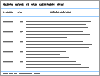
Table 1
Statistics of experimental samples information"
组别 Group | 品种 Breed | 样本量/匹 Sample size | 数据来源 Data source |
|---|---|---|---|
| 亚洲北部 Asia North | 鄂伦春马 Erlunchun horse | 6 | PRJNA515160 |
| 济州马 Jeju horse | 18 | PRJNA168142 | |
| 蒙古马 Mongolian horse | 35 | PRJEB10098 | |
| 宁强马 Ningqiang pony | 13 | PRJNA780752 | |
| 焉耆马 Yanqi horse | 6 | PRJNA780752 | |
| 伊犁马 Yili horse | 16 | PRJNA780752 | |
| 亚洲青藏高原 Asia Qinghai-Tibet plateau | 柴达木马 Chaidamu horse | 8 | PRJNA515160 |
| 大通马 Datong horse | 9 | PRJNA780752 | |
| 河曲马 Hequ horse | 6 | PRJNA515160 | |
| 西藏马 Tibet horse | 29 | PRJNA515160 | |
| 亚洲南部 Asia South | 德保矮马 Debao pony | 52 | PRJNA416233 |
| 建昌马 Jianchang horse | 7 | PRJNA780752 | |
| 晋江马 Jinjiang horse | 7 | PRJNA780752 | |
| 亚洲西南部 Asia Southwest | 阿拉伯马 Arabian horse | 18 | PRJEB14779 |
| 欧洲 Europe | 弗赖伯格马 Freiberg horse | 31 | PRJEB10098 |
| 弗里斯兰马 Friesian horse | 17 | PRJEB13863 | |
| 雅库特马 Yakutian horse | 8 | PRJEB10854 | |
| 北美洲 North America | 夸特马 Quarter horse | 28 | PRJEB14779 |
| 野马 Wild | 普氏野马 Przewalski’s horse | 3 | PRJEB10098 |
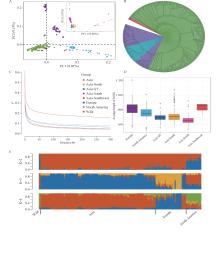
Fig. 1
Genetic diversity and population structure of horsesA. Principal component analysis of population; B. NJ phylogenetic tree; C. LD decay patterns of population, X-axis indicate physical distance between genetic markers, Y-axis indicate linkage disequilibrium strength; D. ROH statistics; E. Admixture analysis for horse populations for K values between 2 and 4"

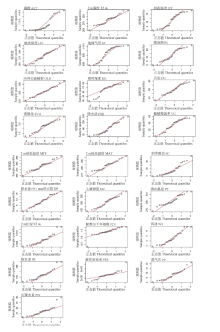
Fig.2
Quantile-Quantile plot of environmental factors"
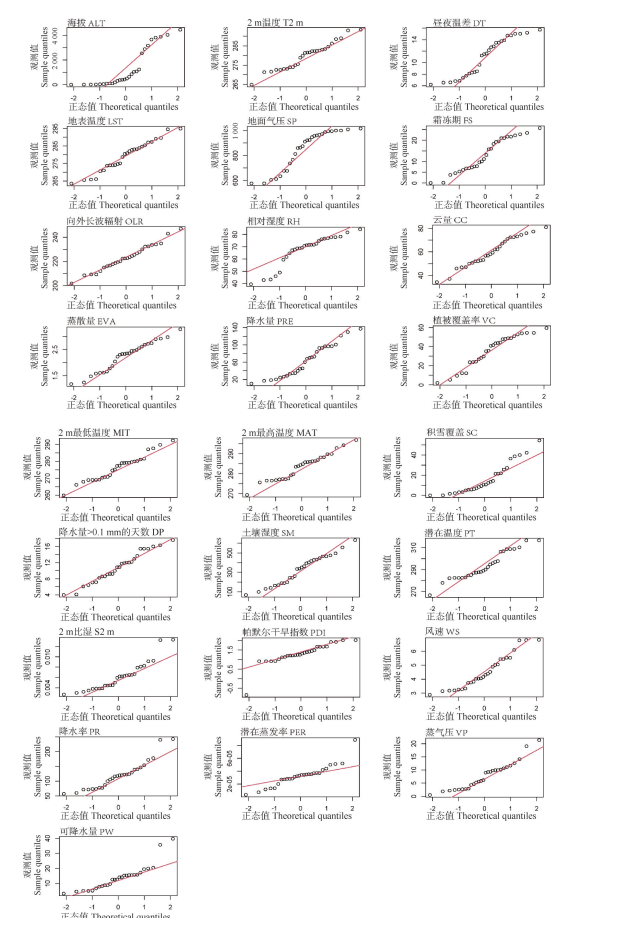
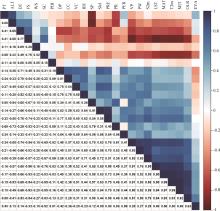
Fig.3
Correlation heat map of environmental factors"

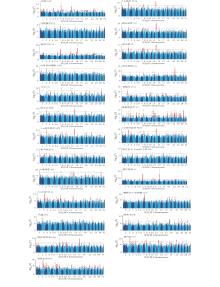
Fig.4
Genome-wide association study of environmental factors"

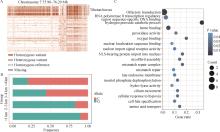
Fig.5
Functional analysis of candidate genesA. Haplotype analysis; B. Allele frequency analysis; C. Candidate genes enrichment bubble plot"

| [1] | ORLANDO L.Equids[J].Curr Biol,2015,25(20):R973-R978. |
| [2] | BRADSHAW W E,HOLZAPFEL C M.Genetic shift in photoperiodic response correlated with global warming[J].Proc Natl Acad Sci U S A,2001,98(25):14509-14511. |
| [3] | LUDWIG A,PRUVOST M,REISSMANN M,et al.Coat color variation at the beginning of horse domestication[J].Science,2009,324(5926):485. |
| [4] | BOWER M A,MCGIVNEY B A,CAMPANA M G,et al.The genetic origin and history of speed in the thoroughbred racehorse[J].Nat Commun,2012,3:643. |
| [5] | WUTKE S,ANDERSSON L,BENECKE N,et al.The origin of ambling horses [J].Curr Biol,2016,26(15):R697-R699. |
| [6] | ORLANDO L,GINOLHAC A,ZHANG G,et al.Recalibrating equus evolution using the genome sequence of an early Middle Pleistocene horse[J].Nature,2013,499(7456):74-78. |
| [7] | 杨柏高,郝海生,杜卫华,等.牦牛高原适应研究进展 [J].畜牧兽医学报,2023,54(1):12-23. |
| YANG B G,HAO H S,DU W H,et al.Advances in research on plateau adaptation of yak[J].Acta Veterinaria et Zootechnica Sinica,2023,54(1):12-23.(in Chinese) | |
| [8] | 张政凯,李业芳,叶绍辉,等.山羊环境适应性的研究进展[J].畜牧兽医学报,2022,53(7):2035-2046. |
| ZHANG Z K,LI Y F,YE S H,et al.Research progress of environmental adaptability in goats[J].Acta Veterinaria et Zootechnica Sinica,2022,53(7):2035-2046.(in Chinese) | |
| [9] | 黄晓隆,盛熙晖,袁经纬.基于组学分析的鸡环境适应性研究进展[J].畜牧兽医学报,2024,55(7):2809-2824. |
| HUANG X L,SHENG X H,YUAN J W.Research progress of environmental adaptability in chickens from perspective of omics analysis[J].Acta Veterinaria et Zootechnica Sinica,2024,55(7):2809-2824.(in Chinese) | |
| [10] | LIU X,ZHANG Y,LI Y,et al.EPAS1 gain-of-function mutation contributes to high-altitude adaptation in Tibetan horses[J].Mol Biol Evol,2019,36(11):2591-2603. |
| [11] | LI Y,CAO K,LI N,et al.Genomic analyses provide insights into peach local adaptation and responses to climate change[J].Genome Res,2021,31(4):592-606. |
| [12] | KODAMA Y,SHUMWAY M,LEINONEN R.The sequence read archive:explosive growth of sequencing data[J].Nucleic Acids Res,2012,40(D1):D54-D56. |
| [13] | BOLGER A M,LOHSE M,USADEL B.Trimmomatic:a flexible trimmer for Illumina sequence data[J].Bioinformatics,2014,30(15):2114-2120. |
| [14] | LI H,HANDSAKER B,WYSOKER A,et al.The Sequence Alignment/Map format and SAMtools[J].Bioinformatics,2009,25(16):2078-2079. |
| [15] | LI H,DURBIN R.Fast and accurate short read alignment with burrows-wheeler transform[J].Bioinformatics,2009,25(14):1754-1760. |
| [16] | MCKENNA A,HANNA M,BANKS E,et al.The genome analysis Toolkit:a MapReduce framework for analyzing next-generation DNA sequencing data[J].Genome Res,2010,20(9):1297-1303. |
| [17] | DANECEK P,AUTON A,ABECASIS G,et al.The variant call format and VCFtools[J].Bioinformatics,2011,27(15):2156-2158. |
| [18] | PURCELL S,NEALE B,TODD-BROWN K,et al.PLINK:a tool set for whole-genome association and population-based linkage analyses[J].Am J Hum Genet,2007,81(3):559-575. |
| [19] | ALEXANDER D H,NOVEMBRE J,LANGE K.Fast model-based estimation of ancestry in unrelated individuals [J].Genome Res,2009,19(9):1655-1664. |
| [20] | ZHANG C,DONG S S,XU J Y,et al.PopLDdecay:a fast and effective tool for linkage disequilibrium decay analysis based on variant call format files[J].Bioinformatics,2019,35(10):1786-1788. |
| [21] | GUINDON S,GASCUEL O.A simple,fast,and accurate algorithm to estimate large phylogenies by maximum likelihood[J].Syst Biol,2003,52(5):696-704. |
| [22] | LETUNIC I,BORK P.Interactive Tree Of Life (iTOL) v5:an online tool for phylogenetic tree display and annotation[J].Nucleic Acids Research,2021,49(W1):W293-W296. |
| [23] | ZHOU X,STEPHENS M.Genome-wide efficient mixed-model analysis for association studies[J].Nat Genet,2012,44(7):821-824. |
| [24] | BU D,LUO H,HUO P,et al.KOBAS-i:intelligent prioritization and exploratory visualization of biological functions for gene enrichment analysis[J].Nucleic Acids Research,2021,49(W1):W317-W325. |
| [25] | 虎巧燕.关中马和建昌马全基因组遗传多样性和选择信号研究[D].杨凌:西北农林科技大学,2025. |
| HU Q Y.Whole-genome genetic diversity and selective signals in Guanzhong and Jianchang horses[D].Yangling:Northwest A&F University,2025.(in Chinese) | |
| [26] | ORLANDO L.The Evolutionary and historical foundation of the modern horse:Lessons from ancient genomics[J].Annu Rev Genet,2020,54:563-581. |
| [27] | HIMADEWI P,WANG X Q D,FENG F,et al.3'HS1 CTCF binding site in human β-globin locus regulates fetal hemoglobin expression[J].Elife,2021,10:e70557. |
| [28] | DENG L,ZHANG C,YUAN K,et al.Prioritizing natural-selection signals from the deep-sequencing genomic data suggests multi-variant adaptation in Tibetan highlanders[J].Natl Sci Rev,2019,6(6):1201-1222. |
| [29] | RADDATZ K,TURNER N,FRANGIOUDAKIS G,et al.Time-dependent effects of Prkce deletion on glucose homeostasis and hepatic lipid metabolism on dietary lipid oversupply in mice[J].Diabetologia,2011,54(6):1447-1456. |
| [30] | YI X,LIANG Y,HUERTA-SANCHEZ E,et al.Sequencing of 50 human exomes reveals adaptation to high altitude[J].Science,2010,329(5987):75-78. |
| [31] | LV F H,CAO Y H,LIU G J,et al.Whole-genome resequencing of worldwide wild and domestic sheep elucidates genetic diversity,introgression,and agronomically important loci[J].Mol Biol Evol,2022,39(2):msab353. |
| [32] | LIBRADO P,DER SARKISSIAN C,ERMINI L,et al.Tracking the origins of Yakutian horses and the genetic basis for their fast adaptation to subarctic environments[J].Proc Natl Acad Sci U S A,2015,112(50):E6889-E6897. |
| [33] | BJORNSDOTTIR G,STEFANSDOTTIR L,THORLEIFSSON G,et al.Rare SLC13A1 variants associate with intervertebral disc disorder highlighting role of sulfate in disc pathology[J].Nat Commun,2022,13(1):634. |
| [34] | LIU X,ZHANG Y,LIU W,et al.A single-nucleotide mutation within the TBX3 enhancer increased body size in Chinese horses[J].Curr Biol,2022,32(2):480-487. |
| [35] | HANNAN N J,STOCK O,SPENCER R,et al.Circulating mRNAs are differentially expressed in pregnancies with severe placental insufficiency and at high risk of stillbirth[J].BMC Med,2020,18(1):145. |
| [36] | LI G,LUO J,WANG F,et al.Whole-genome resequencing reveals genetic diversity,differentiation,and selection signatures of yak breeds/populations in Qinghai,China[J].Front Genet,2022,13:1034094. |
| [37] | WANG X,XIONG J,ZHOU D,et al.TRIM34 modulates influenza virus-activated programmed cell death by targeting Z-DNA-binding protein 1 for K63-linked polyubiquitination[J].J Biol Chem,2022,298(3):101611. |
| [38] | ZHOU X J,TSOI L C,HU Y,et al.Exome chip analyses and genetic risk for IgA nephropathy among han Chinese[J].Clin J Am Soc Nephrol,2021,16(2):213-224. |
| [39] | LI Q,ZHANG Z,FAN W,et al.LECT2 protects nile tilapia (Oreochromis niloticus) against streptococcus agalatiae Infection[J].Front Immunol,2021,12:667781. |
| [40] | KICHI Z A,NATARELLI L,SADEGHIAN S,et al.Orphan GPR26 counteracts early phases of hyperglycemia-mediated monocyte activation and is suppressed in diabetic patients[J].Biomedicines,2022,10(7):1736. |
| [41] | ZHU S,BENNETT S,LI Y,et al.The molecular structure and role of LECT2 or CHM-II in arthritis,cancer,and other diseases[J].J Cell Physiol,2022,237(1):480-488. |
| [42] | LEE S J.Targeting the myostatin signaling pathway to treat muscle loss and metabolic dysfunction[J].J Clin Invest,2021,131(9):e148372. |
| [43] | ONO K,HATA K,NAKAMURA E,et al.Dmrt2 promotes transition of endochondral bone formation by linking Sox9 and Runx2[J].Commun Biol,2021,4(1):326. |
| [44] | LEE S G,CHAE J,WOO S M,et al.TGFBI remodels adipose metabolism by regulating the Notch-1 signaling pathway[J].Exp Mol Med,2023,55(3):520-531. |
| [45] | KIM H J,SON H Y,SUNG J,et al.A genome-wide association study on abdominal adiposity-related traits in adult Korean men[J].Obes Facts,2022,15(4):590-599. |
| [46] | BROWN R D R,SPIEGEL S.ORMDL in metabolic health and disease[J].Pharmacol Ther,2023,245:108401. |
| [47] | KONG H E,LIM J,LINSALATA A,et al.Identification of PSMB5 as a genetic modifier of fragile X-associated tremor/ataxia syndrome[J].Proc Natl Acad Sci U S A,2022,119(22):e2118124119. |
| [48] | HAN J L,LU M X,LI C,et al.Whole-genome sequencing of Ganzi horse reveals the genetic diversity and provides unique insights into its plateau adaptation[J].Livest Sci,2024,288:105549. |
| [1] | WU Jiahao, WU Ziyi, DOU Tengfei, BAI Liyao, ZHANG Yongqian, DONG Lianhe, LI Pengfei, LI Xinjian, HAN Xuelei, LI Xiuling. Genome-wide Association Study of Copy Number Variation in Growth-Related Traits of Yunong-Black Pigs [J]. Acta Veterinaria et Zootechnica Sinica, 2025, 56(3): 1110-1119. |
| [2] | ZHOU Taizeng, YANG Yiting, ZHU Yuehua, QIAN Hongxi, LIU Yihui, GAN Mailin, ZHU Li, SHEN Linyuan. Genome-wide Association Study of Stillbirths and Mummies in Sows [J]. Acta Veterinaria et Zootechnica Sinica, 2025, 56(3): 1231-1241. |
| [3] | CAO Yu, ZHOU Bohan, XU Qi, YUAN Zi'ao, SU Rui, LÜ Qi, LI Jinquan, ZHANG Yanjun, WANG Ruijun, WANG Zhiying. Research Progress on Integrated eQTL-GWAS Data Analysis for Potential Functional Genetic Loci Identification in Animal Breeding [J]. Acta Veterinaria et Zootechnica Sinica, 2025, 56(10): 4759-4773. |
| [4] | MA Jing'e, WAN Shuxing, LEI Wenjing, ZHANG Yingzhi, YU Zixuan, LIU Zige, XU Jiguo. Identification of Candidate Genes and Key Pathways Associated with Body Weight at 16 Weeks of Age in Kangle Yellow Chickens Based on Omics Data [J]. Acta Veterinaria et Zootechnica Sinica, 2025, 56(10): 4889-4902. |
| [5] | GUO Jun, SHAO Dan, MA Meng, LU Jian, DOU Taocun, HU Yuping, WANG Xingguo, WANG Qiang, LI Yongfeng, GUO Wei, TONG Haibing, QU Liang. Genetic Dissection on Body Weight and Age at the first Egg in Resource Population between White Leghorn and Dongxiang Blue Shelled Chickens [J]. Acta Veterinaria et Zootechnica Sinica, 2025, 56(10): 4903-4913. |
| [6] | Xiaolong HUANG, Xihui SHENG, Jingwei YUAN. Research Progress of Environmental Adaptability in Chickens from Perspective of Omics Analysis [J]. Acta Veterinaria et Zootechnica Sinica, 2024, 55(7): 2809-2824. |
| [7] | ZHANG Xiaoke, LIAO Weili, CHEN Xinyou, LI Tingting, YUAN Xiaolong, LI Jiaqi, HUANG Xiang, ZHANG Hao. Genome-wide Association Study for Identifying Candidate Genes of Growth Traits in Duroc Pigs [J]. Acta Veterinaria et Zootechnica Sinica, 2023, 54(5): 1868-1876. |
| [8] | WU Jun, CAI Xiaodian, LIN Qing, ZHONG Zhanming, YE Haoqiang, WEI Chen, XU Zhiting, WU Xibo, SI Jinglei, ZHANG Zhe, LI Jiaqi. Weighted Single-step GWAS of Eye Muscle Area, Predicted Lean Meat Percentage and Average Backfat Thickness in A Yorkshire Pig Population [J]. Acta Veterinaria et Zootechnica Sinica, 2023, 54(4): 1403-1414. |
| [9] | ZHANG Gaomeng, DING Jiqiang, LIU Yuhong, ZHENG Maiqing, WEN Jie, ZHAO Guiping, LI Qinghe. Genome-wide Association Study Reveals the Genetic Basis of Hatching Traits in White-feathered Broilers [J]. Acta Veterinaria et Zootechnica Sinica, 2023, 54(2): 534-544. |
| [10] | FAN Chenyu, SHAN Yanju, ZHANG Ming, JI Gaige, JU Xiaojun, TU Yunjie, HE Xi, SHU Jingting, LIU Yifan, ZHANG Haihan. Genome-wide Association Study of Body Weight and Meat Quality Traits in Lihua Mahuang Chickens [J]. Acta Veterinaria et Zootechnica Sinica, 2023, 54(12): 4982-4992. |
| [11] | LI Dengpan, MA Keyan, HAN Jintao, BAI Yaqin, LI Taotao, MA Youji. Detection and Analysis of Whole Genome Selection Signal of Yongdeng Qishan Sheep [J]. Acta Veterinaria et Zootechnica Sinica, 2023, 54(11): 4577-4588. |
| [12] | ZHANG Changzheng, LI Desen, HUANG Min, FANG Xiaomin, ZHAO Weimin, REN Shouwen, DONG Huansheng, REN Jun, ZHOU Lisheng. An Imputed Whole-genome Sequence-based GWAS Approach Pinpoints Genetic Loci for Body Conformation at Birth and Teat Number Traits in Sushan Pig Population [J]. Acta Veterinaria et Zootechnica Sinica, 2023, 54(1): 88-102. |
| [13] | WU Pingxian, CHEN Li, LONG Xi, CHAI Jie, ZHANG Tinghuan, XU Shunlai, GUO Zongyi, WANG Jinyong. Genome-wide Association Studies for Reproductive Traits at First Farrowing in Rongchang Pigs [J]. Acta Veterinaria et Zootechnica Sinica, 2023, 54(1): 103-112. |
| [14] | ZHANG Zhengkai, LI Yefang, YE Shaohui, JIANG Lin, MA Yuehui. Research Progress of Environmental Adaptability in Goats [J]. Acta Veterinaria et Zootechnica Sinica, 2022, 53(7): 2035-2046. |
| [15] | MA Lixia, CAO Guowei, ZHU Hongfang, DENG Zhanzhao, CAI Zhengyun, ZHOU Chenghao, HAN Wei, GU Yaling, ZHANG Juan. Analysis of Genetic Variation in a Conserved Population of Jingyuan Chickens Based on RAD-seq [J]. Acta Veterinaria et Zootechnica Sinica, 2022, 53(7): 2104-2117. |
| Viewed | ||||||
|
Full text |
|
|||||
|
Abstract |
|
|||||
