


Acta Veterinaria et Zootechnica Sinica ›› 2026, Vol. 57 ›› Issue (1): 146-154.doi: 10.11843/j.issn.0366-6964.2026.01.013
• ANIMAL GENETICS AND BREEDING • Previous Articles Next Articles
WANG Yan1( ), GU Yiren2, ZHANG Jinwei3,4, YANG Xuemei1, LIANG Yan1, LIU Rui1, TAO Xuan1, YANG Yuekui1, AN Rui1, YANG Kun1, ZHANG Xing1, CHEN Xiaohui1, GONG Jianjun1()
Received:2025-05-28
Online:2026-01-23
Published:2026-01-26
Contact:
GONG Jianjun
E-mail:376471617@qq.com;460616227@qq.com
CLC Number:
WANG Yan, GU Yiren, ZHANG Jinwei, YANG Xuemei, LIANG Yan, LIU Rui, TAO Xuan, YANG Yuekui, AN Rui, YANG Kun, ZHANG Xing, CHEN Xiaohui, GONG Jianjun. Analysis of Intestinal Microbial Diversity Differences among Chuanxiang Black Pigs, Berkshire Pigs and Duroc Pigs[J]. Acta Veterinaria et Zootechnica Sinica, 2026, 57(1): 146-154.
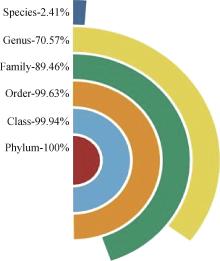
Fig.1
Annotation proportion diagramThe circular diagram displays the proportion of all samples successfully annotated at different taxonomic levels. From the inside to the outside, the circles represent the phylum, class, order, family, and genus levels, respectively, with a half-circle indicating 100% annotation"
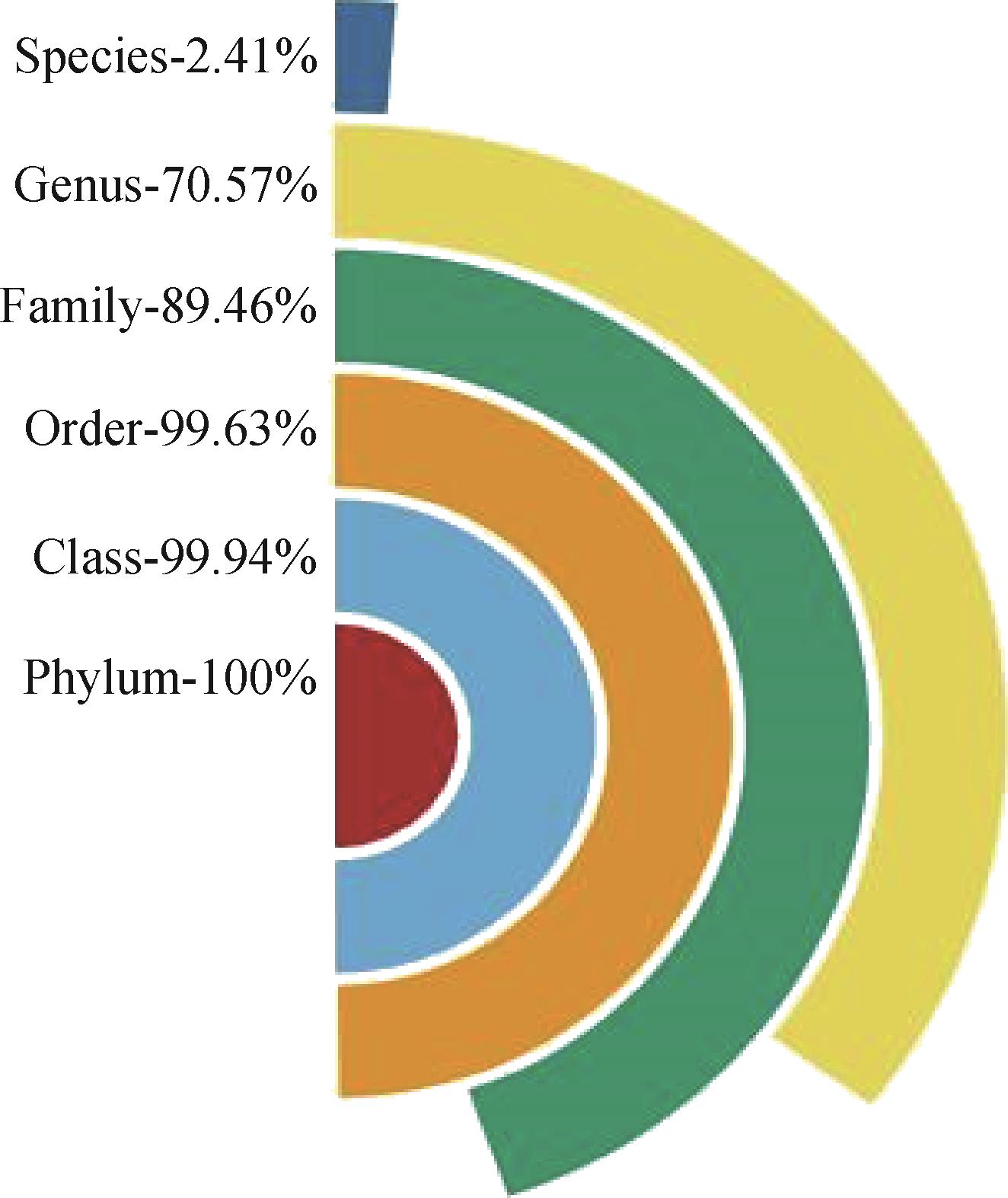
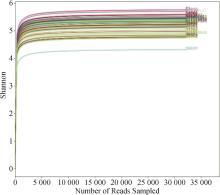
Fig.2
Quality control of intestinal microbiota sequencing data"
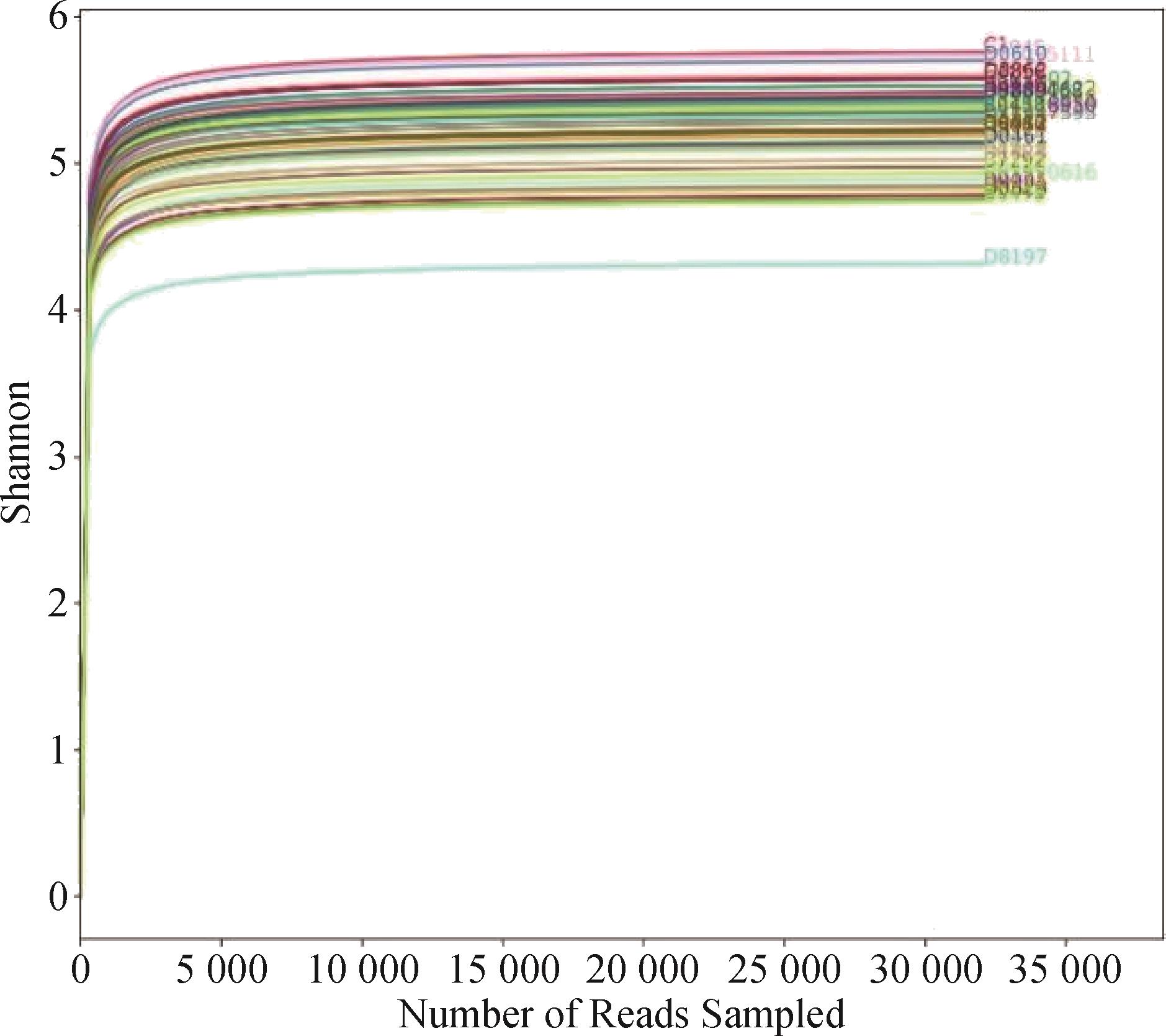
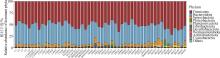
Fig.3
Relative abundance of species at the phylum level"

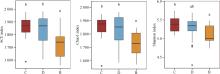
Fig.4
Alpha diversity of intestinal microbiota"
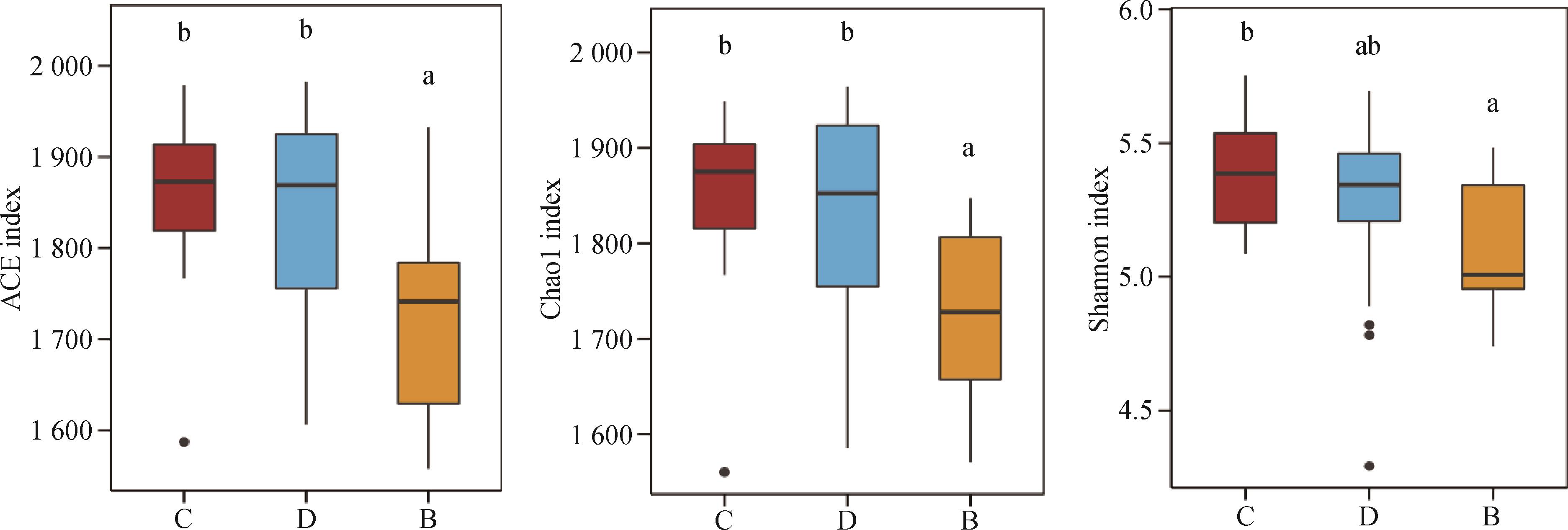
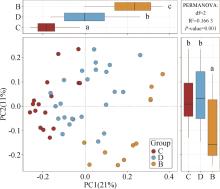
Fig.5
PCoA analysis based on Bray-Curtis distance matrix of intestinal microbiota in different pig breeds"
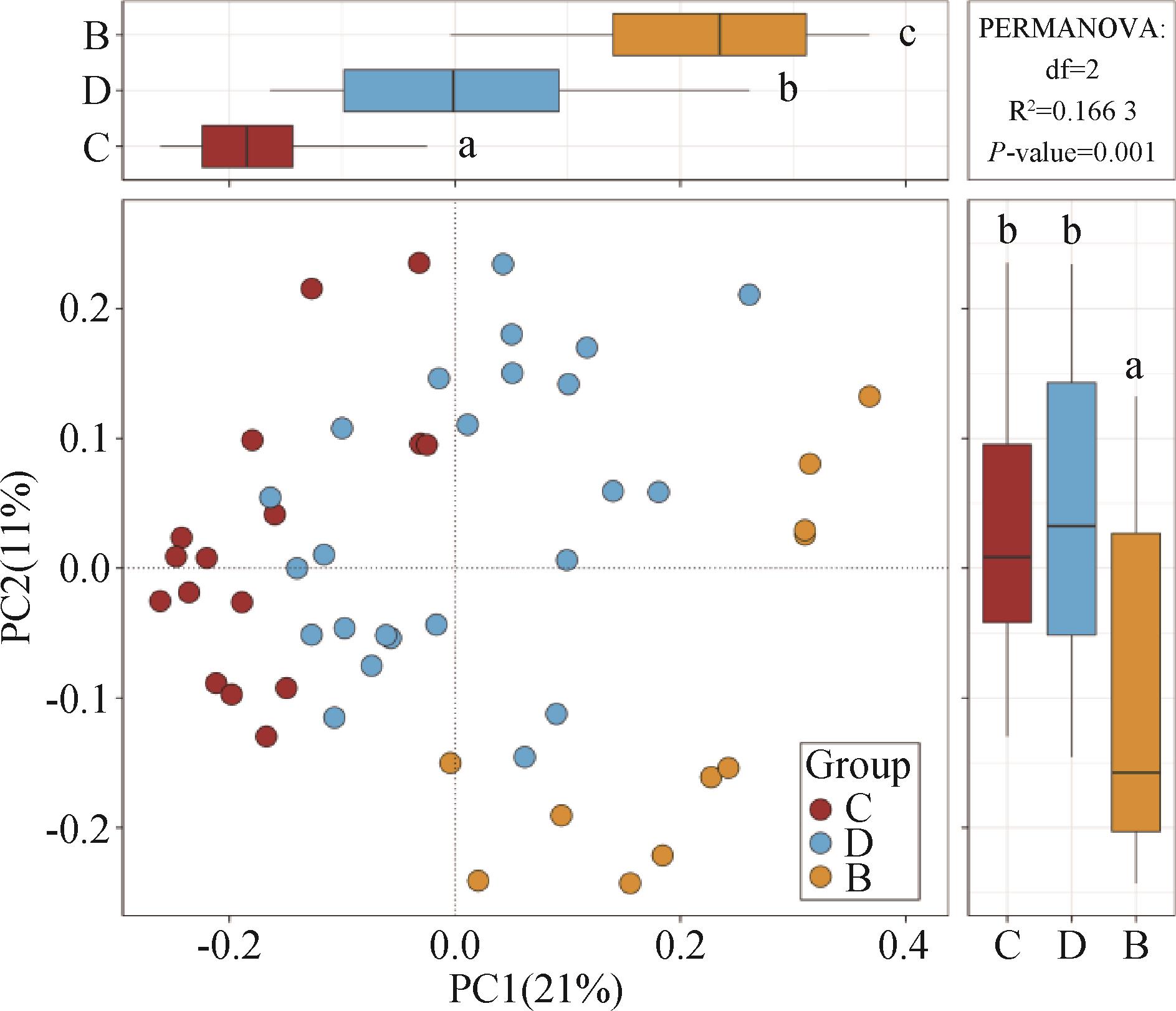
Fig.6
The top 10 species with relative abundance at the phylum level of intestinal microbiota in different pig breedsDifferent lowercase letters above the boxes indicate significant differences in the relative abundance of the species between groups (P<0.05), the same as below"
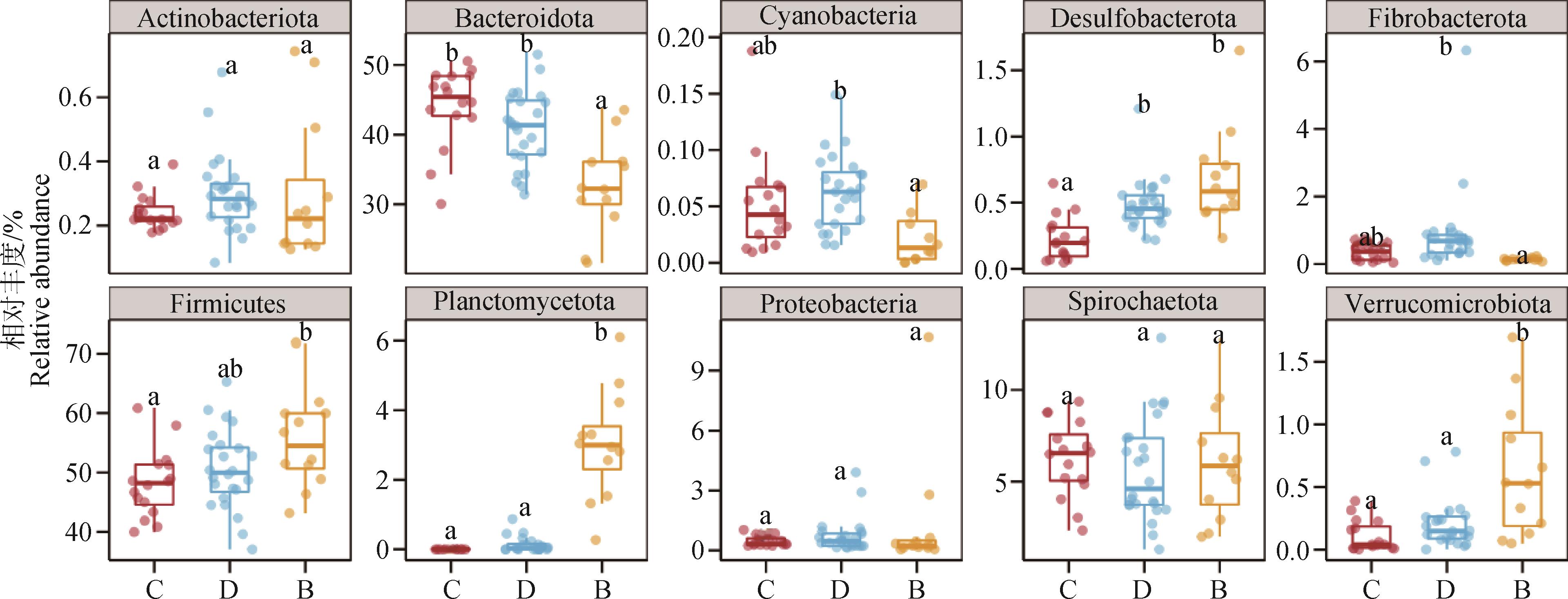
Fig.7
The top 10 species with relative abundance at the genus level of intestinal microbiota in different pig breeds"
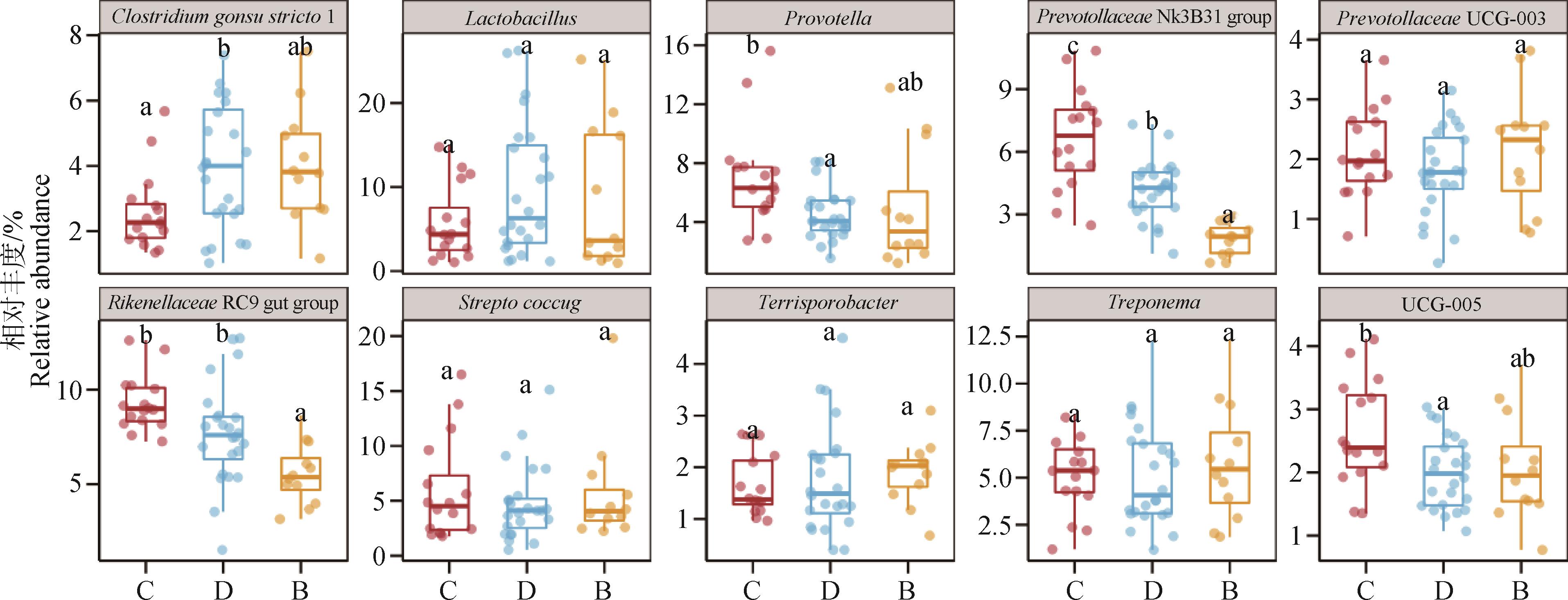
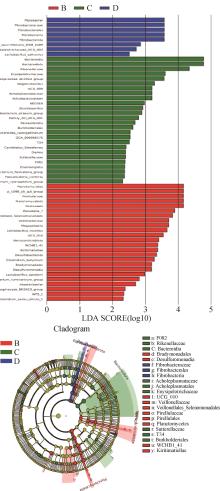
Fig.8
Species with statistical differences between groups based on LEfSe"

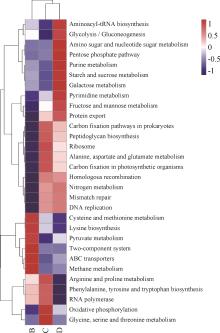
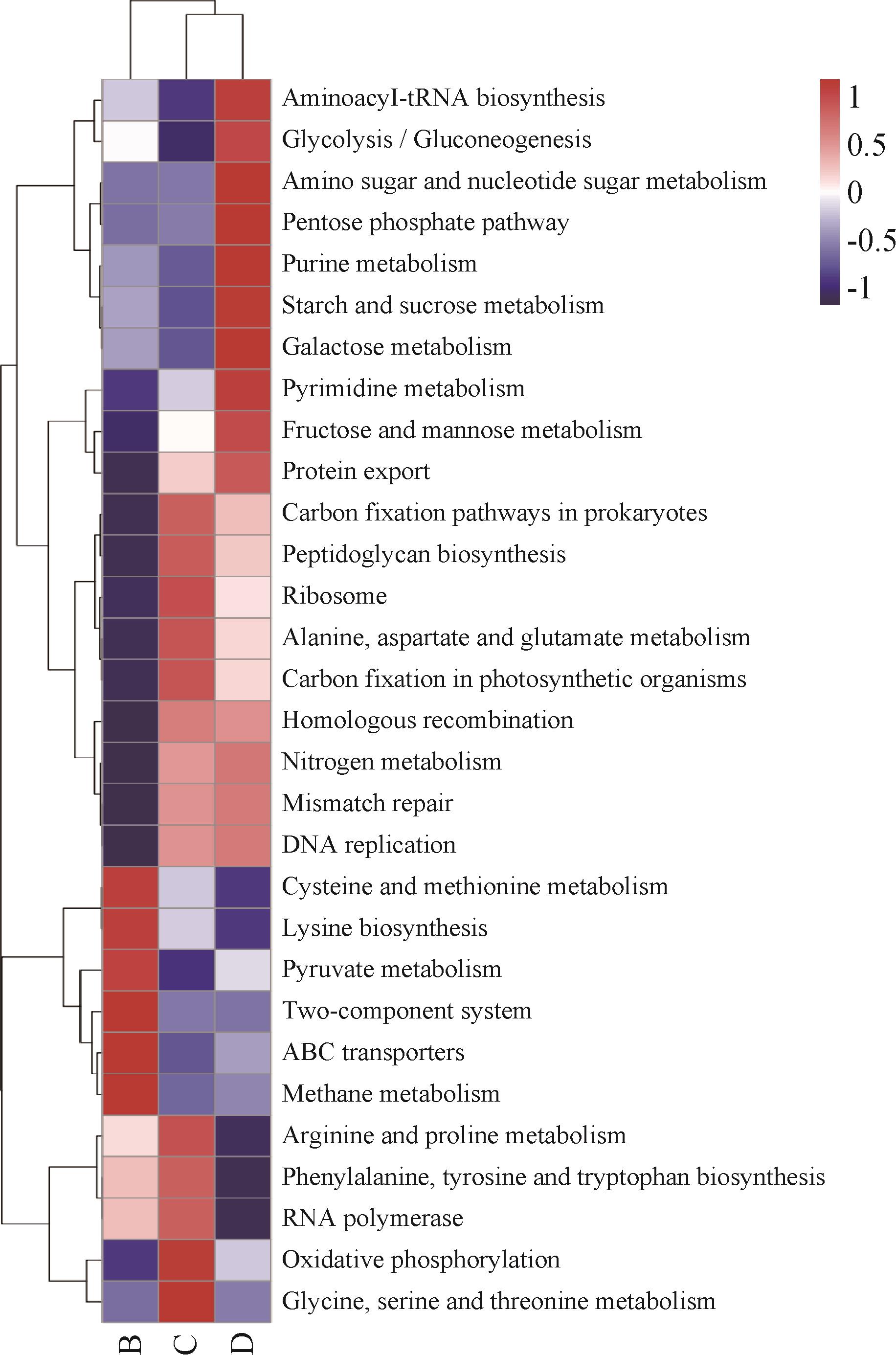
Fig.9
Clustering heatmap of microbial functional annotation"
| [1] | 冯思敏.高低肌内脂肪含量杜洛克猪遗传与肠道微生物组成比较研究[D].武汉:华中农业大学,2023. |
| FENG S M.Comparision of genetic and intestinal microbiota composition between Duroc pigs with high and low intramuscular fat content[D].Wuhan:Huazhong Agricultural University,2023.(in Chinese) | |
| [2] | 王 盼,王忠刚,吴卓穗,等.改善猪肉品质的研究进展[J].广东畜牧兽医科技,2024,49(6):50-56. |
| WANG P,WANG Z G,WU Z S,et al.Research progress on improving pork quality[J].Guangdong Journal of Animal and Veterinary Science,2024,496):50-56.(in Chinese | |
| [3] | 陶 璇,梁 艳,应三成,等.川乡黑猪杂交试验研究[J].中国畜牧杂志,2021,57(S1):214-217. |
| TAO X,LIANG Y,YING S C,et al.Study on crossbreeding experiments of Chuanxiang Black pigs[J].Chinese Journal of Animal Science,2021,57(S1):214-217.(in Chinese) | |
| [4] | 孟兴缘,陈 科.国内首个自主知识产权生猪父本新品种育成[N].科技日报,2021-12-29(006). |
| MENG X Y,CHEN K.China's first new pig sire breed with independent intellectual property rights has been developed [N].Science and Technology Daily,2021-12-29(006).(in Chinese) | |
| [5] | HUANG J Q,ZHANG W J,FAN R,et al.Conposition and functional diversity of fecal bacterial community of wild boar,comercial pig and domestic native pig as revealed by 16S rRNA gene sequencing[J].Arch Microbiol,2020,202 (4):843-857. |
| [6] | YANG L N,BIAN G R,SU Y,et al.Comparison of faecal microbial community of lantang,bama,erhualian,meishan,xiaomeishan,duroc,landrace,and yorkshire sows[J].Asian-Australas J Anim Sci,2014,27(6):898-906. |
| [7] | LI C,ZHAO X Y,ZHAO G S,et al.Comparative analysis of structural composition and function of intestinal microbiota between Chinese indigenous Laiwu pigs and commercial DLY pigs[J].Vet Sci,2023,10 (8):524. |
| [8] | YANG H,XIAO Y P,WANG J J,et al.Core gut microbiota in Jinhua pigs and its correlation with strain,farm and weaning age[J].J Microbiol,2018,56(5):346-355. |
| [9] | PAJARILLO E A,CHAE J P,BALOLONG M P,et al.Characterization of the fecal microbial communities of Duroc pigs using 16S rRNA gene pyrosequencing[J].Asian-Australas J Anim Sci,2015,28(4):584-591. |
| [10] | DIAO H,YAN H L,XIAO Y,et al.Intestinal microbiota could transfer host gut characteristics from pigs to mice[J].BMC Microbiol,2016,16(1):238. |
| [11] | XIAO Y P,KONG F L,XIANG Y,et al.Comparative biogeography of the gut microbiome between Jinhua and Landrace pigs[J].Sci Rep,2018,8(1):5985. |
| [12] | BERGAMASCHI M,TIEZZI F,HOWARD J,et al.Gut microbiome composition differences among breeds impact feed efficiency in swine[J].Microbiome,2020,8(1):110. |
| [13] | CHEN S F,ZHOU Y Q,CHEN Y R,et al.fastp:an ultra-fast all-in-one FASTQ preprocessor[J].Bioinformatics,2018,34(17):i884-i890. |
| [14] | MAGOC T,SALZBERG S L.FLASH:fast length adjustment of short reads to improve genome assemblies[J].Bioinformatics,2011,27(21):2957‐2963. |
| [15] | EDGAR R C.UPARSE:highly accurate OTU sequences from microbial amplicon reads[J].Nat Methods,2013,10(10):996‐998. |
| [16] | STACKEBRANDT E,GOEBEL B M.Taxonomic Note:A place for DNA-DNA reassociation and 16S rRNA sequence analysis in the present species definition in bacteriology[J].Int J System Bacteriol,1994,44(4):846-849. |
| [17] | WANG Q,GARRITY G M,TIEDJE J M,et al.Naive Bayesian classifier for rapid assignment of rRNA sequences into the new bacterial taxonomy[J].Appl Environ Microbiol,2007,73(16):5261‐5267. |
| [18] | 杨雪梅,杨跃奎,曾 凯,等.川乡黑猪新品种培育[J].中国畜禽种业,2025,21(1):49-56. |
| YANG X M,YANG Y K,ZENG K,et al.Cultivation of Chuanxiang Black pig breed[J].The Chinese Livestock and Poultry Breeding,2025,21(1):49-56.(in Chinese) | |
| [19] | ZHANG S H,ZHANG H,ZHANG C,et al.Composition and evolutionary characterization of the gut microbiota in pigs[J].Int Microbiol,2024,27(4):993-1008. |
| [20] | TURNBAUGH P J,BACKHED F,FULTON L,et al.Diet-induced obesity is linked to marked but reversible alterations in the mouse distal gut microbiome[J].Cell Host Microbe,2008,3(4):213-223. |
| [21] | FLINT H J,SCOTT K P,DUNCAN S H,et al.Microbial degradation of complex carbohydrates in the gut[J].Gut Microbes,2012,3(4):289-306. |
| [22] | 梁 艳,陶 璇,杨雪梅,等.川藏黑猪S05系育肥性能研究[J].黑龙江畜牧兽医,2014,(3):61-62,65. |
| LIANG Y,TAO X,YANG X M,et al.Study on the fattening performance of the S05 line of Sichuan-Tibet black swine[J].Heilongjiang Animal Science and Veterinary Medicine,2014,(3):61-62,65.(in Chinese) | |
| [23] | YU S Q,LI L X,ZHAO H Y,et al.Characterization of the dynamic changes of ruminal microbiota colonizing citrus pomace waste during rumen incubation for volatile fatty acid production[J].Microbiol Spectrum,2023,11(2):10.1128. |
| [24] | FRAMPTON J,MURPHY K G,FROST G,et al.Short-chain fatty acids as potential regulators of skeletal muscle metabolism and function[J].Nat Metab,2020,2(9):840-848. |
| [25] | 杨跃奎,龚建军,陶 璇,等.川藏黑猪S04系生长发育及肉质性状选育进展研究[J].中国畜牧兽医文摘,2014,30(9):70-71. |
| YANG Y K,GONG J J,TAO X,et al.Study on the breeding progress of growth development and meat quality traits of Chuanzang Black pig S04 line[J].Chinese Journal of Animal Husbandry and Veterinary Medicine Abstracts,2014,30(9):70-71.(in Chinese) | |
| [26] | 张 洁,张力莉,徐晓锋.反刍动物瘤胃内普雷沃氏菌的研究进展[J].中国饲料,2020,(7):17-21. |
| ZHANG J,ZHANG L L,XU X F.Research progress on prevotella in rumen of ruminants[J].China Feed,2020,(7):17-21.(in Chinese) | |
| [27] | FAN P X,LIU P,SONG P X,et al.Moderate dietary protein restriction alters the composition of gut microbiota and improves ileal barrier function in adult pig model[J].Sci Rep,2017,7:43412. |
| [28] | YANG W Y,LEE Y,LU H,et al.Analysis of gut microbiota and the effect of lauric acid against necrotic enteritis in Clostridium perfringens and Eimeria side-by-side challenge model[J].PLoS One,2019,14(5):e0205784. |
| [29] | MA X Y,YU M,LIU Z C,et al.Effect of amino acids and their derivatives on meat quality of finishing pigs[J].J Food Sci Technol,2020,57(2):404-412. |
| [30] | TIAN W C,YANG L,LIU Y S,et al.Resveratrol attenuates doxorubicin-induced cardiotoxicity in rats by up-regulation of vascular endothelial growth factor B[J].J Nutr Biochem,2020,79:108132. |
| [31] | 赵敏孟.胚蛋注射丙酮酸肌酸调控肉鸡能量代谢和肌肉发育的作用机理研究[D].南京:南京农业大学,2017. |
| ZHAO M M.Regulatory mechanism of in ovo feeding of creatine pyruvate on energy metabolism and muscle development of broiler chichens [D].Nanjing:Nanjing Agricultural University,2017.(in Chinese) |
| [1] | SHU Jingchao, ZHANG Han, PENG Zhifeng, QIAO Hongxing. Isolation, Identification and Virulence Gene Analysis of Porcine Pathogenic Lactococcus garvieae [J]. Acta Veterinaria et Zootechnica Sinica, 2025, 56(7): 3399-3407. |
| [2] | CHU Yijian, CUI Jiuzeng, LI Zengkai, ZHANG Lei, CHU Tingting, HUANG Yanping, SONG Yuxuan. Comparative Study on Vaginal Microorganisms in Pre-endometrial Receptivity and Endometrial Receptivity of Sheep [J]. Acta Veterinaria et Zootechnica Sinica, 2025, 56(2): 689-699. |
| [3] | HUERCHA , YANG Depeng, LUO Tingxiang, LI Caishan, LI Peiying, MA Zhen, YANG Sen, WANG Meiying, BAYINCHAHAN Gailike , GUO Qingyong, HU Zhengxiang. Observation on the Dynamic Changes of Microbial Community in the Blood-feeding Period of Hyalomma asiaticum [J]. Acta Veterinaria et Zootechnica Sinica, 2025, 56(12): 6375-6385. |
| [4] | YANG Wenhui, WANG Feifei, LI Chenlei, SUN Yu, QIN Junjie, ZHU Hao, GUO Yansheng. Study on the Mechanism of Sijunzi San to Strengthen Spleen based on Rumen Flora of Dairy Cows [J]. Acta Veterinaria et Zootechnica Sinica, 2025, 56(12): 6487-6501. |
| [5] | LONG Tanghui, ZHAN Yanbo, LIAO Guanxiang, CHEN Xinfeng, ZHANG Jian, LI Yanjiao, OUYANG Kehui, QIU Qinghua. Effects of Dietary Lysine Supplementation on Fecal Fermentation Parameters and Microbial Flora Structure of Beef Cattle [J]. Acta Veterinaria et Zootechnica Sinica, 2024, 55(5): 2042-2049. |
| [6] | ZHANG Shuai, CHEN Kuirong, XU Di, JIANG Shan, WANG Mengying, ZHANG Kun, XU Yupei, LEI Guofeng, ZHANG Zhicheng, GUO Meng, ZHAO Yunxiang, LAN Ganqiu, LIANG Jing. Analysis of Microbial Composition Differences in High and Low Feed Conversion Rates Pig Feces based on 16S rRNA Sequencing [J]. Acta Veterinaria et Zootechnica Sinica, 2024, 55(4): 1605-1614. |
| [7] | ZHENG Xianrui, ZHUO Mingxue, JI Jinli, JIANG Weihu, DENG Zaishuang, ZHANG Jicheng, TIAN Yali, DING Yueyun, ZHANG Xiaodong, YIN Zongjun. Characteristics of Serum Immune Indices and Intestinal Microbiota of Wannan Black Pigs at Different Growth Stages [J]. Acta Veterinaria et Zootechnica Sinica, 2023, 54(9): 3770-3783. |
| [8] | ZHOU Fuchen, YE Jian, GUO Caijin, ZENG Haiyu, WU Zhenfang, DONG Linsong, CAI Gengyuan. Litter Effect Analysis and Genetic Parameters Estimation of Lean Meat Percentage Trait in Duroc Pigs [J]. Acta Veterinaria et Zootechnica Sinica, 2023, 54(6): 2288-2296. |
| [9] | LU Mengqi, YANG Wengjie, LI Ping, YU Peng, DONG Ling, NIU Xiaoyu, YANG Keli, ZOU Weihua, SONG Hui. Changes of PRRSV Infection on Microorganisms in Lungs and Intestines of Piglets based on 16S rRNA Sequencing [J]. Acta Veterinaria et Zootechnica Sinica, 2023, 54(4): 1664-1678. |
| [10] | YAN Qiongxian, CHEN Wenxun, HUI Haoyang, PENG Can, TANG Shaoxun, ZHOU Xiaoling, TAN Zhiliang. Effects of Zearalenone on Growth Performance, Gastrointestinal Fermentation and Microbiota Community Structure of Goats [J]. Acta Veterinaria et Zootechnica Sinica, 2023, 54(3): 1109-1123. |
| [11] | JIANG Hui, YANG Hui, FANG Shaoming, GAO Jun, CHEN Congying. Identification of Gut Microbial Taxa Associated with Feeding Behaviors in Pigs [J]. Acta Veterinaria et Zootechnica Sinica, 2023, 54(1): 213-226. |
| [12] | REN Man, LIU Xin, TANG Yulin, ZHANG Ruixue, QIN Junjie, ZHU Hao, GUO Yansheng. Regulation of Guiqiyimu Compound Preparation on Rumen Microbes and Short-chain Fatty Acids in Postpartum Dairy Cows [J]. Acta Veterinaria et Zootechnica Sinica, 2022, 53(12): 4461-4469. |
| [13] | DU Yu, PU Xiaofeng, CHEN Xiaomeng, Lü Fenfen, WANG Li, ZHANG Zehua, ZHANG Baojiang, SU Yan. Identification and Evolutionary Analysis of Three Novel SeM Genotypes of Donkey Streptococcus equi subsp. equi Isolates in Xinjiang [J]. Acta Veterinaria et Zootechnica Sinica, 2022, 53(1): 231-240. |
| [14] | TANG Minjia, HE Zhuolin, PU Wanxia. The Research Progress of Acquired 16S rRNA Methyltransferases [J]. Acta Veterinaria et Zootechnica Sinica, 2021, 52(9): 2369-2383. |
| [15] | ZHANG Yucong, ZENG Wanqin, XU Pan, Gulmire·ALIM, SHAN Wenjuan. The Screening of DNA Barcode for Hares in Xinjiang [J]. Acta Veterinaria et Zootechnica Sinica, 2020, 51(2): 270-278. |
| Viewed | ||||||
|
Full text |
|
|||||
|
Abstract |
|
|||||
