


Acta Veterinaria et Zootechnica Sinica ›› 2026, Vol. 57 ›› Issue (1): 540-552.doi: 10.11843/j.issn.0366-6964.2026.01.047
• CLINICAL VETERINARY MEDICINE • Previous Articles Next Articles
ZHAO Lin1,5( ), WU Kunfu1, CHE Siyan1,5, LU Yu2,3(), WANG Zi4, WU Miaomiao1,5()
Received:2024-12-18
Online:2026-01-23
Published:2026-01-26
Contact:
LU Yu, WU Miaomiao
E-mail:1290213245@qq.com;luyu@jaas.ac.cn;miaomiaowu0316@hunau.edu.cn
CLC Number:
ZHAO Lin, WU Kunfu, CHE Siyan, LU Yu, WANG Zi, WU Miaomiao. Effects of Panax notoginseng Stem and Leaf Extract on Growth Performance, Diarrhea Index and Intestinal Health of LPS-Challenged Piglets[J]. Acta Veterinaria et Zootechnica Sinica, 2026, 57(1): 540-552.
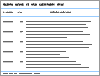
Table 1
Composition and nutrient levels of basal diets (air-dry basis)"
| 项目 Item | 含量 Content |
|---|---|
| 原料 Ingredient | |
| 玉米粉 Corn flour | 60.00 |
| 豆粕 Soybean meal | 16.00 |
| 膨化豆粕 Puffed soybean meal | 10.00 |
| 鱼粉 Fish meal | 5.00 |
| 乳清粉 Whey powder | 4.00 |
| 磷酸氢钙 CaHPO4 | 1.10 |
| 石粉 Limestone | 0.60 |
| 食盐 NaCl | 0.30 |
| 预混料 Premix1) | 3.00 |
| 合计 Total | 100.00 |
| 营养水平 Nutrient levels2) | |
| 消化能/(MJ·kg-1) DE | 13.89 |
| 粗蛋白质 CP | 19.44 |
| 粗脂肪 EE | 4.93 |
| 粗灰分 Ash | 5.28 |
| 钙 Ca | 0.75 |
| 磷 P | 0.54 |
| 蛋氨酸 Ca | 0.53 |
| 赖氨酸 Lys | 1.33 |
Table 2
Primers for RT-PCR experiments"
基因 Gene | 引物序列(5'→3') Primer sequences(5'→3') | 登录号 Accession number | 产物长度/bp Product length |
|---|---|---|---|
甘油醛-3-磷酸脱氢酶 GAPDH | 上游引物:TCGGAGTGAACGGATTTGGC 下游引物:TGACAAGCTTCCCGTTCTCC | NM_001206359.1 | 189 |
干扰素-γ IFN-γ | 上游引物:TCCAGCGCAAAGCCATCAGTG 下游引物:ATGCTCTCTGGCCTTGGAACATAGT | NM_213948.1 | 111 |
肿瘤坏死因子-α TNF-α | 上游引物:CCACGCTCTTCTGCCTACTGC 下游引物:GCTGTCCCTCGGCTTTGAC | NM_214022.1 | 168 |
白细胞介素-6 IL-6 | 上游引物:CCTCTCCGGACAAAACTGAA 下游引物:TCTGCCAGTACCTCCTTGCT | XM_047753916.1 | 118 |
白细胞介素-10 IL-10 | 上游引物:CTGCCTCCCACTTTCTCTTG 下游引物:TCAAAGGGGCTCCCTAGTTT | NM_214041.1 | 95 |
白细胞介素-4 IL-4 | 上游引物:TGACGGACGTCTTTGCTGC 下游引物:GCACAGAACAGGTCATGTTTGC | NM_214123.1 | 165 |
白细胞介素-22 IL-22 | 上游引物:CAATTCCCCTGCCATTGAGT 下游引物:GGGGTGGAGGTAAGGAGATT | XM_021091967.1 | 150 |
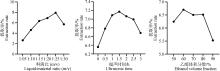
Fig.1
Extraction rate of total saponins of Panax notoginseng under different conditions"
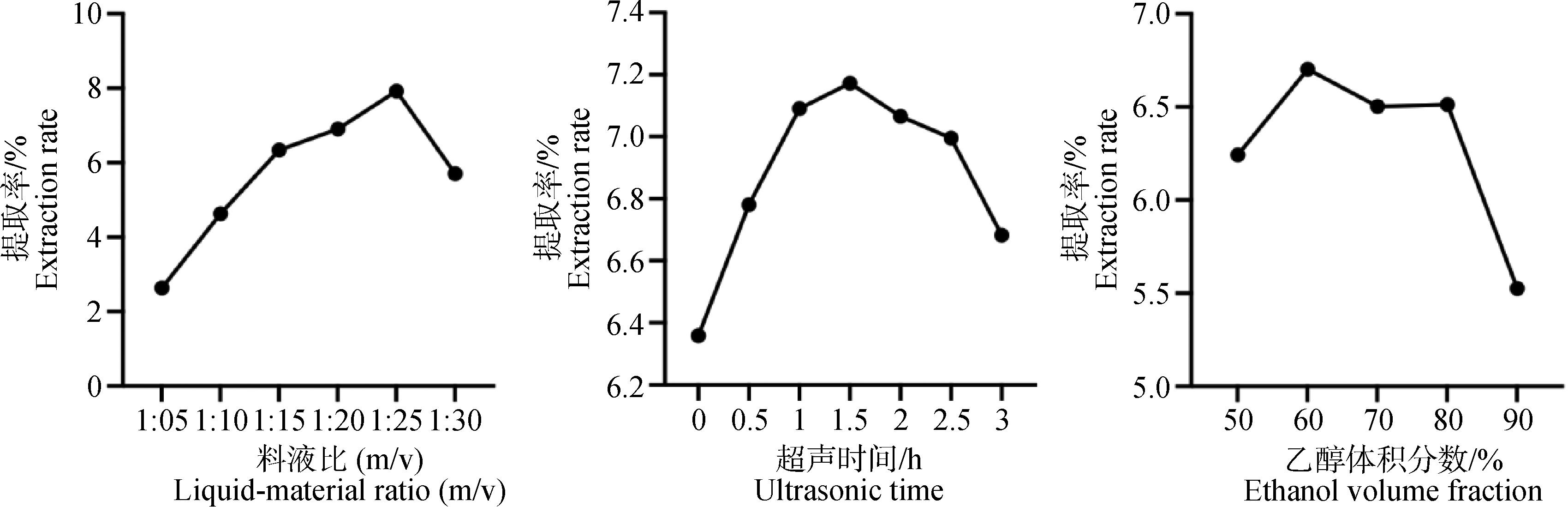
Table 3
Effects of stem and leaf extracts of Panax notoginseng on growth performance of weaned piglets"
| 项目 Item | 组别 Group | |||
|---|---|---|---|---|
| CON | LPS | DEX+LPS | PN+LPS | |
| 平均日采食量/(kg·d-1) ADFI | 0.67±0.05a | 0.53±0.02b | 0.55±0.04b | 0.69±0.02a |
| 平均日增重/(kg·d-1) ADG | 0.47±0.03a | 0.41±0.04ab | 0.35±0.04ab | 0.33±0.04b |
| 料重比 F/G | 1.41±0.03ab | 1.29±0.01b | 1.51±0.06a | 1.57±0.03a |
Table 4
Effect of stem and leaf extracts of Panax notoginseng on diarrhea index of weaned piglets"
项目 Item | 组别 Group | |||
|---|---|---|---|---|
| CON | LPS | DEX+LPS | PN+LPS | |
| 腹泻指数 Diarrhea index | 2.72±0.31c | 5.44±0.34a | 4.53±0.28ab | 4.47±0.43b |
Table 5
Effects of stem and leaf extracts of Panax notoginseng on organ indices of weaned piglets"
项目 Item | 组别 Group | |||
|---|---|---|---|---|
| CON | LPS | DEX+LPS | PN+LPS | |
| 心脏指数 Heart index | 5.39±0.15 | 5.64±0.34 | 5.89±0.33 | 6.23±0.54 |
| 肝脏指数 Liver index | 25.17±0.50b | 30.3±1.63a | 31.22±1.25a | 28.87±1.94ab |
| 脾脏指数 Spleen index | 1.95±0.09b | 2.2±0.12ab | 2.5±0.16a | 2.5±0.19a |
| 肺脏指数 Lung index | 12.42±0.95 | 13.91±0.69 | 12.72±0.44 | 14.11±0.91 |
| 肾脏指数 Kidney index | 5.11±0.21 | 5.09±0.28 | 5.45±0.17 | 5.58±0.34 |
Table 6
Effects of stem and leaf extracts of Panax notoginseng on serum biochemistry of weaned piglets"
项目 Item | 组别 Group | |||
|---|---|---|---|---|
| CON | LPS | DEX+LPS | PN+LPS | |
| 乳酸脱氢酶/(U·L-1) LDH | 948.31±79.80 | 1 288.87±270.67 | 904.37±72.96 | 1 054.21±138.30 |
| 尿素/(μmol·L-1) BU | 5.23±0.38a | 3.94±0.38b | 4.41±0.40b | 5.42±2.14a |
| 总胆红素/(μmol·L-1) TBIL | 1.80±0.09 | 1.37±0.30 | 1.72±0.10 | 1.60±0.18 |
| 总胆固醇/(mmol·L-1) TC | 8.53±1.45a | 2.30±1.23b | 0.75±0.18b | 3.23±0.98b |
| 总蛋白/(g·L-1) TP | 52.75±1.63 | 50.37±3.15 | 51.56±2.26 | 49.73±4.86 |
| 球蛋白/(g·L-1) GLB | 20.60±2.46 | 20.54±1.40 | 21.75±2.23 | 21.56±2.35 |
| 白蛋白/(g·L-1) ALB | 32.15±2.33 | 29.82±1.93 | 29.81±1.40 | 28.17±2.65 |
| 白蛋白/球蛋白 ALB/GLB | 1.71±0.27 | 1.46±0.06 | 1.46±0.20 | 1.33±0.08 |
| 甘油三酯/(mmol·L-1) TG | 0.48±0.05 | 0.42±0.18 | 0.43±0.05 | 0.45±0.12 |
| 碱性磷酸酶/(U·L-1) ALP | 379.72±27.30 | 395.97±44.58 | 350.11±55.01 | 348.76±72.00 |
| 血糖/(mmol·L-1) BG | 2.17±0.45 | 2.08±0.42 | 2.60±0.53 | 1.68±0.44 |
| 谷丙转氨酶/(U·L-1) ALT | 104.96±8.73a | 73.10±10.06b | 72.29±7.23b | 57.44±9.51b |
| 谷草转氨酶/(U·L-1) AST | 110.32±12.42 | 132.24±26.58 | 79.40±11.12 | 190.87±107.75 |
| 谷草转氨酶/谷丙转氨酶 AST/ALT | 1.07±0.12 | 1.98±0.43 | 1.09±0.10 | 2.96±1.14 |
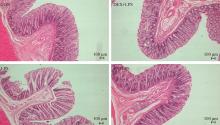
Fig.2
The effect of Panax notoginseng stem and leaf extract on colon morphology of weaned piglets"

Fig.3
The effect of Panax notoginseng stem and leaf extract on microbial alpha diversity (a) and Beta diversity (b) in colon"
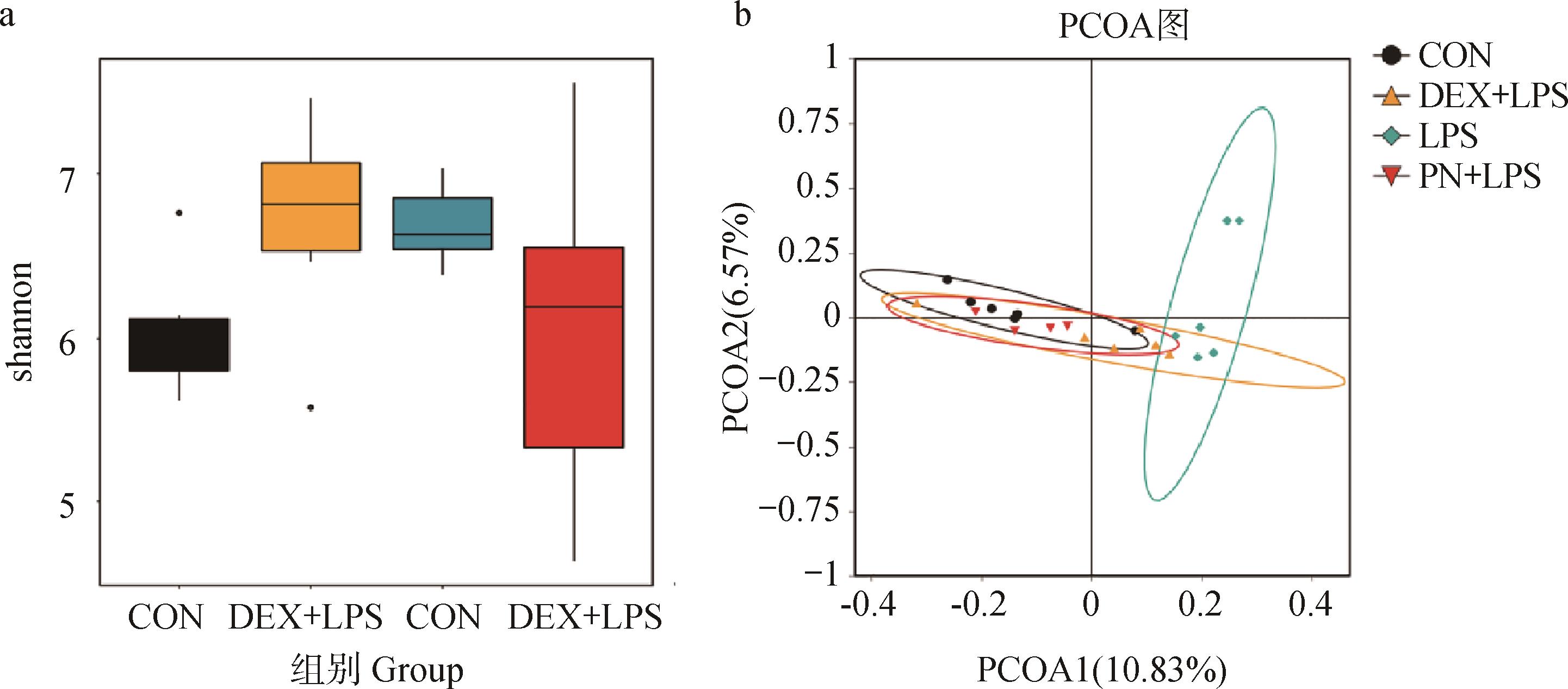
Fig.4
The effect of Panax notoginseng stem and leaf extract on colonic microbes at the phylum levela. Heat map of species differences; b. Bar graph of species differences"

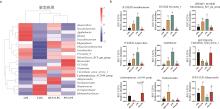
Fig.5
The effect of Panax notoginseng stem and leaf extract on colonic microbes at the genus levela. Heat map of species differences; b. Bar graph of species differences"
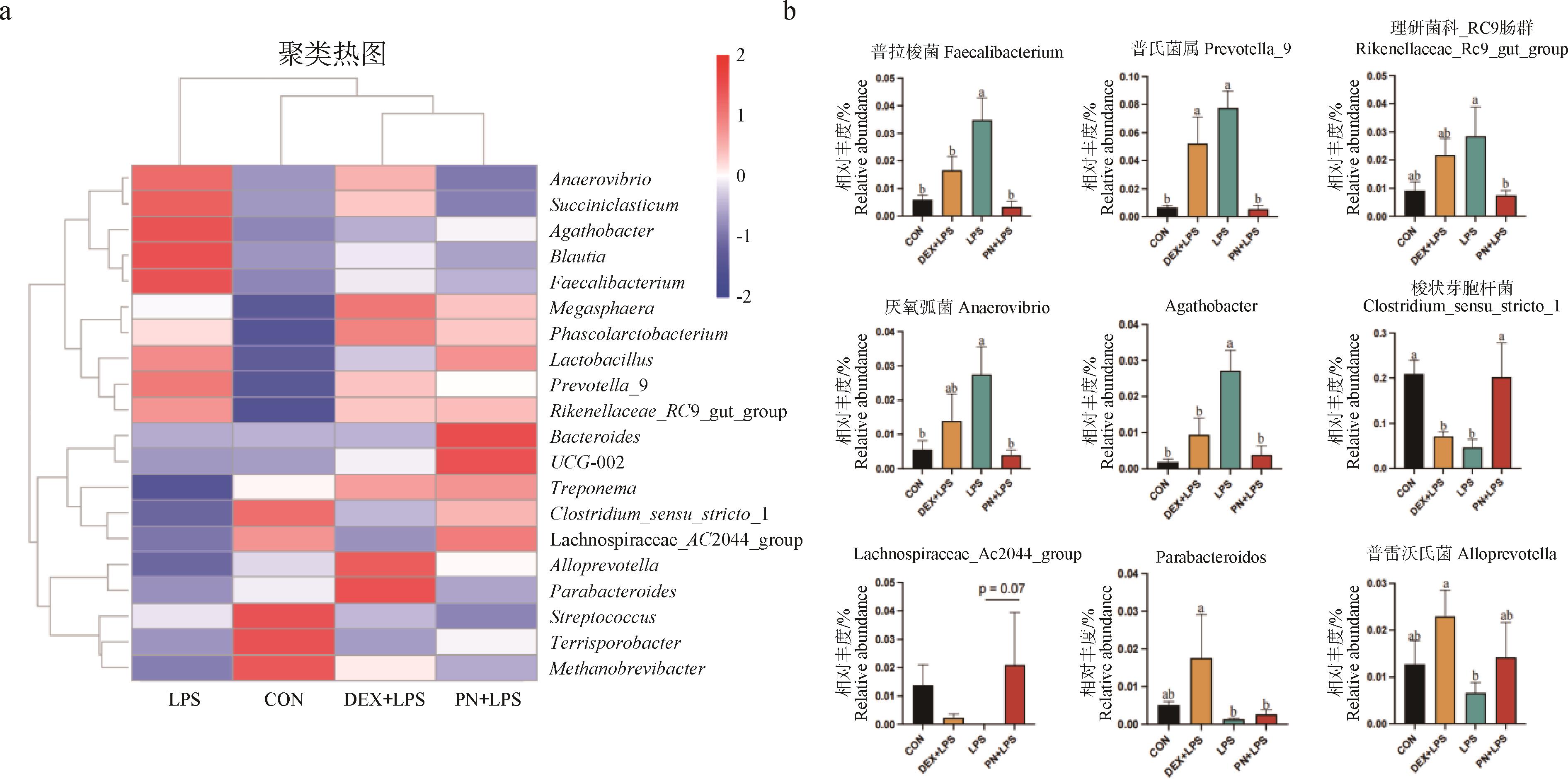
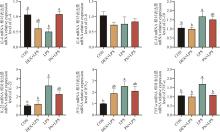
Fig.6
Effect of stem and leaf extracts of Panax notoginseng on expression levels of genes related to colonic inflammation in weaned piglets"

| [1] | 伍昊文,李嘉诚,李毅臻,等.三七总皂苷联合沙棘多糖对小鼠降血脂和保肝作用的研究[J].华夏医学,2023,36(3):37-40. |
| WU H W,LI J C,LI Y Z,et al.Study of Panax notoginseng saponins combined with seabuckthorn polysaccharide on blood lipid and hepatoprotective effect in mice[J].Acta Medicinae Sinica,2023,36(3):37-40.(in Chinese) | |
| [2] | 余慧芳,肖海燕,谢皓辰,等.三七茎叶总皂苷促血管新生抗缺血性脑卒中的作用机制[J].中草药,2024,55(14):4735-4746. |
| YU H F,XIAO H Y,XIE H C,et al.Mechanism of total saponins in stems and leaves of Panax notoginseng on promoting angiogenesis and preventing ischemic stroke[J].Chinese Traditional and Herbal Drugs,2024,55(14):4735-4746.(in Chinese) | |
| [3] | 刘耀晨,张铁军,郭海彪,等.三七的研究进展及其质量标志物预测分析[J].中草药,2021,52(9):2733-2745. |
| LIU Y C,ZHANG T J,GUO H B,et al.Research progress on notoginseng Radix et Rhizoma and predictive analysis on its Q-Marker[J].Chinese Traditional and Herbal Drugs,2021,52(9):2733-2745.(in Chinese) | |
| [4] | 李秋雨,边丽华,王晓玫,等.不同商品规格三七止血功效的谱效关系研究[J].中国中药杂志,2021,46(16):4157-4166. |
| LI Q Y,BIAN L H,WANG X M,et al.Spectrum-effect relationship of hemostatic effects of Notoginseng Radix et Rhizoma with different commodity specifications[J].China Journal of Chinese Materia Medica,2021,46(16):4157-4166.(in Chinese) | |
| [5] | 查雨锋,詹 易,李 婷,等.三七不同部位提取物体外抗氧化功效研究[J].中医学报,2022,37(1):142-148. |
| ZHA Y F,ZHAN Y,LI T,et al.Study on antioxidant effect of extracts from different parts of Sanqi(Radix notoginseng) in vitro [J].Acta Chinese Medicine,2022,37(1):142-148.(in Chinese) | |
| [6] | LIU J C,WU Y H,MA W R,et al.Anti-inflammatory activity of Panax notoginseng flower saponins quantified using LC/MS/MS[J].Molecules,2023,28(5):2416. |
| [7] | HU Y,FAN Q,QIAO B,et al.Alleviatory role of Panax notoginseng saponins in modulating inflammation and pulmonary vascular remodeling in chronic obstructive pulmonary disease:mechanisms and implications[J].COPD,2024,21(1):2329282. |
| [8] | MEN S Y,HUO Q L,SHI L,et al.Panax notoginseng saponins promotes cutaneous wound healing and suppresses scar formation in mice[J].J Cosmet Dermatol,2020,19(2):529-534. |
| [9] | SHIN N R,BOSE S,CHOI Y,et al.Anti-obesity effect of fermented Panax notoginseng is mediated via modulation of appetite and gut microbial population[J].Front Pharmacol,2021,12:665881. |
| [10] | HUAN C C,ZHOU Z Y,YAO J T,et al.The antiviral effect of Panax notoginseng polysaccharides by inhibiting PRV adsorption and replication in vitro [J].Molecules,2022,27(4):1254. |
| [11] | 黄朝蓉,杨兆祥.三七茎叶中皂苷成分及药理作用研究进展[J].中国民族民间医药,2022,31(23):51-58,82. |
| HUANG C R,YANG Z X.Advances in studies on constituents and pharmacological effects of saponins in stem leaves of Panax notoginseng[J].Chinese Journal of Ethnomedicine and Ethnopharmacy,2022,31(23):51-58,82.(in Chinese) | |
| [12] | 朱秀丽,皇甫磊落,陈日平.超声技术在中草药提取中的应用[J].西安文理学院学报(自然科学版),2007(2):33-36. |
| ZHU X L,HUANGFU L L,CHEN R P.Application of ultrasonic technology in the extraction of Chinese herbal medicine[J].Journal of Xi’an University(Natural Science Edition),2007(2):33-36.(in Chinese) | |
| [13] | SASAKI Y,HAYASHI Y,MURANO S,et al.Quantitative relationship between the number of cross-fostering piglets and subsequent productivity of sows on commercial swine farms[J].Anim Sci J,2022,93(1):e13752. |
| [14] | TAO S Y,ZOU H C,LI J J,et al.Landscapes of enteric virome signatures in early-weaned piglets[J].Microbiol Spectr,2022,10(4):e0169822. |
| [15] | 王振勇,王 丹,王云凌,等.新型教槽料对断奶仔猪生长性能、血清生化指标及粪便微生物的影响[J].饲料工业,2019,40(16):17-21. |
| WANG Z Y,WANG D,WANG Y L,et al.Effects of a new creep feed on growth performance,serum biochemical index and fecal microorganism in weaning piglets [J].Feed Industry,2019,40(16):17-21.(in Chinese) | |
| [16] | IPEMA A F,GERRITS W J J,BOKKERS E A M,et al.Assessing the effectiveness of providing live black soldier fly larvae (Hermetia illucens) to ease the weaning transition of piglets[J].Front Vet Sci,2022,9:838018. |
| [17] | BIN P,TANG Z Y,LIU S J,et al.Intestinal microbiota mediates Enterotoxigenic Escherichia coli-induced diarrhea in piglets[J].BMC Vet Res,2018,14:385. |
| [18] | GUEST R L,RUTHERFORD S T,SILHAVY T J.Border control:regulating LPS biogenesis[J].Trends Microbiol,2021,29(4):334-345. |
| [19] | GALANOS C,FREUDENBERG M A.Mechanisms of endotoxin shock and endotoxin hypersensitivity[J].Immunobiology,1993,187(3-5):346-356. |
| [20] | 徐焘杰.三七茎叶对杜藏猪生长性能及肠道微生物区系的影响[D].昆明:云南农业大学,2023. |
| XU T J.The effect of Panax notoginseng stems and leaves on growth performance and gut microbiota of Duzang pigs [D].Kunming:Yunnan Agricultural University,2023.(in Chinese) | |
| [21] | 张德东.三七茎叶皂苷的生物转化与转化产物的化学研究[D].沈阳:辽宁中医药大学,2009. |
| ZHANG D D.Biotransformation of saponins from the stems and leaves of Panax notoginseng and chemical studies of transformation products [D].Shenyang:Liaoning University of Traditional Chinese Medicine,2009.(in Chinese) | |
| [22] | 陈红惠,BELWAL T,李刚凤,等.表面活性剂协同超声波酶法提取三七花总皂苷工艺优化及抗氧化活性研究[J].食品与发酵工业,2020,46(20):178-186. |
| CHEN H H,BELWAL T,LI G F.Enzymolysis-ultrasound-assisted surfactant extraction and antioxidant activity of saponins from Panax notoginseng flowers [J].Food and Fermentation Industries,2020,46(20):178-186.(in Chinese) | |
| [23] | GUO Y X,CHEN X F,GONG P,et al.The gut-organ-axis concept:advances the application of gut-on-chip technology[J].Int J Mol Sci,2023,24(4):4089. |
| [24] | WANG Z W,XIE N,LIANG X R,et al.Gut mechanoimmunology:shaping immune response through physical cues[J].Phys Life Rev,2024,50:13-26. |
| [25] | OKUMURA R,TAKEDA K.Roles of intestinal epithelial cells in the maintenance of gut homeostasis[J].Exp Mol Med,2017,49(5):e338. |
| [26] | HAN X B,HU X D,JIN W,et al.Dietary nutrition,intestinal microbiota dysbiosis and post-weaning diarrhea in piglets[J].Anim Nutr,2024,17:188-207. |
| [27] | 张自龙,熊敏琪,崔金刚,等.三七总皂苷抑制动脉粥样硬化与改善肠道屏障完整性的作用研究[J].世界科学技术-中医药现代化,2024,26(2):390-399. |
| ZHANG Z L,XIONG M Q,CUI J G,et al.Effect of Panax notoginseng saponins on inhibiting atherosclerosis and improving intestinal barrier integrity [J].Modernization of Traditional Chinese Medicine and Materia Medica-World Science and Technology,2024,26(2):390-399.(in Chinese) | |
| [28] | HU Y Y,LI Y C,ZHU H D,et al.In vitro suppression of porcine epidemic diarrhea virus by Panax notoginseng saponins:assessing antiviral potential[J].Arch Virol,2024,169(5):89. |
| [29] | 王 丽.肠道菌群介导三七皂苷抗炎症性肠病药效及作用机制研究[D].长沙:中南大学,2022. |
| WANG L.Effects and mechanism on anti-inflammatory bowel disease of Panax notoginseng saponins mediated by gut microbiota [D].Changsha:Central South University,2022.(in Chinese) | |
| [30] | AHMED H S.The impact of Prevotella on neurobiology in aging:deciphering dendritic cell activity and inflammatory dynamics[J].Mol Neurobiol,2024,61(11):9240-9251. |
| [31] | ABDUGHENI R,WANG W Z,WANG Y J,et al.Metabolite profiling of human-originated Lachnospiraceae at the strain level[J].iMeta,2022,1(4):e58. |
| [32] | 郭 玺,刘盼茹,唐乙朝,等.三七皂苷成分及临床药理作用研究进展[J].南京中医药大学学报,2024,40(9):985-992. |
| GUO X,LIU P R,TANG Y Z,et al.Research progress on the components and clinical pharmacological effects of Panax notoginseng saponin[J].Journal of Nanjing University of Traditional Chinese Medicine,2024,40(9):985-992.(in Chinese) | |
| [33] | YI L,ZHU J,LI Q,et al.Panax notoginseng stems and leaves affect microbial community and function in cecum of duzang pigs[J].Transl Anim Sci,2024,8:txad142. |
| [34] | 夏金凤,陈 影,杨万松,等.三七总皂苷和马齿苋多糖合用的抗炎功效评价[J].香料香精化妆品,2024,(2):89-93. |
| XIA J F,CHEN Y,YANG W S,et al.Anti-inflammatory effect of Panax notoginseng saponins combined with Portulaca Oleracea polysaccharide [J].Flavour Fragrance Cosmetics,2024,(2):89-93.(in Chinese) | |
| [35] | MELGRATI S,SOZZANI S,THELEN M.Editorial:insights in cytokines and soluble mediators in immunity:2022[J].Front Immunol,2023,14:1194553. |
| [36] | LIU C Y,TAM S S,HUANG Y,et al.TNF receptor 1 promotes early-life immunity and protects against colitis in mice[J].Cell Rep,2020,33(3):108275. |
| [37] | CELIK M O,LABUZ D,KEYE J,et al.IL-4 induces M2 macrophages to produce sustained analgesia via opioids[J].JCI Insight,2020,5(4):e133093. |
| [38] | 胡 溪,高 智,冯 立,等.基于“肠-肾轴”理论探究益肾排毒方加三七对肾衰竭血清瘦素、血脂、氧化应激及内皮功能的影响[J/OL].中华中医药学刊,1-11[2025-03-14].http://kns.cnki.net/kcms/detail/21.1546.R.20240902.1724.005.html. |
| HU X,GAO Z,FENG L,et al.Exploring the effect of Yishen Paidu formula plus Sanqi on serum leptin,lipids,oxidative stress,and endothelial function in renal failure based on the theory of "intestinal kidney axis" [J/OL].Chinese Archives of Traditional Chinese Medicine:1-11.[2025-03-14].http://kns.cnki.net/kcms/detail/21.1546.R.20240902.1724.005.html.(in Chinese) |
| [1] | MENG Yunlong, DENG Yuankun, TAN Bi’e, WANG Jing. Research Progress on Tryptophan Metabolites in Alleviating Intestinal Oxidative Stress [J]. Acta Veterinaria et Zootechnica Sinica, 2026, 57(1): 46-57. |
| [2] | PAN Yandi, ZHANG Tingting, FANG Rendong, PENG Lianci. Research Progress on the Mechanism of Host Defense Peptides against Microorganisms [J]. Acta Veterinaria et Zootechnica Sinica, 2025, 56(9): 4294-4302. |
| [3] | MAI Yanqi, SUN Xiaozheng, LIU Xiaoxuan, LIANG Xinglan, HUANG Ying, WU Xiaojuan, LIU Xiande, PEI Yechun. Analysis of the Preventive Effect of Recombinant E. coli Expressing rFel d 1 against Fel d 1-Induced Allergic Asthma [J]. Acta Veterinaria et Zootechnica Sinica, 2025, 56(9): 4529-4545. |
| [4] | ZHENG Yongjie, SUN Tongyu, HU Fengming, WEI Manlin, MA Tao. Research Progress on the Manipulation of Performance, Product Quality and Health Status of Ruminants by Resveratrol [J]. Acta Veterinaria et Zootechnica Sinica, 2025, 56(8): 3631-3639. |
| [5] | WEN Xue, XU Wanxue, FU Yitong, YANG Jie, FU Hongyu, FAN Ruifeng. Research Progress on the Relationship between Ferroptosis and Inflammation [J]. Acta Veterinaria et Zootechnica Sinica, 2025, 56(8): 3666-3677. |
| [6] | YUAN Yue, ZHOU Jianxu, LUO Xiaolin, GUAN Jiuqiang, AN Tianwu, ZHAO Hongwen, BAI Qin, REN Zili, ZHANG Xiangfei, ZHAO Yanling. Effect of Rumen-Protected Fat on Growth Performance, Serum Biochemistry and Slaughter Performance of Fattening Yaks [J]. Acta Veterinaria et Zootechnica Sinica, 2025, 56(8): 3849-3860. |
| [7] | MENG Yaxuan, LIU Yan, WANG Jing, CHEN Guoshun, FENG Tao. Effects of Glucosamine on Serum Anti-oxidation, Inflammatory Indexes and Intestinal Microbes in Weaned Piglets [J]. Acta Veterinaria et Zootechnica Sinica, 2025, 56(8): 3908-3921. |
| [8] | XIONG Pingwen, XU Chuanhui, AI Gaoxiang, JI Huayuan, HU Yan, CHEN Jiang, SONG Qiongli, SONG Wenjing, CHEN Xiaolian, CHEN Xiaolian, ZOU Zhiheng, CHEN Hehong. Effects of Golden Buckwheat Stem and Leaf Meal on Nutrient Apparent Digestibility, Serum Biochemical Indices, Fecal Microflora Composition of Gannan Tibetan Sows [J]. Acta Veterinaria et Zootechnica Sinica, 2025, 56(7): 3290-3304. |
| [9] | SUN Shujia, ZHENG Jiaqi, LU Shuwan, LIU Jinsong, YAO Chunlei, YANG Caimei, XU Yinglei, ZHANG Ruiqiang. Effects of Lactic Acid Bacteria on Growth Performance, Digestive Function and Nutrient Utilization of Yellow-feathered Broilers [J]. Acta Veterinaria et Zootechnica Sinica, 2025, 56(7): 3335-3343. |
| [10] | PENG Wenwen, ZHANG Meiting, XU Haocheng, XU Baoyang, ZHANG Lingling, YANG Caimei. Effects of Bacillus licheniformis on Immunity, Antioxidant Performance and Intestinal Health of Broiler Chickens Challenged by Escherichia coli [J]. Acta Veterinaria et Zootechnica Sinica, 2025, 56(7): 3344-3356. |
| [11] | LI Zhiqiang, CHEN Xueqing, ZHANG Yuanshu. Detection of Angiotensin Converting Enzyme 2 in Intestinal Tissues of Clinically Infected Porcine Epidemic Diarrhea Virus Piglets and Analysis of Its Relationship with Intestinal Pathological Changes [J]. Acta Veterinaria et Zootechnica Sinica, 2025, 56(7): 3463-3473. |
| [12] | CHEN Yun, CHEN Liyuan, SONG Wenjing, ZHANG Xinke, XU Han, WU Jiayi, ZHAO Cuiyan, ZHANG Shouquan. Research Progress on the Mechanism of T-2 Toxin 's Impact on Male Animal Reproduction [J]. Acta Veterinaria et Zootechnica Sinica, 2025, 56(5): 2038-2046. |
| [13] | ZHU Yun, WANG Yuming, SUN Xiaoxiao, CHEN Hui, ZHAO Feng, XIE Jingjing, CHEN Yifan, SA Renna. Effect of the Addition of Corn Gluten Meal to Low-protein Diversified Diet on Growth Performance and Digestive Characteristics of White-feathered Broilers [J]. Acta Veterinaria et Zootechnica Sinica, 2025, 56(4): 1802-1812. |
| [14] | WU Xiuju, XIA Pei, LUO Yihao, LUO Jinwei, XUE Mengdi, KE Yanhang, LI Juan, LÜ Jingzhi. Effect of Dietary Lactulose Supplementation on Growth Performance, Serum Parameters and Meat Quality in Meat Rabbits [J]. Acta Veterinaria et Zootechnica Sinica, 2025, 56(4): 1813-1824. |
| [15] | QIU Qian, SANG Rui, WANG Wei, LIU Xinman, YU Minghong, LIU Xiaotong, YU Tian, ZHANG Xuemei. Study on the Activity of Huning Powder against Chicken Lung-derived E. coli and the in vitro Effects of Anti-inflammation and Anti-oxidation [J]. Acta Veterinaria et Zootechnica Sinica, 2025, 56(4): 1969-1980. |
| Viewed | ||||||
|
Full text |
|
|||||
|
Abstract |
|
|||||
