


Acta Veterinaria et Zootechnica Sinica ›› 2026, Vol. 57 ›› Issue (1): 392-400.doi: 10.11843/j.issn.0366-6964.2026.01.034
• PREVENTIVE VETERINARY MEDICINE • Previous Articles Next Articles
LUO Runbo1,2( ), WU Dan3, LI Kexin1,2, ZHONG Ya’nan1,2, SUOLANG Sizhu1,2, SHANG Peng1()
Received:2025-03-11
Online:2026-01-23
Published:2026-01-26
Contact:
SHANG Peng
E-mail:runboluo@163.com;nemoshpmh@126.com
CLC Number:
LUO Runbo, WU Dan, LI Kexin, ZHONG Ya’nan, SUOLANG Sizhu, SHANG Peng. Isolation and Drug Resistance Analysis of Clostridium perfringens from Tibetan Pigs[J]. Acta Veterinaria et Zootechnica Sinica, 2026, 57(1): 392-400.
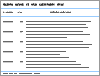
Table 1
Sample source information"
样品来源地 Sampling location | 采样时间 Sampling time | 区域标注 Regional annotation | 样品数量/头份 No. of samples |
|---|---|---|---|
林芝市波密县 Bomê County, Nyingchi City | 2021-10 | 地区1 Region 1 | 25 |
林芝市米林县 Mainling County, Nyingchi City | 2022-03 | 地区2 Region 2 | 38 |
林芝市工布江达县 Gongbu Jiangda County, Nyingchi City | 2022-06 | 地区3 Region 3 | 24 |
山南市曲松县 Qusum County, Shannan City | 2022-07 | 地区4 Region 4 | 27 |
山南市隆子县 Lhünzê County, Shannan City | 2022-08 | 地区5 Region 5 | 24 |
拉萨市墨竹工卡县 Maizhokunggar County, Lhasa City | 2022-12 | 地区6 Region 6 | 30 |
拉萨市当雄县 Damxung County, Lhasa City | 2023-03 | 地区7 Region 7 | 27 |
昌都市察雅县 Caiya County, Qamdo City | 2023-03 | 地区8 Region 8 | 56 |
昌都市芒康县 Markam County, Qamdo City | 2024-06 | 地区9 Region 9 | 22 |
合计 Total | — | — | 273 |
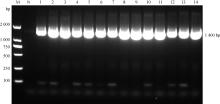
Fig.1
Gel Electrophoresis of PCR products of 16S rRNA gene of some isolated bacteriaM. DL 2000 DNA marker; N. Negative control; 1-14. Isolation of bacterial strains"
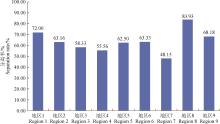
Fig.2
Isolation of Clostridium perfringens from Tibetan pigs in Xizang"
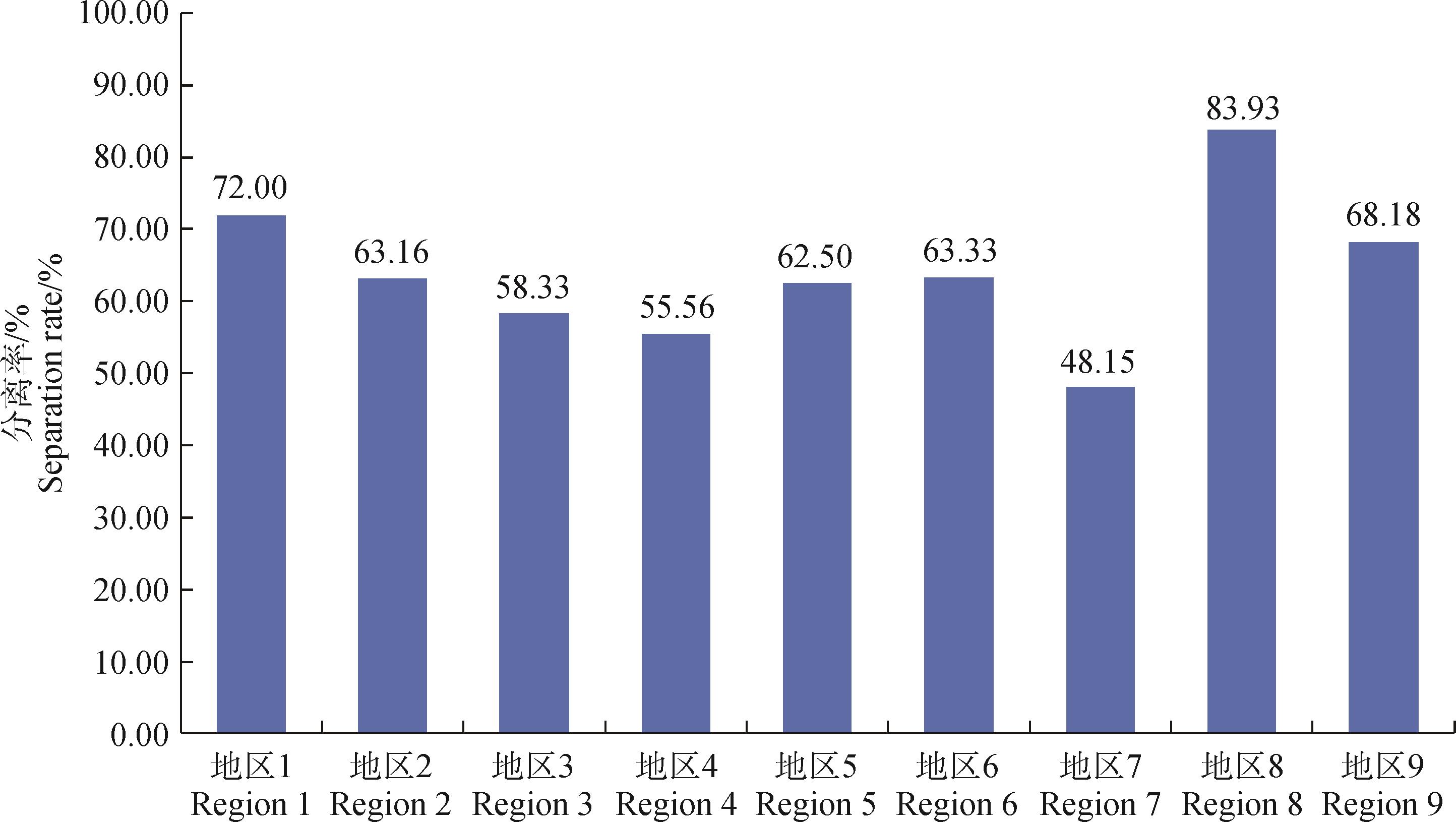
Fig.3
Distribution of Clostridium perfringens toxin types from Tibetan pigs in XizangA. The number of strains containing the cpb2 gene in each region; B. The number of strains containing only the cpa gene in each region"
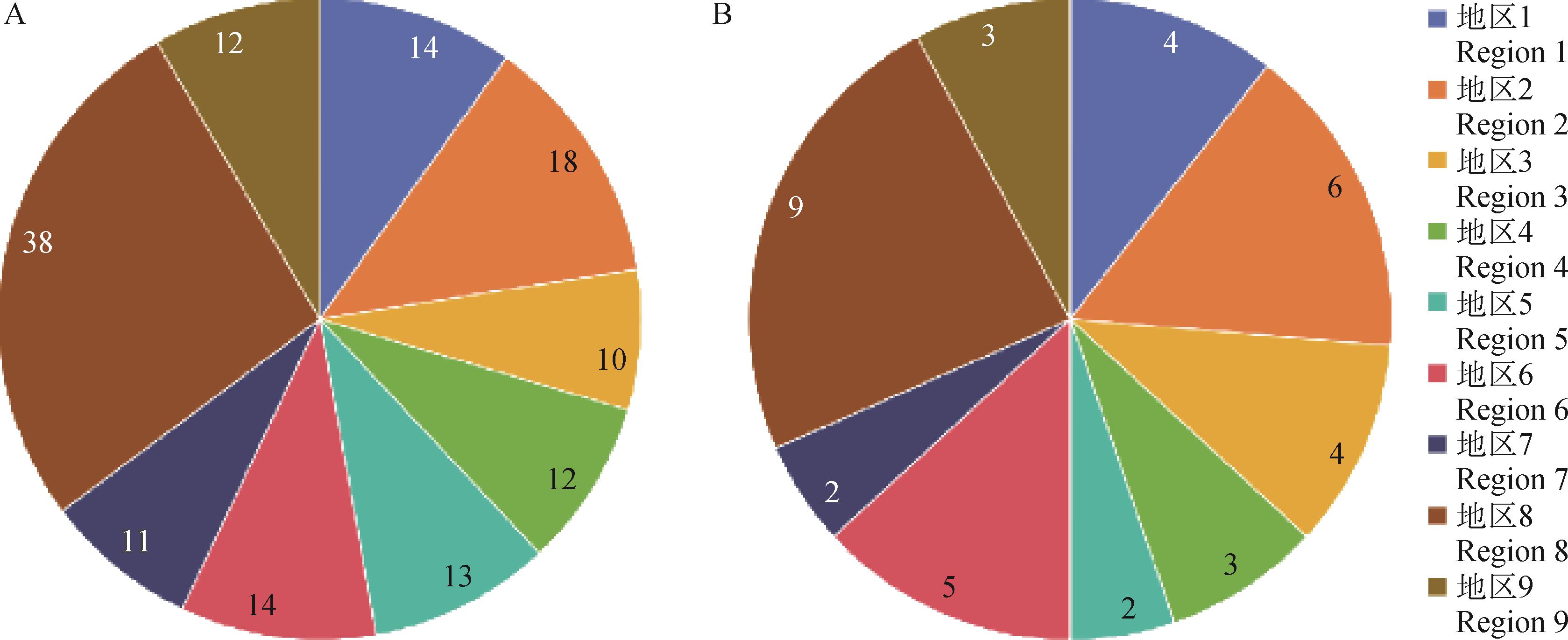
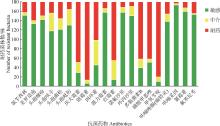
Fig.4
Drug sensitivity test of Clostridium perfringens isolated from Tibetan pigs in Xizang"

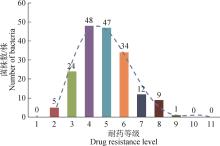
Fig.5
Multidrug resistance of Clostridium perfringens isolated from Tibetan pigs in Xizang"
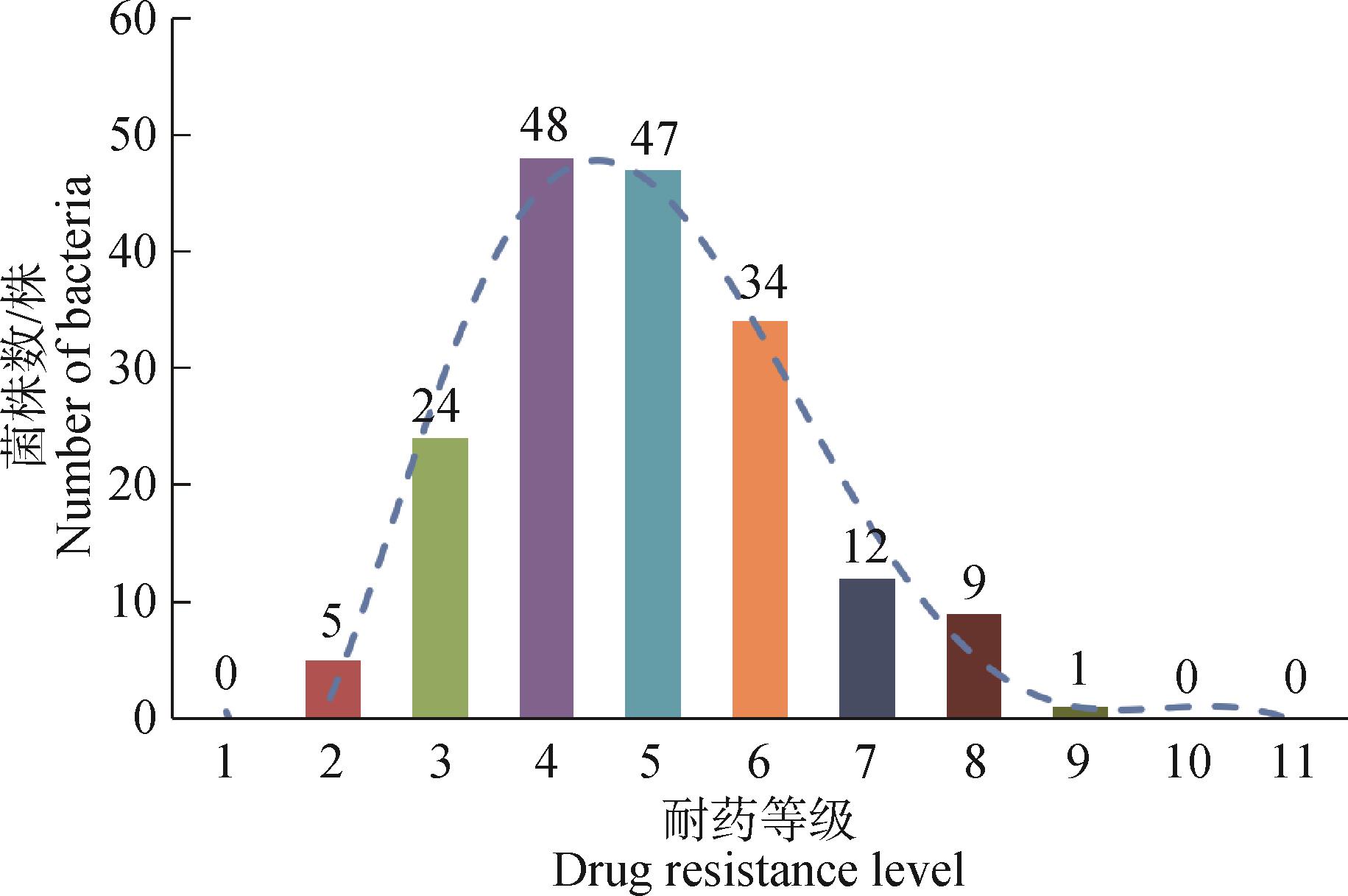
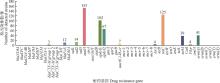
Fig.6
Detection of drug resistance genes of Clostridium perfringens isolated from Tibetan pigs in Xizang"
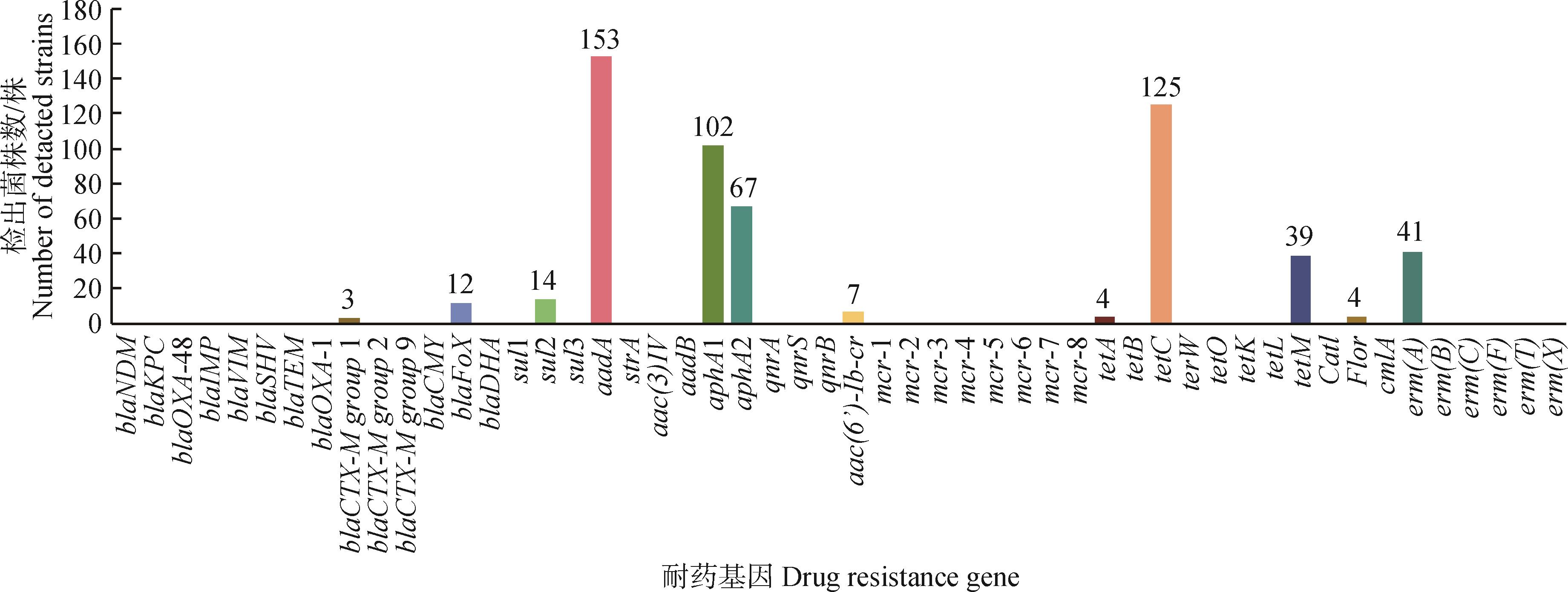
Table 2
Analysis of the correlation between drug resistance phenotypes and resistance genes"
抗生素类型 Types ofantibiotics | 耐药表型 Resistant phenotype | 耐药菌株数/株Number of drug-resistant bacteria | 耐药基因型 Drug resistance genotype | 含耐药基因菌株数/株 Number of bacterial strains containing resistance genes | 符合率/% Compliance rate/% |
|---|---|---|---|---|---|
β-内酰胺类 β-lactams | 氨苄西林+头孢噻吩+头孢呋辛+头孢曲松+头孢吡肟 | 151 | blaSHV+blaTEM+blaOXA-1+blaCTX-M group 1+blaCTX-M group +blaCTX-M group 9 | 3 | 1.99 |
碳青霉烯类 Carbapenems | 美罗培南 | 133 | blaNDM+blaKPC+blaOXA-48+blaIMP+blaVIM | 0 | 0 |
氨基糖苷类 Aminoglycosides | 庆大霉素+链霉素 | 35 | aadA+strA+aph(3')-III-F+aadB+aphA1+aphA2 | 153 | 22.88 |
| 四环素类Tetracyclines | 强力霉素+四环素 | 157 | tetA+tetB+tetC+terW+tetO+tetK+tetL+tetM | 125 | 79.62 |
| 大环内酯类Macrolides | 红霉素 | 34 | erm(A)+erm(B)+erm(C)+erm(F)+erm(T)+erm(X) | 41 | 82.93 |
| 喹诺酮类Quinolones | 环丙沙星+诺氟沙星 | 150 | qnrA+qnrS+qnrB+aac(6’)-Ib-cr | 7 | 4.67 |
| 磺胺类Sulfonamide class | 万古霉素+杆菌肽 | 51 | sul1+sul2+sul3 | 14 | 27.45 |
| 氯霉素类Chloramphenicol class | 氯霉素+氟苯尼考 | 159 | Catl+Flor+cmlA | 4 | 2.52 |
| [1] | ROOD J I,ADAMS V,LACEY J,et al.Expansion of the Clostridium perfringens toxin-based typing scheme[J].Anaerobe,2018,53:5-10. |
| [2] | 张 莹,孙忠祥,曾 艺.藏猪传统养殖系统及其农业文化遗产特征[J].古今农业,2023(3):113-120. |
| ZHANG Y,SUN Z X,ZENG Y.Traditional Tibetan pig breeding system and its agricultural heritage characteristics [J].Ancient and Modern Agriculture,2023(3):113-120.(in Chinese) | |
| [3] | 全国信息与文献标准化技术委员会.藏猪:GB/T 32763—2016[S].北京:中国标准出版社,2016. |
| National Technical Committee for Information and Documentation Standardization.Tibetan Pig:GB/T 32763—2016[S].Beijing:China Standard Press,2016.(in Chinese) | |
| [4] | 尹添柱,商振达,董 冰.藏猪肉风味特性及其形成途径研究进展[J].中国畜牧杂志,2023,59(12):49-55. |
| YIN T Z,SHANG Z D,DONG B.Research progress on the flavor characteristics and formation pathways of Tibetan pork [J].China Animal Husbandry Journal,2023,59(12):49-55.(in Chinese) | |
| [5] | 吴 丹,罗润波,黄家旗,等.青海玉树牦牛源产气荚膜梭菌的分离鉴定及耐药性研究[J].中国兽医学报,2022,42(3):522-528. |
| WU D,LUO R B,HUANG J Q,et al.Isolation,identification,and drug resistance study of Clostridium perfringens from yak in Yushu,Qinghai[J].China Journal of Veterinary Medicine,2022,42(3):522-528.(in Chinese) | |
| [6] | 吴 丹,黄家旗,罗润波,等.牦牛源C型产气荚膜梭菌动物致病性及其β毒素基因生物信息分析[J].中国兽医学报,2022,42(6):1184-1193. |
| WU D,HUANG J Q,LUO R B,et al.Animal pathogenicity of Clostridium perfringens type C from Panniau and bioinformatics analysis of its β toxin gene [J].China Journal of Veterinary Medicine,2022,42(6):1184-1193.(in Chinese) | |
| [7] | 孙长贵,成 军.NCCLS抗菌药物敏感性试验执行标准第14版信息增刊更新内容介绍:2004年浙江省检验医学学术会议[C].中国浙江杭州,2004. |
| SUN C G,CHENG J.NCCLS antibiotic sensitivity testing implementation standard,14th edition information supplement update:2004 Zhejiang Provincial Conference on Laboratory Medicine[C].Hangzhou,Zhejiang,China,2004.(in Chinese) | |
| [8] | POIREL L,WALSH T R,CUVILLIER V,et al.Multiplex PCR for detection of acquired carbapenemase genes[J].Diagn Microbiol Infect Dis,2011,70(1):119-123. |
| [9] | DALLENNE C,COSTA A D,DECRÉ D,et al.Development of a set of multiplex PCR assays for the detection of genes encoding important beta-lactamases in Enterobacteriaceae[J].J Antimicrob Chemother,2010,65(3):490-495. |
| [10] | KOZAK G K,BOERLIN P,JANECKO N,et al.Antimicrobial resistance in Escherichia coli isolates from swine and wild small mammals in the proximity of swine farms and in natural environments in Ontario,Canada[J].Appl Environ Microbiol,2009,75(3):559-566. |
| [11] | CATTOIR V,POIREL L,ROTIMI V,et al.Multiplex PCR for detection of plasmid-mediated quinolone resistance qnr genes in ESBL-producing enterobacterial isolates[J].J Antimicrob Chemother,2007,60(2):394-397. |
| [12] | CATTOIR V,WEILL F X,POIREL L,et al.Prevalence of qnr genes in Salmonella in France[J].J Antimicrob Chemother,2007,59(4):751-754. |
| [13] | REBELO A R,BORTOLAIA V,KJELDGAARD J S,et al.Multiplex PCR for detection of plasmid-mediated colistin resistance determinants,mcr-1,mcr-2,mcr-3,mcr-4 and mcr-5 for surveillance purposes[J].Euro Surveill,2018,23(6):17-00672. |
| [14] | YANG F,SHEN C,ZHENG X,et al.Plasmid-mediated colistin resistance gene mcr-1 in Escherichia coli and Klebsiella pneumoniae isolated from market retail fruits in Guangzhou,China[J].Infect Drug Resist,2019,12:385-389. |
| [15] | WANG W,YU L,HAO W,et al.Multi-locus sequence typing and drug resistance analysis of swine origin Escherichia coli in Shandong of China and its potential risk on public health[J].Front Public Health,2021,9:780700. |
| [16] | AMINOV R I,GARRIGUES-JEANJEAN N,MACKIE R I.Molecular ecology of tetracycline resistance:development and validation of primers for detection of tetracycline resistance genes encoding ribosomal protection proteins[J].Appl Environ Microbiol,2001,67(1):22-32. |
| [17] | GIOVANETTI E,BRENCIANI A,LUPIDI R,et al.Presence of the tet(O) gene in erythromycin- and tetracycline-resistant strains of Streptococcus pyogenes and linkage with either the mef(A) or the erm(A) gene[J].Antimicrob Agents Chemother,2003,47(9):2844-2849. |
| [18] | 杨 鑫.细菌氯霉素类药物耐药基因三重PCR检测试剂盒研究与应用[D].成都:四川农业大学,2008. |
| YANG X.Research and application of a triple pcr detection kit for bacterial chloramphenicol resistance genes [D].Chengdu:Sichuan Agricultural University,2008.(in Chinese) | |
| [19] | CHEN J,YU Z,MICHEL F J,et al.Development and application of real-time PCR assays for quantification of erm genes conferring resistance to macrolides-lincosamides-streptogramin B in livestock manure and manure management systems[J].Appl Environ Microbiol,2007,73(14):4407-4416. |
| [20] | JIANG H,CHENG H,LIANG Y,et al.Diverse mobile genetic elements and conjugal transferability of sulfonamide resistance genes (sul1,sul2,and sul3) in Escherichia coli isolates from Penaeus vannamei and pork from large markets in Zhejiang,China[J].Front Microbiol,2019,10:1787. |
| [21] | 扎西旺堆,王辰龙,柳 泉,等.加查县3株藏猪源产气荚膜梭菌的分离鉴定及耐药性研究[J].甘肃畜牧兽医,2023,53(5):89-92. |
| ZHAXI W D,WANG C L,LIU Q,et al.Isolation,identification,and drug resistance study of Clostridium perfringens from three Tibetan pig sources in Jiacha County [J].Gansu Animal Husbandry and Veterinary Medicine,2023,53(5):89-92.(in Chinese) | |
| [22] | CHAN G,FARZAN A,SOLTES G,et al.The epidemiology of Clostridium perfringens type A on Ontario swine farms,with special reference to cpb2-positive isolates[J].BMC Vet Res,2012,8:156. |
| [23] | LEE K E,LIM S I,SHIN S H,et al.Distribution of Clostridium perfringens isolates from piglets in South Korea[J].J Vet Med Sci,2014,76(5):745-749. |
| [24] | 张汉云,冯 琪,蓝国文,等.我国部分地区猪产气荚膜梭菌流行病学调查及毒素型分析[J].养猪,2022(1):121-124. |
| ZHANG H Y,FENG Q,LAN G W,et al.Epidemiological investigation and toxin type analysis of Clostridium perfringens in pig production in some regions of China [J].Pigs,2022(01):121-124.(in Chinese) | |
| [25] | FARZAN A,KIRCANSKI J,DELAY J,et al.An investigation into the association between cpb2-encoding Clostridium perfringens type A and diarrhea in neonatal piglets[J].Can J Vet Res,2013,77(1):45-53. |
| [26] | 孙娅莉.仔猪galectins基因的组织分布及断乳前后其在胃肠道表达差异研究[D].郑州:河南农业大学,2010. |
| SUN Y L.Study on the tissue distribution of porcine galectins and their expression differences in the gastrointestinal tract before and after weaning[D].Zhengzhou:Henan Agricultural University,2010.(in Chinese) | |
| [27] | 周 姣,刘宝生,韩春生,等.江西地区仔猪肠道A型产气荚膜梭菌的分离及其β_2毒素的研究[J].中国预防兽医学报,2018,40(2):101-105. |
| ZHOU J,LIU B S,HAN C S,et al.Isolation of Clostridium perfringens type A in piglets’ intestines in Jiangxi region and its β_2 toxin research [J].China Journal of Preventive Veterinary Medicine,2018,40(2):101-105.(in Chinese) | |
| [28] | 张锦华,戴益民,周 姣,等.猪源携带β2毒素A型产气荚膜梭菌全基因组序列分析:中国畜牧兽医学会兽医公共卫生学分会第六次学术研讨会[C].中国新疆乌鲁木齐,2018. |
| ZHANG J H,DAI Y M,ZHOU J,et al.Whole genome sequence analysis of pig-derived Clostridium perfringens type A toxin β2[C].Urumqi,Xinjiang,China:The 6th Academic Symposium of the Veterinary Public Health Branch of the China Society of Animal Husbandry and Veterinary Medicine,2018.(in Chinese) | |
| [29] | ALLAART J G,van ASTEN A J,GRONE A.Predisposing factors and prevention of Clostridium perfringens-associated enteritis[J].Comp Immunol Microbiol Infect Dis,2013,36(5):449-464. |
| [30] | SCHAFER K,ZIMMERMANN W,POSTHAUS H.Possible influence of herd health management and hygiene on the in-herd prevalence of Clostridium perfringens type C in pig breeding farms[J].Schweiz Arch Tierheilkd,2013,155(9):520-522. |
| [31] | DORS A,CZYZEWSKA-DORS E,WASYL D,et al.Prevalence and factors associated with the occurrence of bacterial enteropathogens in suckling piglets in farrow-to-finish herds[J].Vet Rec,2016,179(23):598. |
| [1] | YANG Xin, WANG Shaoyu, TONG Chang, PENG Zhitao, CAI Shenghuang, HUANG Junxiong, XU Jiaojiao, WEN Xin, WU Yinbao. Research Progress on the Horizontal Gene Transfer of Antibiotic Resistance Genes from Livestock and Poultry Manure [J]. Acta Veterinaria et Zootechnica Sinica, 2025, 56(9): 4279-4293. |
| [2] | ZHAO Huiyu, LEI Yinuo, XING Qianru, ZHANG Shan, ZHANG Guangzhi, JIANG Hui, SHEN Qingchun, DING Jiabo, JIANG Shijin, FAN Xuezheng. Preparation of Clostridium perfringens α Toxin-ferritin Nanoparticle Antigens and Evaluation of Its Immunogenicity in Mice [J]. Acta Veterinaria et Zootechnica Sinica, 2025, 56(9): 4626-4637. |
| [3] | ZENG Shengxin, SONG Chengqi, SHEN Kaiyuan, HAO Guoxin, WANG Yakun, WANG Xin, WANG Xiaoxu, LIU Zhijie, LIU Yongbo, LIU Yongsheng, YANG Shunli, FU Zhixin. Isolation, Identification of a Deer Clostridium perfringens and Pathogenicity Analysis in Mouse [J]. Acta Veterinaria et Zootechnica Sinica, 2025, 56(8): 3976-3984. |
| [4] | ZHAO Qiuyun, SHEN Huanjun, SONG Houhui, JIANG Hongxia, XU Chenggang. Isolation and Characterization of Salmonella Phage P1-CTX Carrying blaCTX-M-27 [J]. Acta Veterinaria et Zootechnica Sinica, 2025, 56(7): 3519-3527. |
| [5] | LIU Siqi, YANG Zhen, YANG Yanan, CAI Yuan, ZHAO Shengguo. The Effect of Interfering with AdiopR2 on the Thermogenesis of Subcutaneous Inguinal Adipocytes in Tibetan Pigs [J]. Acta Veterinaria et Zootechnica Sinica, 2025, 56(6): 2649-2660. |
| [6] | JIA Qiong, GAO Shuaipeng, XIU Yanyu, REN Hongrui, ZHANG Shuyin, YANG Haoyu, FAN Ruiwen. Establishment of Double-antibody Sandwich ELISA Method Based on the Specifiec Nanobody against Clostridium Perfringens β Toxin [J]. Acta Veterinaria et Zootechnica Sinica, 2025, 56(6): 2906-2916. |
| [7] | YAO Boyuan, YANG Zhiwen, SUN Yapeng, YANG Yanan, ZHANG Yaru, WANG Xinrong. Analysis of Novel Transcripts, Alternative Splicing, and SNP in Porcine Heart Tissue Based on RNA-Seq Technology [J]. Acta Veterinaria et Zootechnica Sinica, 2025, 56(4): 1664-1675. |
| [8] | TAN Juanjuan, YANG Beiying, WU Qianyue, HUA Huiying, CAO Huabin, YAN Hui, ZHANG Jinhua. Diversity Analysis of Wild Boar Flora in Jiangxi Region and the Isolation and Identification of Clostridium perfringens Carried by Wild Boar [J]. Acta Veterinaria et Zootechnica Sinica, 2025, 56(4): 1876-1886. |
| [9] | ZHAO Wanyue, XU Xiaowen, CHANG Shushu, XIANG Zhijie, GUO Aizhen, CHEN Yingyu. Epidemiologic Investigation of the Major Viruses of the Bovine Respiratory Disease Complex [J]. Acta Veterinaria et Zootechnica Sinica, 2025, 56(3): 1324-1335. |
| [10] | FAN Jie, TAI Yirun, ZHU Yanli, CHEN Zhixiong, HU Qiaoyun, CHEN Zhi, LIU Tiantian, LI Xin, FAN Zhongxin, GE Meng. Investigation of Porcine Circovirus 2 Infection Status and Analysis of Genetic Evolution in Hunan Province in Recent Years [J]. Acta Veterinaria et Zootechnica Sinica, 2025, 56(3): 1376-1385. |
| [11] | WANG Mengyao, ZHANG Zhi, WU Chunlin, SHI Zhiyu, SUN Xueqiang, YAO Huochun, PAN Zihao. Isolation, Characterization and Bioinformatics Analysis of Clostridium perfringens of Bovine Origin [J]. Acta Veterinaria et Zootechnica Sinica, 2025, 56(10): 5159-5169. |
| [12] | WU Xi, ZHANG Xiangfeng, LI Haiyang, LUO Lü, WEI Mingbang, ZHANG Hui, YE Yourong, SHANG Peng. Detection and Analysis of Antibiotic Resistance and Resistance Genes in Escherichia coli from Tibetan Pigs in Xizang [J]. Acta Veterinaria et Zootechnica Sinica, 2025, 56(10): 5212-5221. |
| [13] | Sihan ZHOU, Tianen LI, Jinhua DENG, Hongchao SUN, Wenchao YAN, Tuanyuan SHI, Tianqi WANG. Investigation and Analysis on Infection of Chicken Coccidia in Some Regions of Zhejiang Province [J]. Acta Veterinaria et Zootechnica Sinica, 2024, 55(6): 2629-2640. |
| [14] | SUN Wenli, WANG Haoqi, ZE Licuo, GAO Yufan, ZHANG Feifan, ZHANG Jian, DUAN Mengqi, SHANG Peng, QIANG Bayangzong. Polymorphism of Pro-Inflammatory Factors (IL-1β, IL-6, TNF-α) in Tibetan Pigs and Its Association Analysis with Immune Traits [J]. Acta Veterinaria et Zootechnica Sinica, 2024, 55(5): 1958-1969. |
| [15] | TIAN Rui, XU Sixiang, XIE Feng, LIU Guangjin, WANG Gang, LI Qingxia, DAI Lei, XIE Guoxin, ZHANG Qiongwen, LU Yajing, WANG Guangwen, WANG Jinxiu, ZHANG Wei. Bioinformatics Analysis of the Genome of Clostridium perfringens Isolated from Cattle [J]. Acta Veterinaria et Zootechnica Sinica, 2024, 55(4): 1707-1715. |
| Viewed | ||||||
|
Full text |
|
|||||
|
Abstract |
|
|||||
