


Acta Veterinaria et Zootechnica Sinica ›› 2026, Vol. 57 ›› Issue (1): 500-512.doi: 10.11843/j.issn.0366-6964.2026.01.044
• CLINICAL VETERINARY MEDICINE • Previous Articles Next Articles
DING Tao1,2( ), MIAO Yuhang1,2, XIN Jie1,2, MA Wenyan1,2, FU Huailin3, HU Jumei4, DU Jun1,2()
Received:2025-01-20
Online:2026-01-23
Published:2026-01-26
Contact:
DU Jun
E-mail:taoding113@163.com;dujun@nxu.edu.cn
CLC Number:
DING Tao, MIAO Yuhang, XIN Jie, MA Wenyan, FU Huailin, HU Jumei, DU Jun. Analysis of the Anti-inflammatory Mechanism of Portulaca oleracea L. on Mastitis in Dairy Cows Based on Network Pharmacology and Molecular Docking Technology[J]. Acta Veterinaria et Zootechnica Sinica, 2026, 57(1): 500-512.
Table 1
qRT-PCR primer sequences"
基因 Gene | 正向引物(5′→3′) Forward primer | 反向引物(5′→3′) Reverse primer |
|---|---|---|
| β-actin | CGTCCGTGACATCAAGGAGAAGC | GGAACCGCTCATTGCCGATGG |
| IL-17A | AGTCTGGTGGCTCTTGTGAAGG | CATGCTGCGGGAAGTTCTTGTC |
| IL-17RA | CTTACAGACGCCAATGAAGGTGAG | CTCCTCGTGCCGCCTGAC |
| Act1 | TCCTCCGCCTGCCTCTCC | TCTCACAGCCGACACATAGCC |
| TRAF6 | GGAGGCTGGCAGGCTGAAG | GGTGGTGGCAGTGAGGAGAC |
| ALB | GTGTTCTCTGCTTGACCTGATGTG | GGTGTAACGAACTATGAGCCTGTAAC |
| MMP9 | AAGCGTGATTGTGAAGACCATACTC | GAAGTGATCCTGGCAGAAGTAAGC |
| IL-1β | ATGAAGAGCTGCATCCAACACCTG | ACCGACACCACCTGCCTGAAG |
| TNF-α | CTGGCGGAGGAGGTGCTCTC | GGAGGAAGGAGAAGAGGCTGAGG |
| IL-6 | CACTGACCTGCTGGAGAAGATGC | CCGAATAGCTCTCAGGCTGAACTG |
| IL-8 | ACACATTCCACACCTTTCCAC | ACCTTCTGCACCCACTTTTC |
| IL-10 | GGACCAACTGCACAGCTT | GTGGCATCACCTCTTCCA |
| IFN-γ | GGCAGCTAACCTAAGCAAGA | CAAAGTAGTGGCTCAGAATCC |
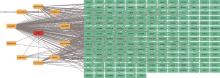
Fig.1
Active component-potential target map of Portulaca oleraceaMCX is up to the standard of POL. The yellow part is the 10 main active ingredients of POL, and the green part is the target of the 10 main active ingredients"
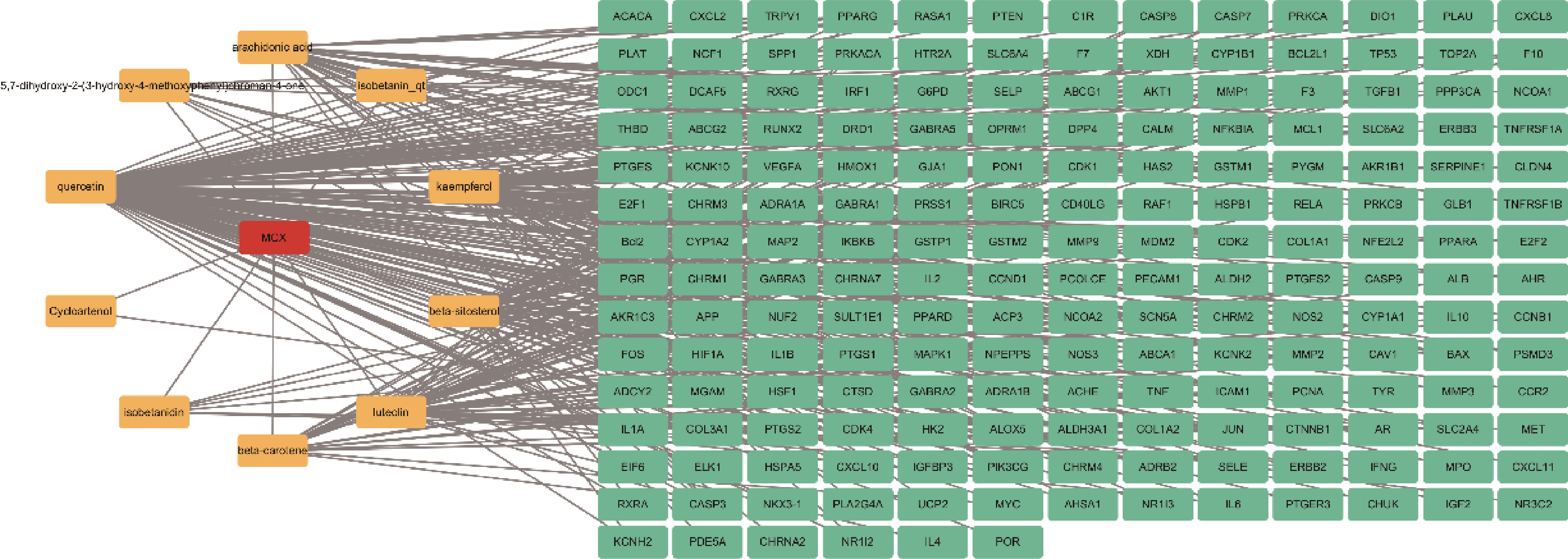
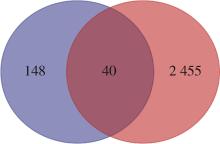
Fig.2
Venn diagram of the intersection of the active ingredient target of Portulaca oleracea and the target of cow mastitisThe blue region is an effective target for the active ingredients of purslane, the orange region is all the targets contained in the disease database, and the intersection region of the two colors is the predictive target of purslane for inhibiting mastitis in dairy cows"
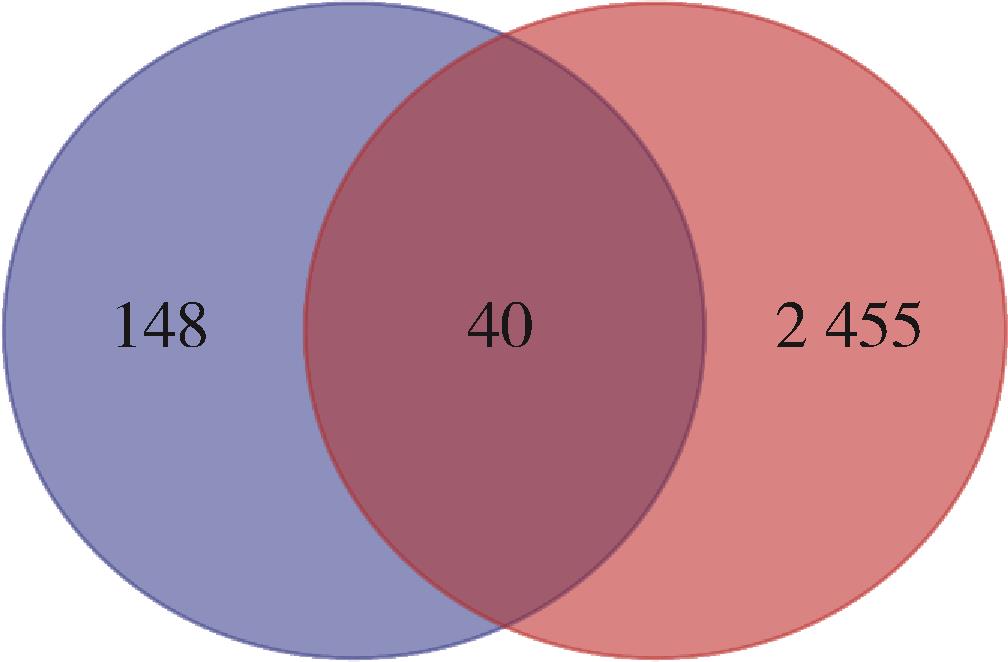
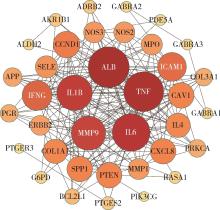
Fig.3
Target map of main components of Portulaca oleracea inhibiting mastitis in dairy cows"
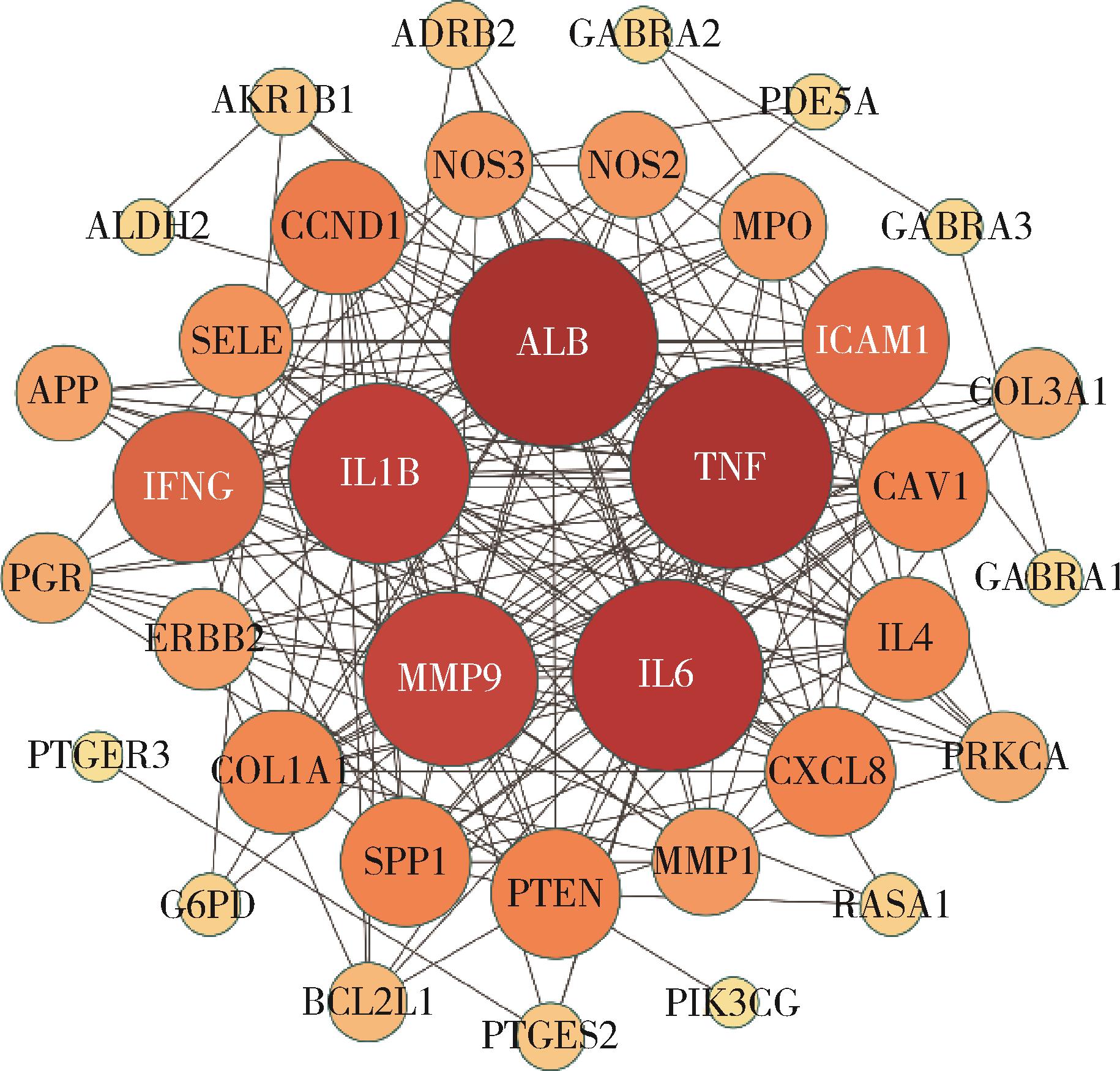
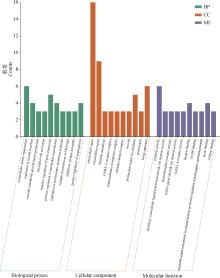
Fig.4
GO function annotation"

Fig.5
KEGG pathway enrichment analysis"
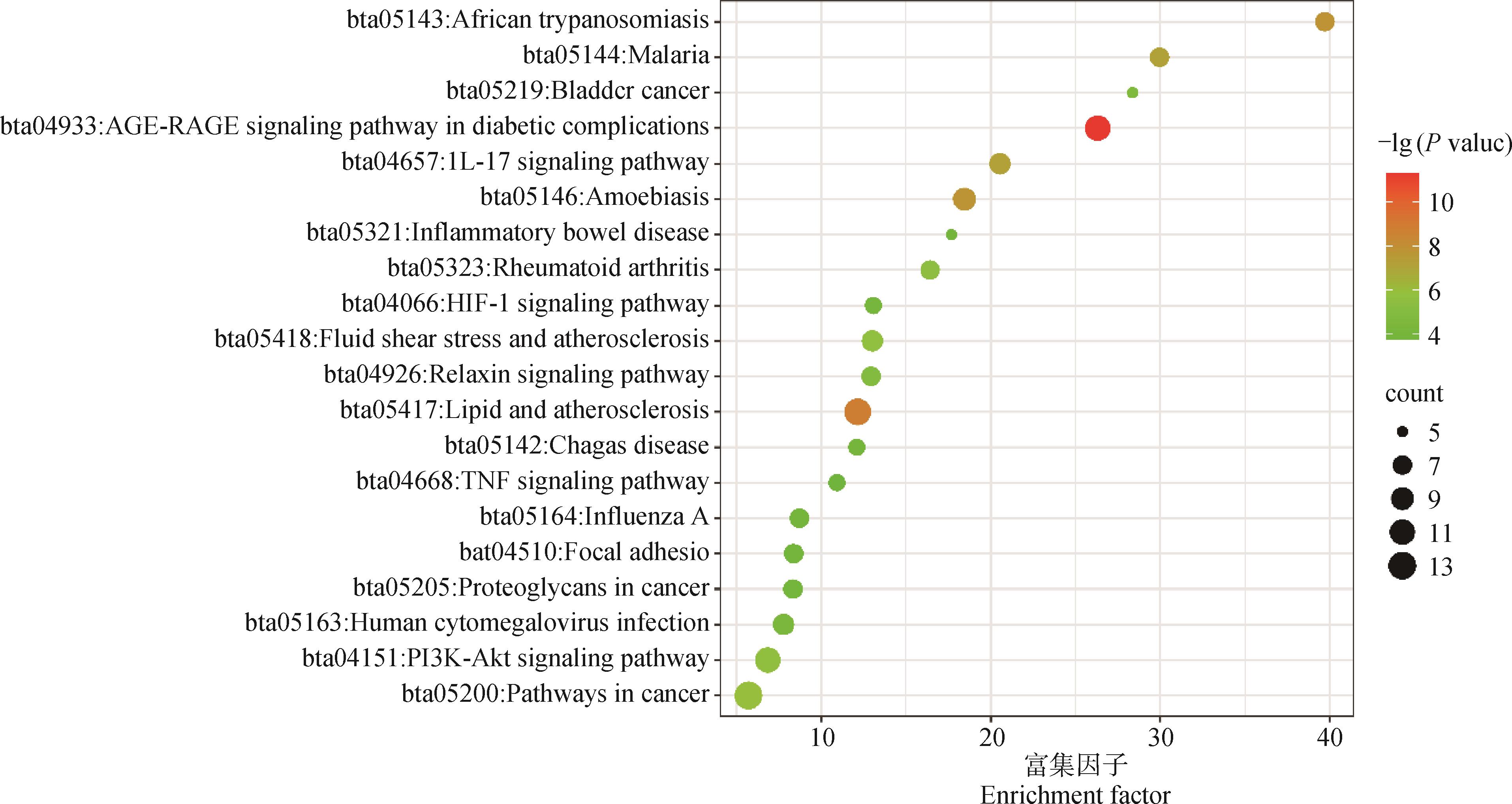
Fig.6
Molecular docking binding energy diagram"
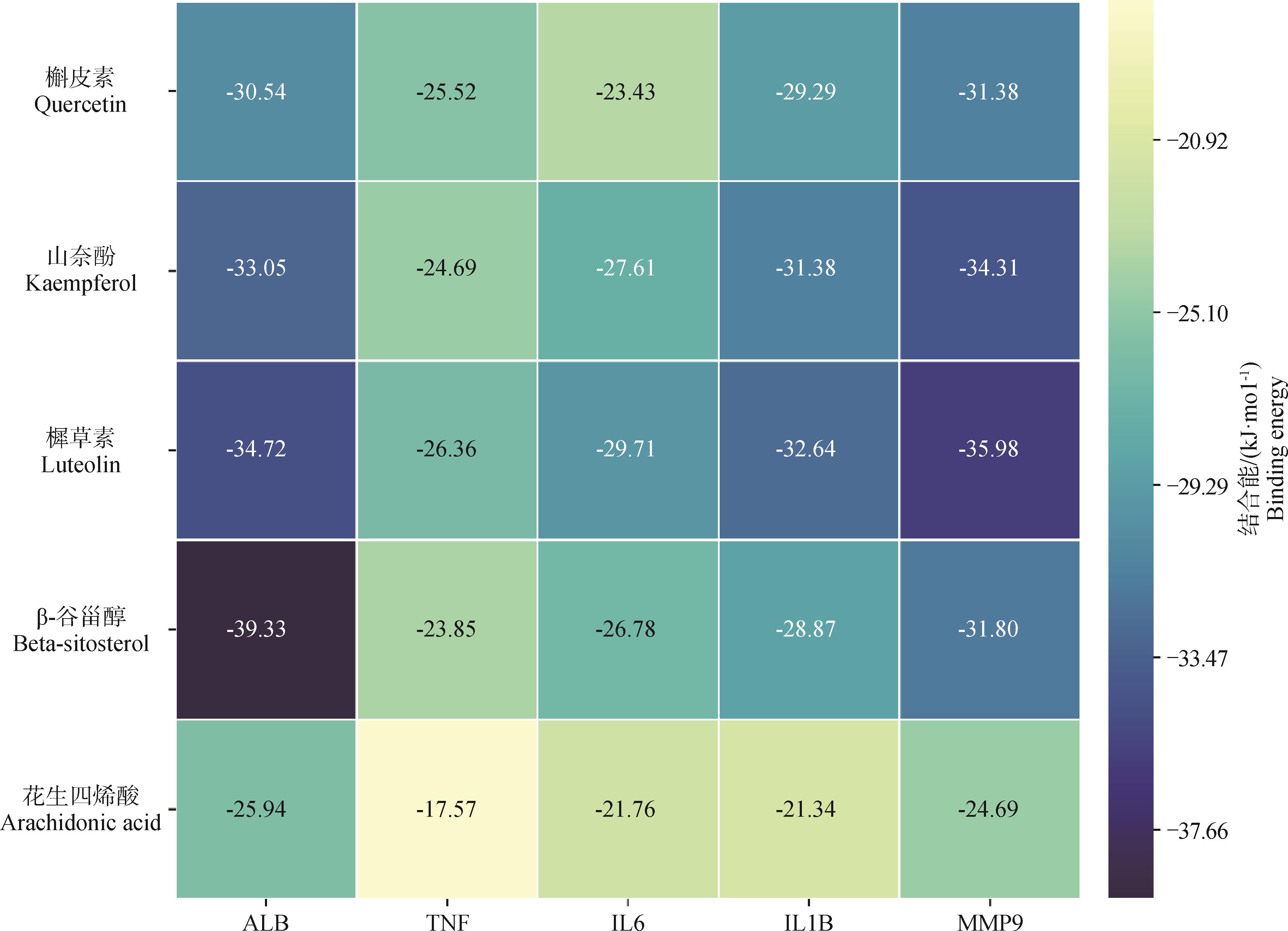
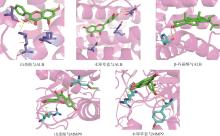
Fig.7
Molecular docking mode of some core compounds of Portulaca oleracea and key targets of porcine inflammatory response"

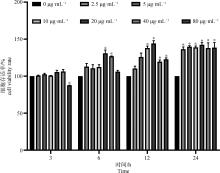
Fig.8
Effects of different concentrations of Portulaca oleracea and different action time on MAC-T activity"
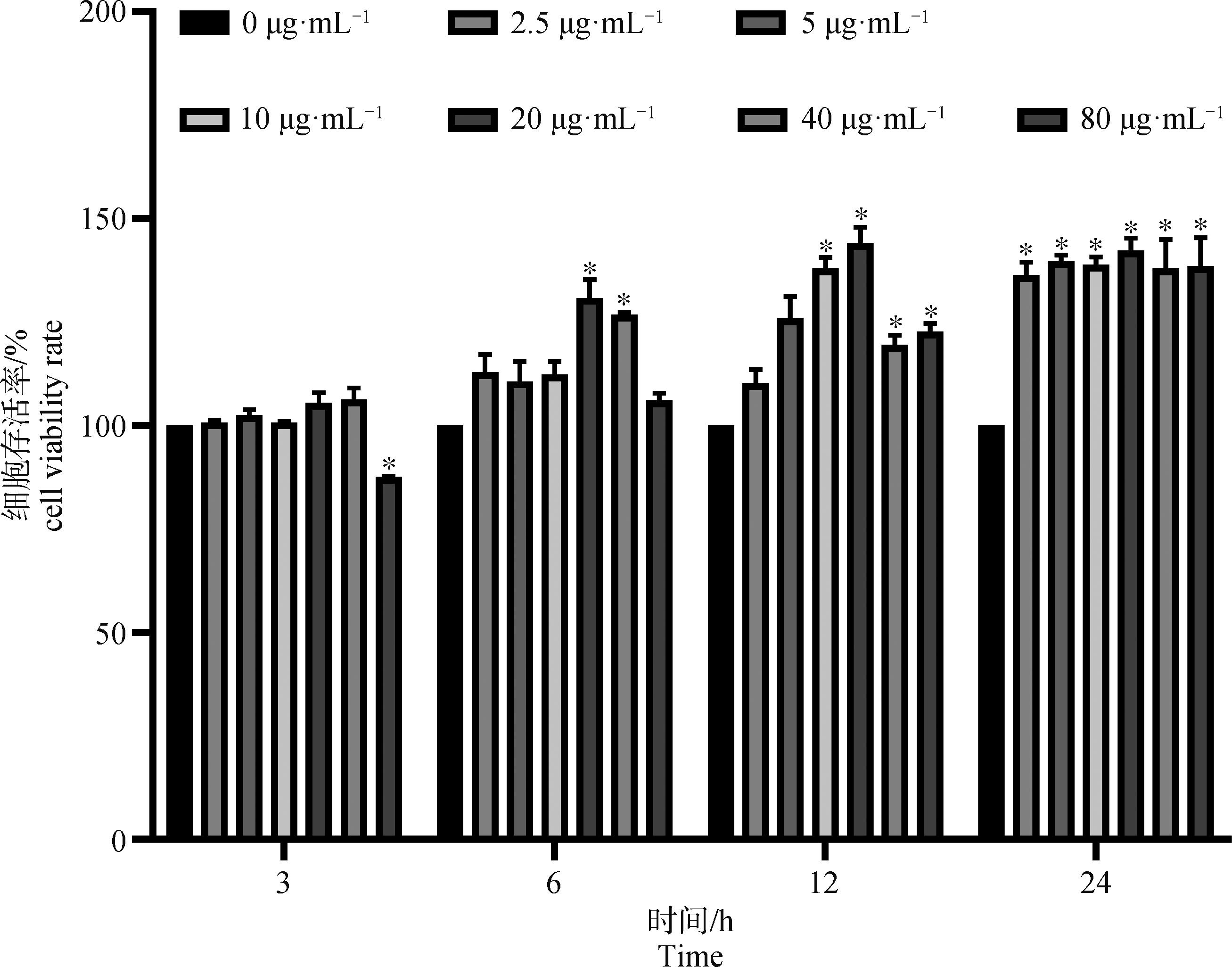
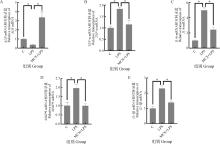
Fig.9
Effects of purslane on key targets of MAC-TGenes transcription of MAC-T after 12 h treatment with 20 μg·mL-1 purslane: A. ALB; B. TNF-α; C. IL-6; D. IL-1β; E. MMP9. *.P<0.05"
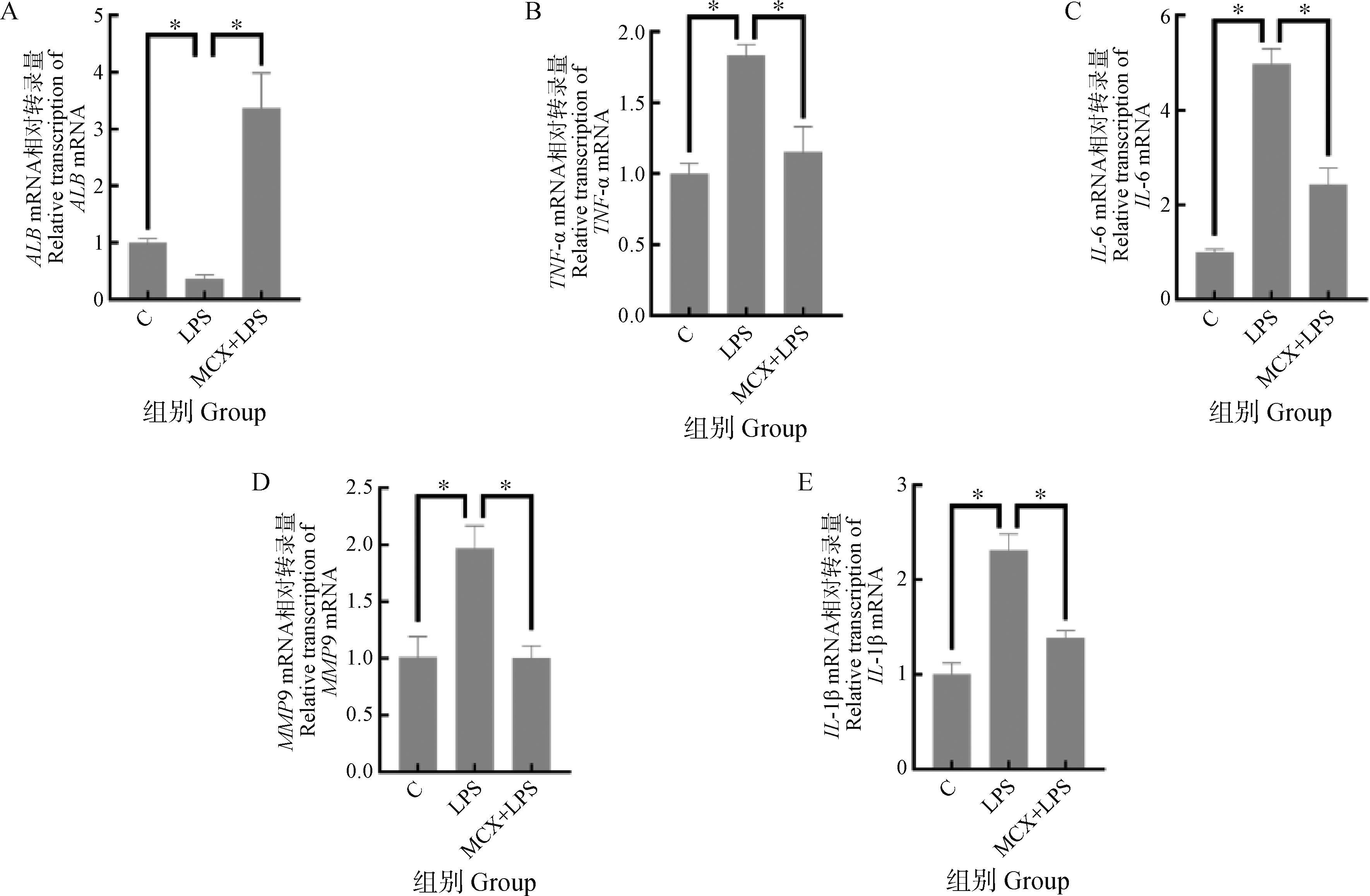
Fig.10
Effects of purslane on MAC-T IL-17 signaling pathwayGenes transcription of MAC-T after 12 h treatment with 20 μg·mL-1 purslane: A. IL-17A; B. IL-17RA; C. Act1; D. TRAF6.*.P<0.05"
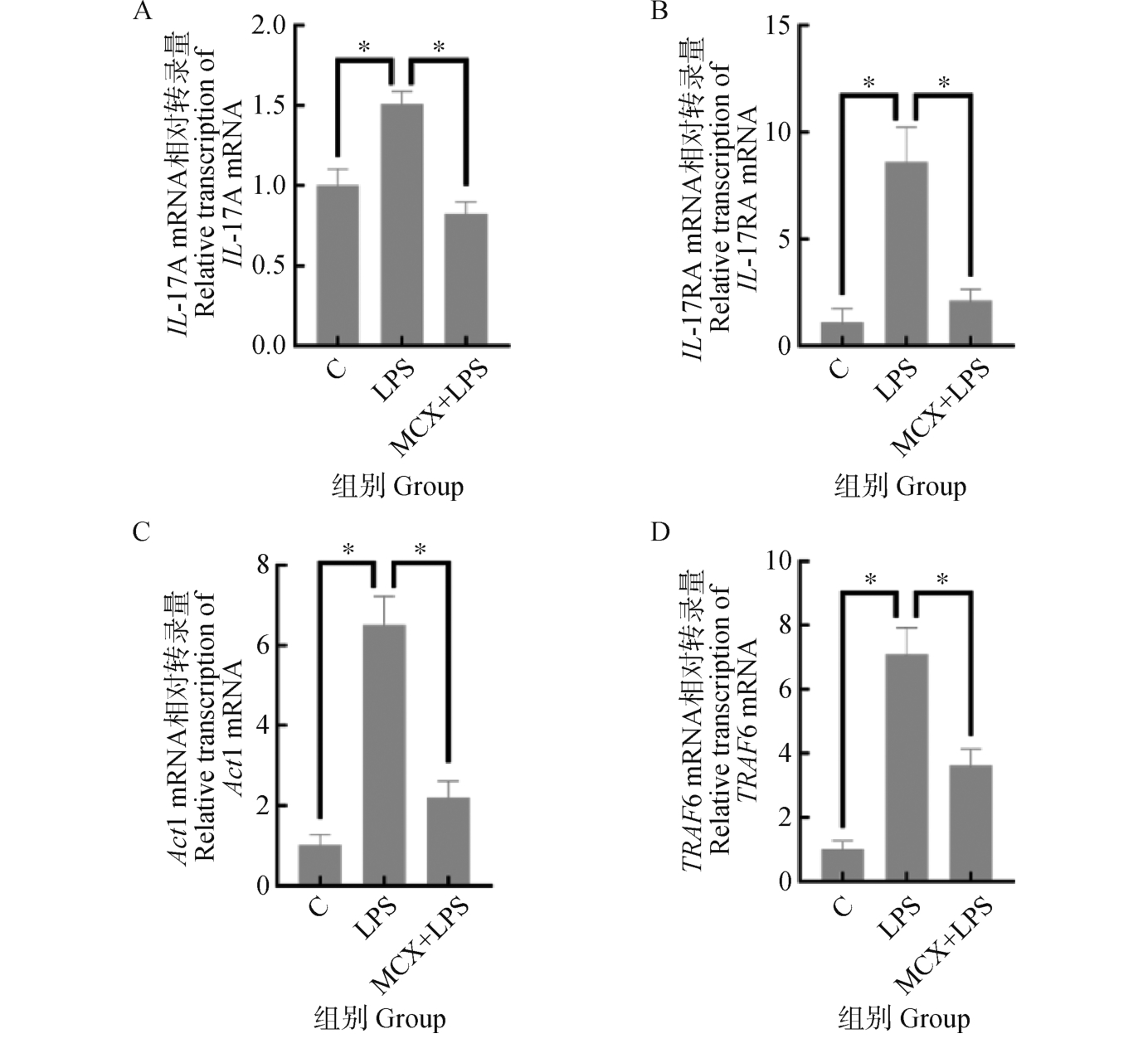
Fig.11
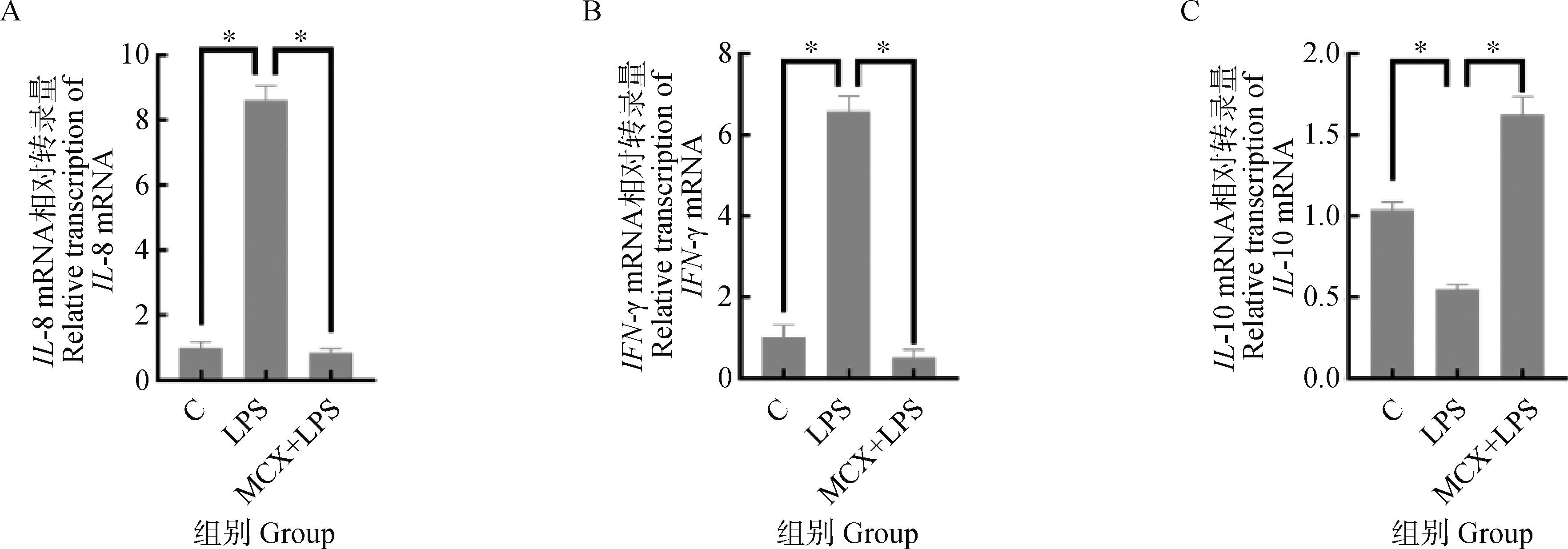
Effects of Portulaca oleracea on MAC-T inflammation-related genesGenes transcription of MAC-T after 12 h treatment with 20 μg·mL-1 purslane: A. IL-8; B. IFN-γ; C. IL-10.*.P<0.05。"
| [1] | 乔 勋,石元军.奶牛乳房炎诊断和治疗方法的研究进展[J].中国乳业,2023(4):72-75. |
| QIAO X,SHI Y J.Research progress on diagnosis and treatment of mastitis in dairy cows[J].China Dairy,2023(4):72-75.(in Chinese) | |
| [2] | MUES L,KEMPER N,BLUMENBERG J A.Occurrence and diagnostic of intermittent shedding of staphylococcus aureus in bovine mammary infection[J].Front Vet Sci,2025,12:1523698. |
| [3] | 卢智奇,侯丽娥,吴非凡,等.奶牛乳腺炎的影响因素及防治措施研究进展[J].畜牧兽医杂志,2023,42(6):26-31. |
| LU Z Q,HOU L E,WU F F,et al.Research progress on influencing factors and prevention measures of dairy cow mastitis[J].Journal of Animal Science and Veterinary Medicine,2023,42(6):26-31.(in Chinese) | |
| [4] | TONG X,BARKEMA H W,NOBREGA D B,et al.Virulence of bacteria causing mastitis in dairy cows:A literature review[J].Microorganisms,2025,13(1):167. |
| [5] | PIRES A J,PEREIRA G,FANGUEIRO D,et al.When the solution becomes the problem:a review on antimicrobial resistance in dairy cattle[J].Future Microbiol,2024,19(10):903-929. |
| [6] | 张亚楠,曹梦杰,王 君.马齿苋提取物的生物学功能及其在动物养殖中的应用研究进展[J].饲料研究,2024,47(17):166-170. |
| ZHANG Y N,CAO M J,WANG J.Research progress on biological function and its application of Portulaca oleracea extract in animal breeding[J].Feed Research,2024,47(17):166-170.(in Chinese) | |
| [7] | 张红岩,雷 霆,高凤仙.马齿苋的生物学功能及其在畜禽生产中的应用[J].动物营养学报,2022,34(2):765-771. |
| ZHANG H Y,LEI T,GAO F X.Biological functions of purslane and its application in livestock and poultry production[J].Chinese Journal of Animal Nutrition,2022,34(2):765-771.(in Chinese) | |
| [8] | 陈国妮,孙飞龙,闫亚茹.马齿苋的活性成分及其在畜牧业中的应用[J].饲料广角,2015,(17):44-47. |
| CHEN G N,SUN F L,YAN Y R.The active ingredients of purslane and its application in animal husbandry[J].Feed China,2015,(17):44-47.(in Chinese) | |
| [9] | 姚 燕,李 展.中草药在奶牛乳房炎防治中的应用[J].中国畜牧业,2017(5):50-51. |
| YAO Y,LI Z.Application of Chinese herbal medicine in prevention and treatment of cow mastitis[J].China Animal Industry,2017(5):50-51.(in Chinese) | |
| [10] | MACIEJEWSKA-TURSKA M,GEORGIEV M I,KAI G,et al.Advances in bioinformatic methods for the acceleration of the drug discovery from nature[J].Phytomedicine,2025,139:156518. |
| [11] | YU Y,XU S,HE R,et al.Application of molecular simulation methods in food science:Status and prospects[J].J Agric Food Chem,2023,71(6):2684-2703. |
| [12] | 牟瑞营,马国成,郭光礼,等.木犀草素对LPS诱导的小鼠乳腺炎保护作用研究[J].黑龙江畜牧兽医,2017(3):181-184,295. |
| MU R Y,MA G C,GUO G L,et al.Study on the protective effect of luteolin on LPS-induced mastitis in mice[J].Heilongjiang Animal Science and Veterinary Medicine,2017(3):181-184,295.(in Chinese). | |
| [13] | 王 桃,曹 璐,米晓钰,等.基于肿瘤坏死因子信号通路探讨槲皮素对小鼠乳腺炎模型的作用机制[J].动物营养学报,2022,34(6):3972-3982. |
| WANG T,CAO L,MI X Y,et al.To explore the mechanism of quercetin on mouse mastitis model based on tumor necrosis factor signaling pathway[J].Chinese Journal of Animal Nutrition,2022,34(6):3972-3982.(in Chinese) | |
| [14] | JIANG M,LV Z,HUANG Y,et al.Quercetin alleviates lipopolysaccharide-induced inflammatory response in bovine mammary epithelial cells by suppressing TLR4/NF-κB signaling pathway[J].Front Vet Sci,2022,9:915726. |
| [15] | FAN Y,SHEN J,LIU X,et al.β-Sitosterol suppresses lipopolysaccharide-induced inflammation and lipogenesis disorder in bovine mammary epithelial cells[J].Int J Mol Sci,2023,24(19):14644. |
| [16] | 刘莉莉,陈 敏.β-谷甾醇对脂多糖诱导的小鼠乳腺上皮细胞炎症反应及乳蛋白合成的影响[J].动物营养学报,2023,35(9):5994-6003. |
| LIU L L,CHEN M.Effects of β-sitosterol on lipopolysaccharide-induced inflammatory response and milk protein synthesis in mouse mammary epithelial cells[J].Chinese Journal of Animal Nutrition,2023,35(9):5994-6003.(in Chinese) | |
| [17] | 卢 挺,董伟韬,陈 艳,等.非靶向脂质组学探究花生四烯酸对奶牛乳腺上皮细胞的影响[J].中国兽医学报,2023,43(10):2086-2092. |
| LU T,DONG W T,CHEN Y,et al.Exploring effect of arachidonic acid on bovine mammary epithelial cells through non-targeted lipidomics[J].Chinese Journal of Veterinary Science,2023,43(10):2086-2092.(in Chinese) | |
| [18] | MENG M,HUO R,MA N,et al.β-carotene alleviates LPS-induced inflammation through regulating STIM1/ORAI1 expression in bovine mammary epithelial cells[J].Int Immunopharmacol,2022,113(Pt A):109377. |
| [19] | 葛 鑫,陈潇菲.β-胡萝卜素调节NLRP3炎症小体抑制金黄色葡萄球菌性乳腺炎的实验研究[J].新疆医科大学学报,2022,45(06):623-628. |
| GE X,CHEN X F.Inhibitory effect on β-carotene of Staphylococcus aureus mastitis by regulating NLRP3 inflammasome[J].Journal of Xinjiang Medical University,2022,45(06):623-628.(in Chinese) | |
| [20] | 葛影影,王根林,张 震,等.奶牛乳房炎血清学相关指标的变化[J].黑龙江畜牧兽医,2018(3):39-43. |
| GE Y Y,WANG G L,ZHANG Z,et al.Changes of serological indexes of mastitis in dairy cows[J].Heilongjiang Animal Science and Veterinary Medicine,2018(3):39-43.(in Chinese) | |
| [21] | 齐宏亮,李 婧,张 涌,等.乳房炎奶牛组织和血液病理学研究进展[J].动物医学进展,2014,35(8):99-102. |
| QI H L,LI Q,ZHANG Y,et al.Advance in histopathology and hemopathology of dairy cows with mastitis[J].Progress in Veterinary Medicine,2014,35(8):99-102.(in Chinese) | |
| [22] | 王振宇,王泽青,刘占宏,等.中兽药散剂治疗奶牛临床型乳房炎的研究[J].中国乳业,2022(7):30-35. |
| WANG Z Y,WANG Z Q,LIU Z H,et al.Traditional Chinese veterinary medicine for clinical mastitis in dairy cows[J].China Dairy,2022(7):30-35.(in Chinese) | |
| [23] | KONG X,WANG M,GUO Z,et al.Evaluation the protective role of baicalin against H2O2-driven oxidation,inflammation and apoptosis in bovine mammary epithelial cells[J].Front Vet Sci,2024,11:1504887. |
| [24] | SAKEMI Y,TAMURA Y,HAGIWARA K.Interleukin-6 in quarter milk as a further prediction marker for bovine subclinical mastitis[J].J Dairy Res,2011,78(1):118-121. |
| [25] | 苗 苗,魏 勇,成 宇,等.奶牛血清中TNF-α、IL-1β的含量变化及相关基因的mRNA表达量[J].今日畜牧兽医,2024,40(4):11-13. |
| MIAO M,WEI Y,CHENG Y,et al.The changes of TNF-α,IL-1β and mRNA expression of related genes in serum of dairy cows[J].Today Animal Husbandry and Veterinary Medicine,2024,40(4):11-13.(in Chinese) | |
| [26] | VANDOOREN J,VAN DEN STEEN P E,OPDENAKKER G.Biochemistry and molecular biology of gelatinase B or matrix metalloproteinase-9 (MMP-9):the next decade[J].Crit Rev Biochem Mol Biol,2013,48(3):222-272. |
| [27] | DONG Y,ZHAO H,MAN J,et al.MMP-9-mediated regulation of hypoxia-reperfusion injury-related neutrophil inflammation in an in vitro proximal tubular cell model[J].Ren Fail,2021,43(1):900-910. |
| [28] | CAGGIANO N,SMIRNOFF A L,BOTTINI J M,et al.Protease activity and protein profile in milk from healthy dairy cows and cows with different types of mastitis[J].Int Dairy J,2018,89:1-5. |
| [29] | FENG Y,ZHENG C,ZHOU Z,et al.IL-17A neutralizing antibody attenuates eosinophilic meningitis caused by Angiostrongylus cantonensis by involving IL-17RA/Traf6/NF-κB signaling[J].Exp Cell Res,2019,384(1):111554. |
| [30] | KIM H R,KIM B M,WON J Y,et al.Quercetin,a plant polyphenol,has Potential for the prevention of bone destruction in rheumatoid arthritis[J].J Med Food,2019,22(2):152-161. |
| [31] | LI N,CHEN S,DENG W,et al.Kaempferol attenuates gouty arthritis by regulating the balance of Th17/Treg cells and secretion of IL-17[J].Inflammation,2023,46(5):1901-1916. |
| [32] | CHEN H L,LO C H,HUANG C C,et al.Galectin-7 downregulation in lesional keratinocytes contributes to enhanced IL-17A signaling and skin pathology in psoriasis[J].J Clin Invest,2021,131(1):e130740. |
| [1] | CAI Kuojun, XU Min, SUN Pengliang, XIA Lining, ZHAO Hongqiong. Isolation, Identification and Drug Resistance Analysis of Klebsiella pneumoniae from Dairy Cow Mastitis in Xinjiang [J]. Acta Veterinaria et Zootechnica Sinica, 2026, 57(1): 464-475. |
| [2] | WEN Xin, LI Yongshuai, WANG Luyu, ZHAO Yan, SUN Jingwen, SHI Huijun, FU Qiang, YANG Li. To Analyze the Mechanism of Berberine against Staphylococcus aureus Infection Based on Network Pharmacology and Experimental Verification [J]. Acta Veterinaria et Zootechnica Sinica, 2026, 57(1): 513-525. |
| [3] | ZHAO Yujie, WAN Baoxia, WANG Jiaqi, SUN Siyu, LENG Xinyang, CUI Yizhe. Mechanism of Action of Dandelion Addition to Ration to Enhance the Immune Performance of Geese Based on Network Pharmacological Analysis [J]. Acta Veterinaria et Zootechnica Sinica, 2025, 56(9): 4698-4707. |
| [4] | LI Xiaodie, PAN Shiqin, WANG Lu, CHENG Zhentao, OU Deyuan, SONG Xuqin, YANG Jian. Research Progress on the Anti-inflammatory Mechanism of Traditional Chinese Veterinary Medicine based on Network Pharmacology [J]. Acta Veterinaria et Zootechnica Sinica, 2025, 56(8): 3701-3721. |
| [5] | CHEN Zehan, ZHANG Ruoyi, LIN Huiying, ZENG Chunli, LIN Fu, LI Jian. Anti-inflammatory Effects of Chelidonium majus on IPEC-J2 Cells based on HPLC Fingerprint and Network Pharmacology [J]. Acta Veterinaria et Zootechnica Sinica, 2025, 56(5): 2466-2480. |
| [6] | FENG Haipeng, ZHANG Kang, ZHANG Jingyan, LU Xiaorong, LI Jianxi. The Potential Drugs Screening against IBV Infection based on Network Pharmacology and Molecular Docking and Validation in vitro [J]. Acta Veterinaria et Zootechnica Sinica, 2025, 56(12): 6397-6410. |
| [7] | ZHANG Beiwen, LI Hongxi, WENG Chengzhen, HUANG Xinxin, LI Xiaobing, QIU Longxin, CHEN Hongbo. The Mechanism of Bidens pilosa L. in the Treatment of Bacterial Diarrhea in Poultry based on Network Pharmacological Analysis and Experimental Verification [J]. Acta Veterinaria et Zootechnica Sinica, 2025, 56(11): 5683-5696. |
| [8] | Anlin WEN, Yunyun YANG, Yongrong LUO, Ying YANG, Zhentao CHENG, Deyuan OU, Ming WEN. Network Pharmacologic Analysis and Experimential Verification on the Mechanism of Coptidis Rhizoma in Preventing Duck Viral Enteritis [J]. Acta Veterinaria et Zootechnica Sinica, 2024, 55(7): 3225-3233. |
| [9] | XU Junjie, ZHANG Lutong, WANG Jinjie, CHEN Xiaochen, HE Weixian, CAI Chuanjiang, CHU Guiyan, YANG Gongshe. Exploring the Effect of Epimedium on Estrus of Gilts Based on Multiomics and Network Pharmacology [J]. Acta Veterinaria et Zootechnica Sinica, 2024, 55(4): 1615-1628. |
| [10] | LIU Yuanhong, HU Yuhuan, ZHANG Li, YANG Pingrui, HU Weidong, MA Qi, BI Shicheng. Network Pharmacologic Analysis and Experimental Verification of Atractylodes Macrocephala-Cistanche Deserticola in the Treatment of Constipation [J]. Acta Veterinaria et Zootechnica Sinica, 2024, 55(2): 834-845. |
| [11] | MENG Lu, HU Haiyan, DONG Lei, ZHENG Nan, WANG Jiaqi. Influence of Dairy Farm Environment on Mastitis Milk Microbiota via SourceTracker [J]. Acta Veterinaria et Zootechnica Sinica, 2023, 54(9): 3872-3883. |
| [12] | GONG Zhiguo, ZHAO Jiamin, GU Baichen, REN Peipei, YU Zhuoya, BAI Yunjie, LIU Xinyu, WANG Chao, LIU Bo. Exploring the Mechanism of Codonopsis pilosula in Alleviation of Acute Lung Injury in Escherichia coli Infected Mice Based on Network Pharmacology [J]. Acta Veterinaria et Zootechnica Sinica, 2023, 54(8): 3571-3581. |
| [13] | ZHANG Xumei, WEI Yurong, XU Chenghui, YANG Tong, SHI Huijun, FU Qiang, YANG Li. To Analyze the Mechanism of Berberine in the Treatment of Salmonella Gallinarum Infection Based on Network Pharmacology and Experimental Verification [J]. Acta Veterinaria et Zootechnica Sinica, 2023, 54(8): 3557-3570. |
| [14] | YANG Zihui, DONG Zhen, WU Huilan, TAN Bin, ZENG Jianguo. Analysis of the Material Basis and Mechanism of Action of Antioxidant Function of Taraxacum mongolicum based on Network Pharmacology [J]. Acta Veterinaria et Zootechnica Sinica, 2023, 54(5): 2170-2185. |
| [15] | PAN Chanyuan, ZHAO Zixuan, DUAN Mingjie, JIANG Linshu, TONG Jinjin. The Mechanism of Artemisia carvifolia Alleviating Dairy Cow Oxidative Stress Predicted by Network Pharmacology [J]. Acta Veterinaria et Zootechnica Sinica, 2023, 54(3): 1071-1084. |
| Viewed | ||||||
|
Full text |
|
|||||
|
Abstract |
|
|||||
