


畜牧兽医学报 ›› 2025, Vol. 56 ›› Issue (12): 6458-6476.doi: 10.11843/j.issn.0366-6964.2025.12.047
王坤( ), 张永杰, 胡瑞莹, 郭丽阳, 陈春丽*()
收稿日期:2025-03-07
出版日期:2025-12-23
发布日期:2025-12-24
通讯作者:
陈春丽
E-mail:2537511983@qq.com;chunli.chen@neau.edu.cn
作者简介:王坤(2000-),女,河南南阳人,硕士生,主要从事兽医药理学研究,E-mail: 2537511983@qq.com
基金资助:
WANG Kun(), ZHANG Yongjie, HU Ruiying, GUO Liyang, CHEN Chunli*()
Received:2025-03-07
Online:2025-12-23
Published:2025-12-24
Contact:
CHEN Chunli
E-mail:2537511983@qq.com;chunli.chen@neau.edu.cn
摘要:
本试验旨在研究黄芩素(baicalein,Bai)对溃疡性结肠炎(ulcerative colitis,UC)小鼠的炎症、肠道屏障以及肠道菌群的影响。将60只5周龄的BALB/c雄性小鼠适应性饲养7 d后,每组10只随机分为6组,分别为空白组(NC组),葡聚糖硫酸钠组(DSS组),混合抗生素+葡聚糖硫酸钠组(ABX+DSS组),葡聚糖硫酸钠+黄芩素组(DSS+Bai组),混合抗生素+葡聚糖硫酸钠+肠道菌群移植组(ABX+DSS+FMT组,ADF组)和黄芩素单独给药组(Bai组)。在饮用水中添加3%的葡聚糖硫酸钠(dextran sulfate sodium,DSS)复制急性溃疡性结肠炎动物模型,观察黄芩素在炎症性肠病中的治疗作用,分析黄芩素对炎症状态下肠道菌群的影响,初步探究黄芩素治疗炎症性肠病的作用机制。结果表明,黄芩素可以通过PPAR-γ/NF-κB通路帮助结肠炎小鼠缓解肠道炎症,显著下调DSS组IL-1β和TNF-α的表达(P<0.05),上调了IL-10和结肠蛋白的表达(P<0.05)。组织病理切片显示, DSS组结肠上皮细胞大量脱落,坏死崩解,肠绒毛结构模糊,隐窝缺失,黏膜层及黏膜下层有大量炎性细胞浸润,黏膜下层出现纤维化结构,黏膜层的腺体结构破坏,杯状细胞大量减少。黄芩素治疗组结肠结构完整,黏膜层及黏膜下层有炎性细胞,肠上皮脱落程度比DSS组明显减少。对肠道菌群的进一步评估发现,与DSS组相比黄芩素可以调节肠道菌群,以厚壁菌门、变形菌门为主,黄芩素给药组均能显著增加厚壁菌门的丰度,降低变形菌门丰度,促进肠道益生菌的生长,抑制致病菌,从而达到结肠炎的治疗效果。综上,黄芩素可以缓解葡聚糖硫酸钠诱导的结肠炎,通过PPAR-γ/NF-κB通路并调节肠道菌群,发挥治疗效果。
中图分类号:
王坤, 张永杰, 胡瑞莹, 郭丽阳, 陈春丽. 利用小鼠模型分析黄芩素调节肠道菌群缓解葡聚糖硫酸钠诱导的结肠炎机制[J]. 畜牧兽医学报, 2025, 56(12): 6458-6476.
WANG Kun, ZHANG Yongjie, HU Ruiying, GUO Liyang, CHEN Chunli. Mechanism of Baicalein Alleviating Dextran Sulfate Sodium Induced Colitis by Modulating Gut Microbiota in Mouse Model[J]. Acta Veterinaria et Zootechnica Sinica, 2025, 56(12): 6458-6476.
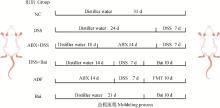
图 1
动物试验流程图"
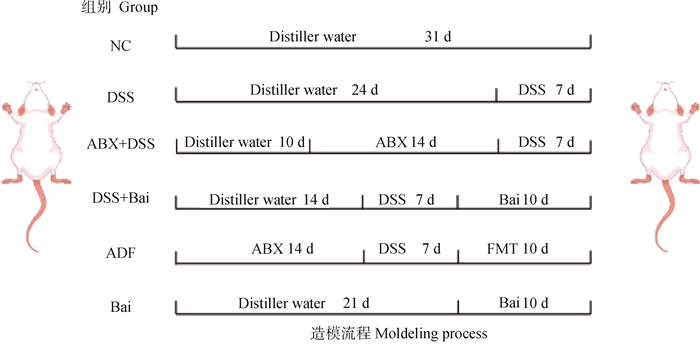
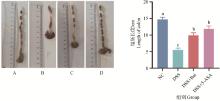
图 2
各组小鼠结肠大体外观(左)及长度柱状图(右) A. 空白组; B. DSS组; C. DSS+Bai组; D. DSS+5-ASA组。不同小写字母代表不同样本间差异显著(P < 0.05)"
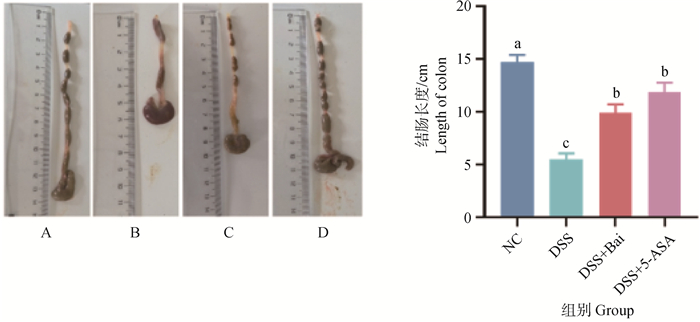
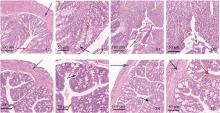
图 3
黄芩素对UC小鼠结肠病理学损伤的影响 A. 空白组;B.葡聚糖硫酸钠组;C.黄芩素组;D.5-氨基水杨酸组;蓝色箭头. 结肠壁;红色箭头. 结肠上皮细胞;黑色箭头. 杯状细胞;黄色箭头. 炎症细胞;绿色细胞. 破碎的结肠组织"

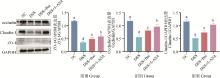
图 4
黄芩素治疗对结肠紧密连接蛋白表达水平的影响 采用小写字母上标法(a、b、c等)表示组间比较结果,相邻字母不同表示差异具有统计学意义(P < 0.05)。数据呈现方式:误差线代表三次独立重复试验(n=3)的测量结果,展示形式为算术平均数±标准差($\bar x \pm s$)"
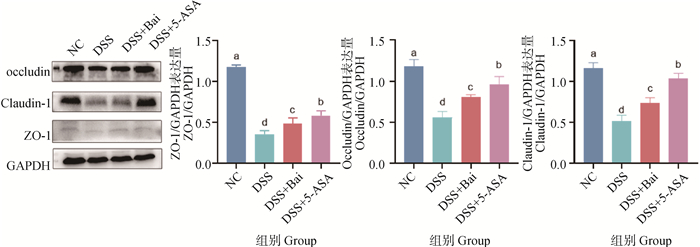
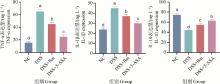
图 5
小鼠炎症因子表达水平的检测结果 采用小写字母上标法(a、b、c等)标示组间比较结果,相邻字母不同表示差异具有统计学意义(P < 0.05)。数据呈现方式:误差线代表三次独立重复试验(n=3)的测量结果,展示形式为算术平均数±标准差($\bar x \pm s$)"
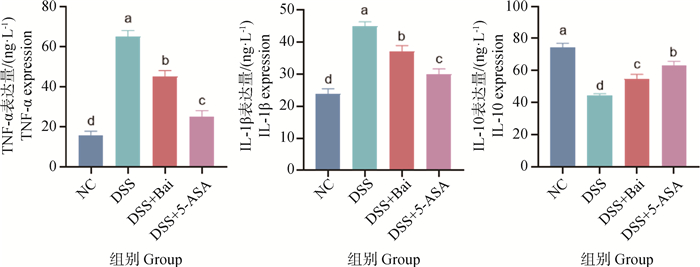
表 1
重要物种组成分析表($\bar x \pm s$,n=4)"
| 物种Species | NC | DSS | ADF+DSS | DSS+Bai | ADF | Bai |
| 厚壁菌门 Firmicutes phylum | 93.701±0.31 | 85.515±0.552 | 75.209±1.414 | 90.039±0.802 | 73.715±2.084 | 95.504±0.249 |
| 变形菌门 Proteobacteria Phylum | 0.959±0.329 | 2.043±0.095 | 22.854±1.575 | 0.761±0.048 | 11.489±0.397 | 1.309±0.134 |
| 拟杆菌门 Bacteroidetes | 1.729±0.083 | 9.852±0.219 | 1.644±0.164 | 4.321±0.058 | 4.311±0.101 | 1.605±0.104 |
| 放线菌门 Actinomycota | 2.034±0.187 | 1.519±0.238 | 0.021±0.012 | 2.089±0.076 | 5.745±0.747 | 0.517±0.095 |
| 疣微菌门 Verrucomycota | 0.008±0.003 | 0.007±0.007 | 0.214±0.072 | 1.891±0.759 | 4.605±1.113 | 0.014±0.012 |
| 柔膜菌门 Membranomycota phylum | 0.941±0.103 | 0.854±0.117 | 0.004±0.003 | 0.424±0.079 | 0.043±0.007 | 0.594±0.079 |
| 蓝藻门 Cyanophyta | 0.012±0.011 | 0.025±0.015 | 0.027±0.015 | 0.015±0.006 | 0.021±0.012 | 0.057±0.037 |
| 酸杆菌门 Acidobacteria phylum | 0.006±0.006 | 0.003±0.001 | 0.005±0.003 | 0.008±0.008 | 0.005±0.004 | 0.004±0.000 |
| 梭杆菌门 Clostridium phylum | 0.009±0.007 | 0.002±0.003 | 0.005±0.009 | 0.000±0.000 | 0.003±0.006 | 0.011±0.013 |
| 其他Ohters | 0.021±0.015 | 0.060±0.018 | 0.019±0.009 | 0.040±0.020 | 0.040±0.013 | 0.034±0.015 |
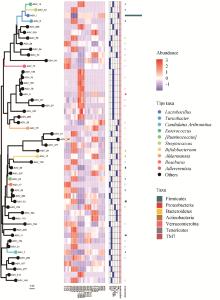
图 6
肠道菌群进化树图"
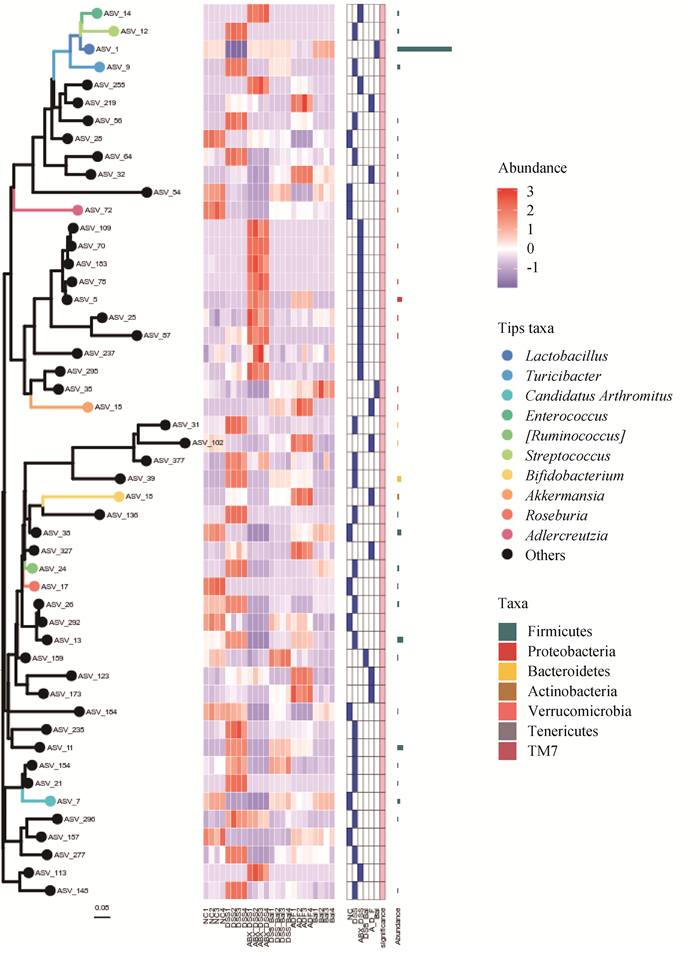
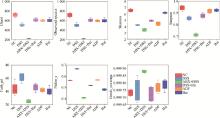
图 7
α多样性分析结果"
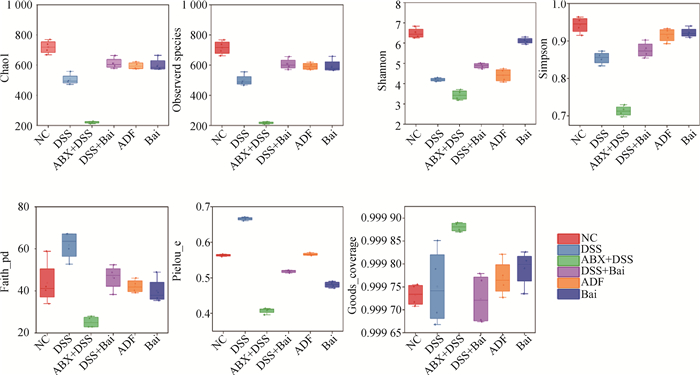
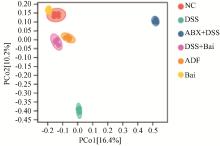
图 8
距离矩阵与PCoA分析"
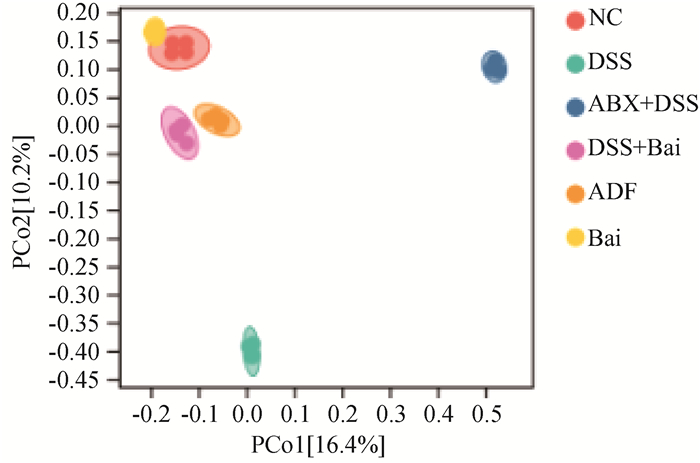
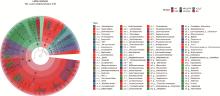
图 9
物种分类学分枝图"
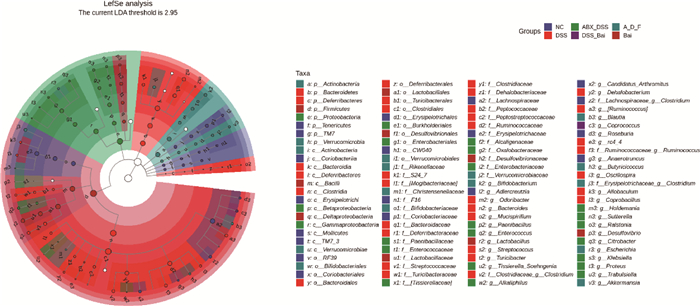
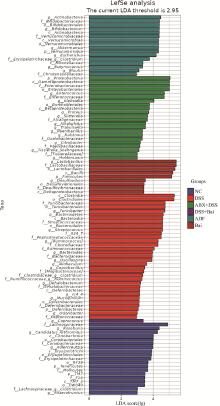
图 10
显著差异物种LDA分布柱状图"
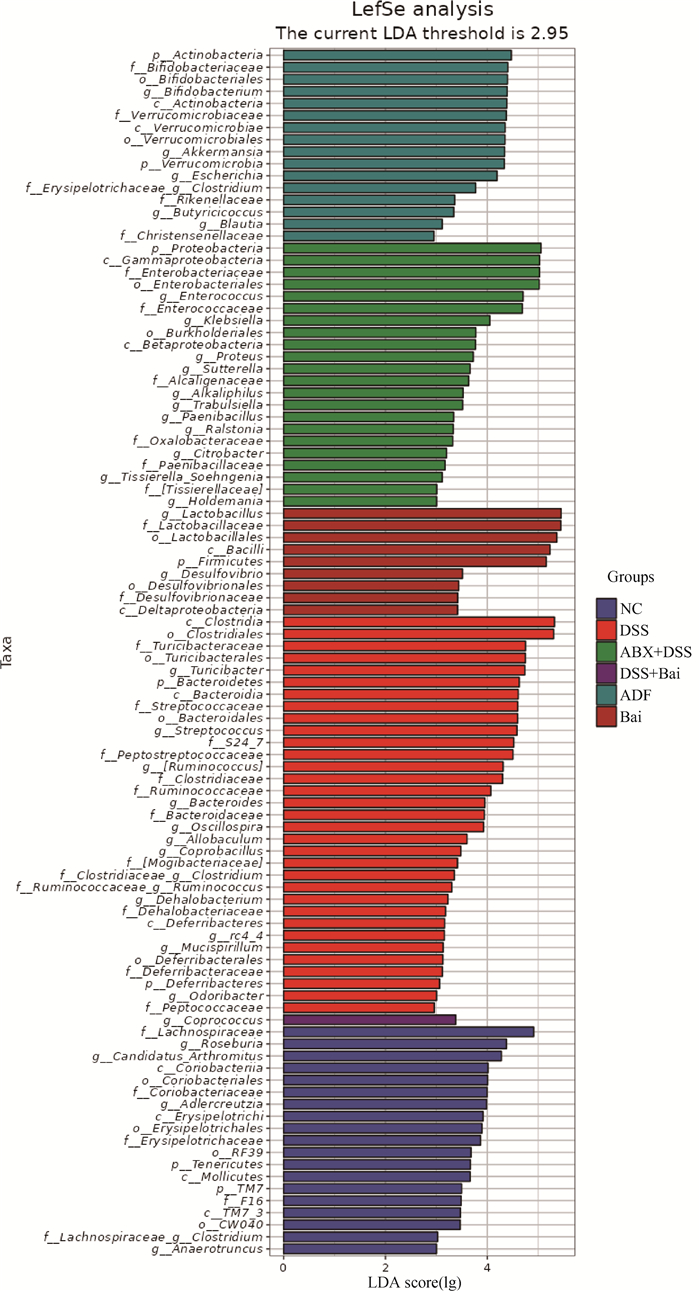
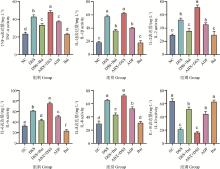
图 11
黄芩素调节肠道菌群缓解炎症的结果 采用小写字母上标法(a、b、c等)标示组间比较结果,相邻字母不同表示差异具有统计学意义(P < 0.05)。数据呈现方式:误差线代表三次独立重复试验(n=3)的测量结果,展示形式为算术平均数±标准差($\bar x \pm s$)"
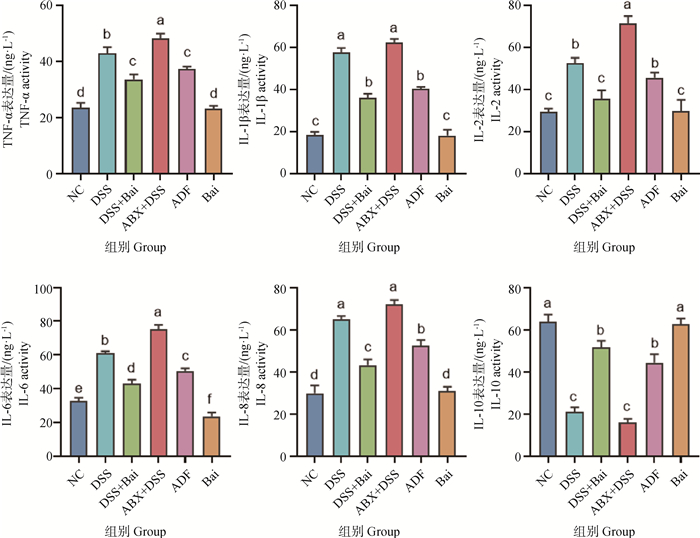
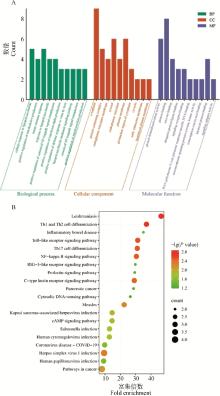
图 12
DSS组与DSS+Bai组GO功能富集分析(A)和差异表达基因的KEGG富集(B)"
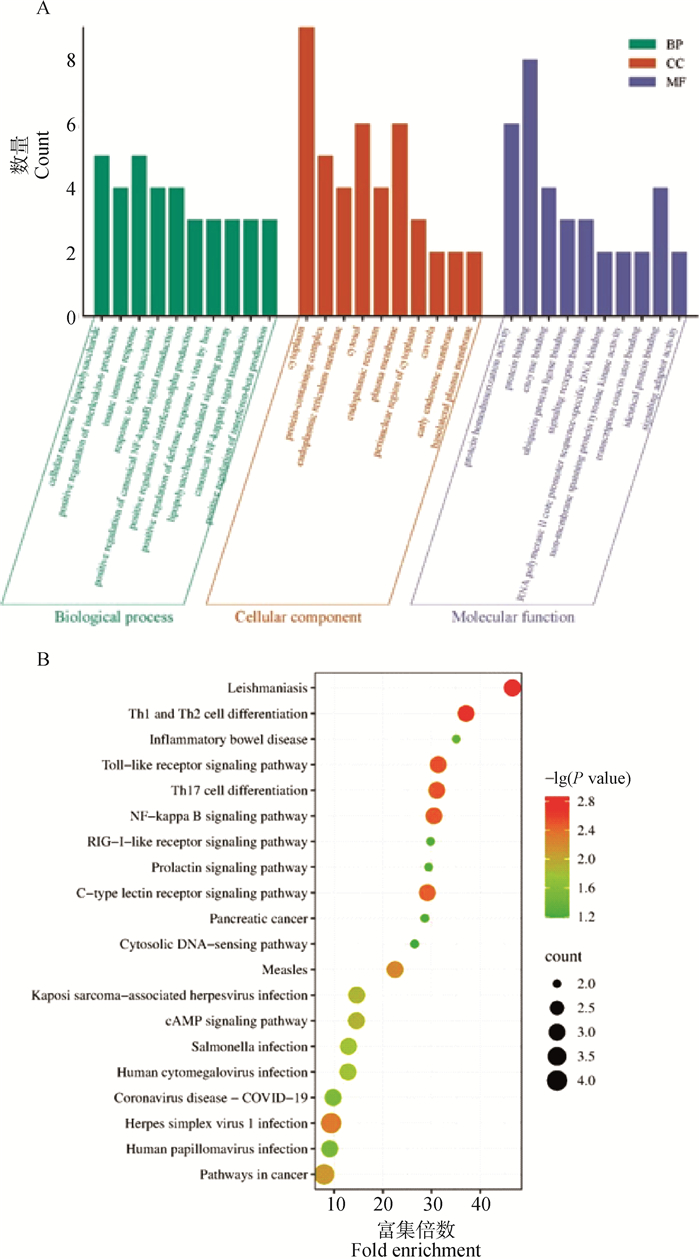
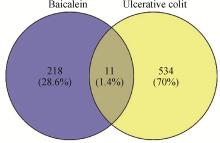
图 13
差异基因Venn图"
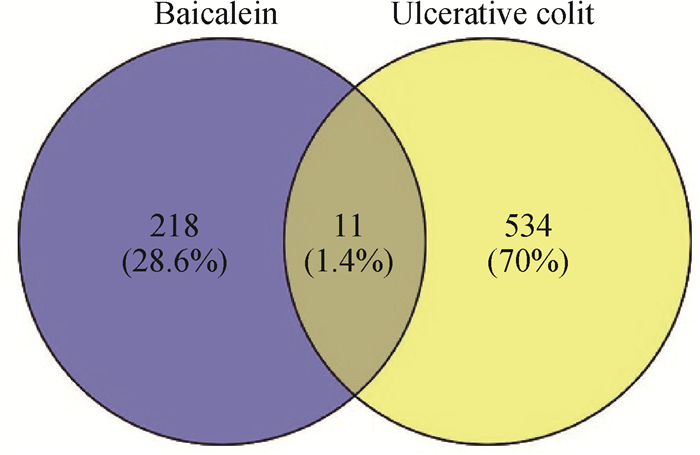
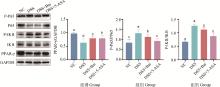
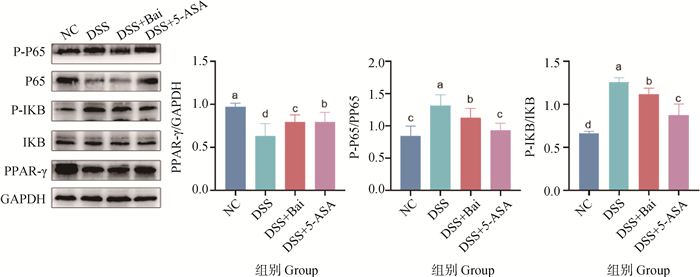
图 14
黄芩素治疗对结肠NF-κB信号通路蛋白水平的影响 采用小写字母上标法(a、b、c等)标示组间比较结果,相邻字母不同表示差异具有统计学意义(P < 0.05)。数据呈现方式:误差线代表三次独立重复试验(n=3)的测量结果,展示形式为算术平均数±标准差($\bar x \pm s$)"
| 1 |
YANG L , FANG Z , ZHU J , et al.The potential of Sijunzi decoction in the fight against gastrointestinal disorders: a review[J].Front Pharmacol,2025,16,1464498.
doi: 10.3389/fphar.2025.1464498 |
| 2 | BI X , PENG H , XIONG H , et al.Fabrication of the rapid self-assembly hydrogels loaded with luteolin: Their structural characteristics and protection effect on ulcerative colitis[J].Foods (Basel, Switzerland),2024,13(7):1105. |
| 3 |
UNGARO R , MEHANDRU S , ALLEN P B , et al.Ulcerative colitis[J].Lancet (London, England),2017,389(10080):1756-1770.
doi: 10.1016/S0140-6736(16)32126-2 |
| 4 | OWSIANKO N , ROMAŃCZUK-OSENKA N , SZCZERBAKOW M , et al.Questionnaire-Based Study of 81 Patients in Poland to evaluate the course of inflammatory bowel disease and the effects of the COVID-19 pandemic on quality of life and mental state from February to June 2021[J].Med Sci Monit,2022,28,e938243. |
| 5 | KNIGHT D J , GIRLING K J .Gut flora in health and disease[J].Lancet (London, England),2003,361(9371):1831. |
| 6 |
ZHAO L , ZHANG F , DING X , et al.Gut bacteria selectively promoted by dietary fibers alleviate type 2 diabetes[J].Science (New York, NY),2018,359(6380):1151-1156.
doi: 10.1126/science.aao5774 |
| 7 |
VALLES-COLOMER M , FALONY G , DARZI Y , et al.The neuroactive potential of the human gut microbiota in quality of life and depression[J].Nat Microbiol,2019,4(4):623-632.
doi: 10.1038/s41564-018-0337-x |
| 8 |
IATSENKO I , BOQUETE J P , LEMAITRE B .Microbiota-derived lactate activates production of reactive oxygen species by the intestinal NADPH oxidase nox and shortens drosophila lifespan[J].Immunity,2018,49(5):929-942.
doi: 10.1016/j.immuni.2018.09.017 |
| 9 |
SONG J , LI M , KANG N , et al.Baicalein ameliorates cognitive impairment of vascular dementia rats via suppressing neuroinflammation and regulating intestinal microbiota[J].Brain Res Bull,2024,208,110888.
doi: 10.1016/j.brainresbull.2024.110888 |
| 10 |
ZHANG C E , YU X H , CUI Y T , et al.Shengjiang Xiexin Decoction ameliorates antibiotic-associated diarrhea by altering the gut microbiota and intestinal metabolic homeostasis[J].Phytomedicine,2023,113,154737.
doi: 10.1016/j.phymed.2023.154737 |
| 11 |
XU D , ZHUANG L , GAO S , et al.Orally administered ginkgolide C attenuates DSS-induced colitis by maintaining gut barrier integrity, inhibiting inflammatory responses, and regulating intestinal flora[J].J Agric Food Chem,2022,70(46):14718-14731.
doi: 10.1021/acs.jafc.2c06177 |
| 12 |
LIAO J , XIE L , LIU T , et al.Heterologous biosynthesis of health-promoting baicalein in Lycopersicon esculentum[J].Molecules,2022,27(10):3086.
doi: 10.3390/molecules27103086 |
| 13 |
KANG J , MO S , SHU X , et al.Effects of baicalein pretreatment on the NLRP3/GSDMD pyroptosis pathway and neuronal injury in pilocarpine-induced status epilepticus in the mice[J].eNeuro,2025,12(1):ENEURO.0319-24.2024.
doi: 10.1523/ENEURO.0319-24.2024 |
| 14 | HONG S , CAI W , HUANG Z , et al.Ginsenoside Rg3 enhances the anticancer effect of 5-FU in colon cancer cells via the PI3K/AKT pathway[J].Oncol Report,2020,44(4):1333-1342. |
| 15 |
DU Y B , HAN Y , ZHANG R , et al.Dietary baicalein improves growth performance, antioxidant activity, and intestinal flora of koi carp (Cyprinus carpio)[J].Aquac Rep,2022,27,101421.
doi: 10.1016/j.aqrep.2022.101421 |
| 16 |
WANG M , DONG Y , WU J , et al.Baicalein ameliorates ionizing radiation-induced injuries by rebalancing gut microbiota and inhibiting apoptosis[J].Life Sci,2020,261,118463.
doi: 10.1016/j.lfs.2020.118463 |
| 17 |
MOHAMMAD B .A review of the biological and pharmacological activities of mesalazine or 5-aminosalicylic acid (5-ASA): an anti-ulcer and anti-oxidant drug[J].Inflammopharmacology,2021,29(5):1279-1290.
doi: 10.1007/s10787-021-00856-1 |
| 18 |
VANDE CASTEELE N , JAKATE A , MCNAMEE B , et al.Similar pharmacokinetics of three dosing regimens comprising two oral delayed-release mesalamine formulations in healthy adult volunteers: Randomised, open-label, parallel-group study[J].Br J Clin Pharmacol,2021,87(3):1141-1149.
doi: 10.1111/bcp.14479 |
| 19 |
WADA H , MIYOSHI J , KURONUMA S , et al.5-Aminosalicylic acid alters the gut microbiota and altered microbiota transmitted vertically to offspring have protective effects against colitis[J].Sci Rep,2023,13(1):12241.
doi: 10.1038/s41598-023-39491-x |
| 20 | 次仁央宗, 徐晓蓉, 刘占举.氨基水杨酸制剂的药理学与临床应用[J].临床药物治疗杂志,2011,9(2):33-37. |
| CIREN Y Z , XU X R , LIU Z J .Pharmacology and Clinical application of aminosalicylic acid preparations[J].Journal of Clinical Drug Therapy,2011,9(2):33-37. | |
| 21 | 王剑. 鸡毒支原体感染与宿主共生菌群紊乱相关性及机制研究[D]. 哈尔滨: 东北农业大学2021. |
| WANG J. Research on the Correlation and Mechanism between Mycoplasma gallisepticum infection and disruption of host commensal bacterial community[D]. Harbin: Northeast Agricultural University 2021. (in Chinese) | |
| 22 | 李雪莹. 黄连素通过调控肠道菌群对猫结肠损伤的保护作用[D]. 哈尔滨: 东北农业大学2023. |
| LI X Y. The protective effect of huanglian decoction on cat colonic injury through regulation of gut microbiota[D]. Harbin: Northeast Agricultural University 2023. (in Chinese) | |
| 23 |
SALVATORI S , MARAFINI I , FRANCHIN M , et al.Reversibility of frail phenotype in patients with inflammatory bowel diseases[J].J Clin Med,2023,12(7):2658.
doi: 10.3390/jcm12072658 |
| 24 | 谭雯心, 邓琴, 彭钰蓉, 等.甘草泻心汤治疗溃疡性结肠炎研究进展[J].光明中医,2023,38(3):588-590. |
| TAN W X , DENG Q , PENG Y R , et al.Research progress on the treatment of ulcerative colitis with gancao xiexin decoction[J].Journal of Guangming Traditional Chinese Medicine,2023,38(3):588-590. | |
| 25 |
LV M , WANG Y , WAN X , et al.Rapid screening of proanthocyanidins from the roots of Ephedra sinica stapf and its preventative effects on dextran-sulfate-sodium-induced ulcerative colitis[J].Metabolites,2022,12(10):957.
doi: 10.3390/metabo12100957 |
| 26 |
EICHELE D D , KHARBANDA K K .Dextran sodium sulfate colitis murine model: An indispensable tool for advancing our understanding of inflammatory bowel diseases pathogenesis[J].World J Gastroenterol,2017,23(33):6016-6029.
doi: 10.3748/wjg.v23.i33.6016 |
| 27 | CHANGLIN Z , YING Z , SHUHUA Z , et al.Research on the protective effect of miR-185-3p mediated by huangqin-tang decoction (HQT) on the epithelial barrier function of ulcerative colitis[J].Evid Based Complement Alternat Med,2021,2021,4775606. |
| 28 |
QIU J , XIAO G , YANG M , et al.Integrated network pharmacology and metabolomics reveal the mechanisms of Jasminum elongatum in anti-ulcerative colitis[J].Sci Rep,2023,13(1):22449.
doi: 10.1038/s41598-023-49792-w |
| 29 | 杜维霞, 沈名扬, 艾青, 等.Zonulin介导的肠道微生物对肠上皮细胞屏障功能的调节[J].中国细胞生物学学报,2014,36(10):1362-1367. |
| DU W X , SHEN M Y , AI Q , et al.Regulation of intestinal epithelial cell barrier function by zonulin-mediated intestinal microbiota[J].Chinese Journal of Cell Biology,2014,36(10):1362-1367. | |
| 30 | 田晓燕. 补阳还五汤对糖尿病脑病小鼠肠道紧密连接蛋白Occludin和ZO-1的影响及机制探讨[D]. 承德: 承德医学院, 2024. |
| TIAN X Y. Effects of Bu Yang Huan Wu decoction on intestinal tight junction proteins occludin and ZO-1 in diabetic encephalopathy mice and mechanism exploration[D]. Chengde: Chengde Medical University, 2024. (in Chinese) | |
| 31 | 杨昕坦, 阮峥, 李焕荣.猪圆环病毒2型感染对猪小肠上皮细胞Claudin-1蛋白和锁小带蛋白-1基因mRNA表达的影响[J].北京农学院学报,2019,34(1):56-60. |
| YANG X T , RUAN Z , LI H R .Effects of porcine circovirus type 2 infection on the expression of claudin-1 protein and occludin-1 gene mRNA in porcine small intestinal epithelial cells[J].Journal of Beijing University of Agriculture,2019,34(1):56-60. | |
| 32 |
LECLERCQ S , STÁRKEL P , DELZENNE N M , et al.The gut microbiota: A new target in the management of alcohol dependence?[J].Alcohol (Fayetteville, NY),2019,74,105-111.
doi: 10.1016/j.alcohol.2018.03.005 |
| 33 |
LIN B , YAN J , ZHONG Z , et al.A study on the preparation of microbial and nonstarch polysaccharide enzyme synergistic fermented maize cob feed and its feeding efficiency in finishing pigs[J].BioMed Res Int,2020,2020,8839148.
doi: 10.1155/2020/8839148 |
| 34 |
SUN Y , WEN M , LIU Y , et al.The human microbiome: A promising target for lung cancer treatment[J].Front Immunol,2023,14,1091165.
doi: 10.3389/fimmu.2023.1091165 |
| 35 |
WANG Y , WANG Z .Association between ideal cardiovascular health and bowel conditions among US adults[J].Front Nutrit,2024,11,1473531.
doi: 10.3389/fnut.2024.1473531 |
| 36 |
GAO Y , WU X , ZHAO N , et al.Scientific connotation of the compatibility of traditional Chinese medicine from the perspective of the intestinal flora[J].Front Pharmacol,2023,14,1152858.
doi: 10.3389/fphar.2023.1152858 |
| 37 |
BRADLEY P H , POLLARD K S .Proteobacteria explain significant functional variability in the human gut microbiome[J].Microbiome,2017,5(1):36.
doi: 10.1186/s40168-017-0244-z |
| 38 |
WU C H , KO J L , LIAO J M , et al.D-methionine alleviates cisplatin-induced mucositis by restoring the gut microbiota structure and improving intestinal inflammation[J].Ther Adv Med Oncol,2019,11,1758835918821021.
doi: 10.1177/1758835918821021 |
| 39 | LIN K , ZHU L , YANG L .Gut and obesity/metabolic disease: Focus on microbiota metabolites[J].Med Comm,2022,3(3):e171. |
| 40 | CHANG J , JIA X , LIU Y , et al.Microbial mechanistic insight into the role of yeast-derived postbiotics in improving sow reproductive performance in late gestation and lactation sows[J].Animals (Basel),2024,14(1):162. |
| 41 |
LIU G , CHU M , NIE S , et al.Effects of Ilisha elongata protein, soy protein and whey protein on growth characteristics and adhesion of probiotics[J].Curr Res Food Sci,2022,5,2125-2134.
doi: 10.1016/j.crfs.2022.10.024 |
| 42 | KUMARI M , SWARNKAR M K , KUMAR S , et al.Complete genome sequence of potential probiotic Lactobacillus sp. HFC8, isolated from human gut using PacBio SMRT sequencing[J].Genome Announc,2015,3(6):e01337-15. |
| 43 |
LIU N , HU Y , WU M , et al.The quality characteristics and microbial communities of three components in traditional split-fermented red sour soup[J].Food Sci Nutrit,2024,12(10):7287-7305.
doi: 10.1002/fsn3.4317 |
| 44 |
OMAR A M , AHMADI N , OMBADA M , et al.Breaking Bad: a case of Lactobacillus bacteremia and liver abscess[J].J Community Hosp Intern Med Perspect,2019,9(3):235-239.
doi: 10.1080/20009666.2019.1607704 |
| 45 |
HUANG R , LIU Y .Efficacy of bifidobacterium-related preparations on depression: the first meta-analysis[J].Front Psychiat,2024,15,1463848.
doi: 10.3389/fpsyt.2024.1463848 |
| 46 |
ZHAO B C , WANG T H , CHEN J , et al.Essential oils improve nursery pigs' performance and appetite via modulation of intestinal health and microbiota[J].Animal Nutrit,2024,16,174-188.
doi: 10.1016/j.aninu.2023.10.007 |
| 47 |
VALENTINO V , DE FILIPPIS F , MAROTTA R , et al.Genomic features and prevalence of ruminococcus species in humans are associated with age, lifestyle, and disease[J].Cell Rep,2024,43(12):115018.
doi: 10.1016/j.celrep.2024.115018 |
| 48 |
WU M , KANG J , TAO J , et al.Clinical characteristics and drug resistance mechanisms of linezolid-non-susceptible enterococcus in a tertiary hospital in Northwest China[J].Infect Drug Resist,2024,17,485-494.
doi: 10.2147/IDR.S442105 |
| 49 | GU J , JIAO Z , WANG T , et al.Glucans with different degrees of polymerization from Leuconostoc mesenteroides CICC6055: Analysis of physicochemical properties and intestinal prebiotic function[J].Int J Mol Sci,2023,25(1) |
| 50 |
REN Z , HONG Y , HUO Y , et al.Prospects of probiotic adjuvant drugs in clinical treatment[J].Nutrients,2022,14(22):4723.
doi: 10.3390/nu14224723 |
| 51 | 白学鑫, 陈玉平, 盛春泉, 等.具核梭杆菌小分子抑制剂的筛选及其抗结直肠癌性研究[J].药学实践与服务,2024,42(12):503-507. |
| BAI X X , CHEN Y P , SHENG C Q , et al.Screening of small molecule inhibitors of Fusobacterium nucleatum and study on their anti-colorectal cancer activity[J].Pharmaceutical Practice and Service,2024,42(12):503-507. | |
| 52 | 张年洁, 甄明哲, 王巧玉, 等.槲皮素对产肠毒素大肠杆菌感染小鼠的抗炎作用及肠道菌群的影响[J].黑龙江畜牧兽医,2024(24):94-100. |
| ZHANG N J , ZHEN M Z , WANG Q Y , et al.The anti-inflammatory effect of quercetin on mice infected with enterotoxigenic Escherichia coli and its influence on the intestinal microbiota[J].Heilongjiang Animal Husbandry and Veterinary Medicine,2024(24):94-100. | |
| 53 | 周厚法. NAFLD患者肠道微生态中厚壁菌门与拟杆菌门的分析研究[D]. 青海: 青海大学2023. |
| ZHOU H F. Analysis of firmicutes and bacteroidetes in the gut microbiota of patients with NAFLD[D]. Qinghai: Qinghai University, 2023. | |
| 54 |
ZHANG Z , QIN X , LIU J , et al.Role and mechanism of the zinc finger protein ZNF580 in foam-cell formation[J].Exp therap med,2022,24(3):579.
doi: 10.3892/etm.2022.11516 |
| 55 | 黄益娜. 普洱熟茶介导肠道菌群-短链脂肪酸-PPAR-γ通路预防小鼠结肠炎的探究[D]. 南昌: 南昌大学2022. |
| HUANG Y N. Investigation on the role of Pu'er oolong tea in preventing colitis in mice through the gut microbiota - short chain fatty acids - PPAR-γ pathway[D]. Jiangxi: Nanchang University 2022. (in Chinese) | |
| 56 |
NAGATAKE T , KISHINO S , URANO E , et al.Intestinal microbe-dependent ω3 lipid metabolite αKetoA prevents inflammatory diseases in mice and cynomolgus macaques[J].Mucosal Immunol,2022,15(2):289-300.
doi: 10.1038/s41385-021-00477-5 |
| 57 |
BOGACKA I , KURZYNSKA A , BOGACKI M , et al.Peroxisome proliferator-activated receptors in the regulation of female reproductive functions[J].Folia histochemica et cytobiologica,2015,53(3):189-200.
doi: 10.5603/fhc.a2015.0023 |
| 58 |
WANG D , SHI L , XIN W , et al.Activation of PPARγ inhibits pro-inflammatory cytokines production by upregulation of miR-124 in vitro and in vivo[J].Biochem Bioph Res Commun,2017,486(3):726-731.
doi: 10.1016/j.bbrc.2017.03.106 |
| 59 |
REDDY R C .Immunomodulatory role of PPAR-gamma in alveolar macrophages[J].J Investig Med,2008,56(2):522-527.
doi: 10.2310/JIM.0b013e3181659972 |
| 60 |
RICOTE M , LI A C , WILLSON T M , et al.The peroxisome proliferator-activated receptor-gamma is a negative regulator of macrophage activation[J].Nature,1998,391(6662):79-82.
doi: 10.1038/34178 |
| 61 |
APPEL S , MIRAKAJ V , BRINGMANN A , et al.PPAR-gamma agonists inhibit toll-like receptor-mediated activation of dendritic cells via the MAP kinase and NF-kappaB pathways[J].Blood,2005,106(12):3888-3894.
doi: 10.1182/blood-2004-12-4709 |
| 62 |
BELINGA V F , WU G J , YAN F L , et al.Splenectomy following MCAO inhibits the TLR4-NF-κB signaling pathway and protects the brain from neurodegeneration in rats[J].J Neuroimmunol,2016,293,105-113.
doi: 10.1016/j.jneuroim.2016.03.003 |
| 63 |
CLOUTIER A , MAROIS I , CLOUTIER D , et al.The prostanoid 15-deoxy-Δ12, 14-prostaglandin-j2 reduces lung inflammation and protects mice against lethal influenza infection[J].J infects Diseases,2012,205(4):621-630.
doi: 10.1093/infdis/jir804 |
| [1] | 茹敏, 蒋小丰, 罗国升, 武永厚. 饲粮添加枯草芽孢杆菌对大肠杆菌攻毒仔猪生长性能、血清免疫及抗氧化功能、肠道形态和微生物的影响[J]. 畜牧兽医学报, 2025, 56(9): 4461-4471. |
| [2] | 杨宇翔, 王朋朋, 李斌, 谢留威, 修福晓, 刘成武. 益生菌在犬肠道疾病中作用及机制的研究进展[J]. 畜牧兽医学报, 2025, 56(8): 3610-3620. |
| [3] | 孟亚轩, 刘彦, 王晶, 陈国顺, 冯涛. 氨基葡萄糖对断奶仔猪血清抗氧化、炎症指标以及肠道微生物的影响[J]. 畜牧兽医学报, 2025, 56(8): 3908-3921. |
| [4] | 李志强, 陈雪清, 张源淑. 猪流行性腹泻病毒临床感染仔猪肠道组织中血管紧张素转化酶2的检测及其与肠道病理变化的关系分析[J]. 畜牧兽医学报, 2025, 56(7): 3463-3473. |
| [5] | 陆乐, 罗贤祖, 黄心昱, 邹辉, 顾建红, 刘学忠, 卞建春, 刘宗平, 袁燕. 镉可通过影响大鼠肠道菌群致大脑皮质氧化应激[J]. 畜牧兽医学报, 2025, 56(7): 3540-3547. |
| [6] | 张燕敏, 刘帅, 滕战伟, 谢红兵, 夏小静, 贺永惠, 常美楠. 功能性寡糖缓解犊牛腹泻的机理研究进展[J]. 畜牧兽医学报, 2025, 56(3): 979-994. |
| [7] | 丁莹莹, 张嘉芸, 唐龙轩, 张少华, 郭小腊, 蒲丽霞, 牟文杰, 王帅. 肠道共生生物对肠道干细胞的调节机制研究进展[J]. 畜牧兽医学报, 2025, 56(3): 1019-1026. |
| [8] | 马登军, 陈佳欣, 周瑞琳, 王力宏, 李会凤, 刘昕恬, 杨震国. 5-HT调控畜禽神经行为异常及肠道功能紊乱的研究进展[J]. 畜牧兽医学报, 2025, 56(12): 6025-6033. |
| [9] | 白慧涛, 孙健, 解伟纯, 王雪莹, 王晓娜, 唐丽杰. 粪菌移植改善仔猪断奶早期肠道屏障功能的作用机制研究进展[J]. 畜牧兽医学报, 2025, 56(11): 5379-5388. |
| [10] | 谢秀兰, 王建东, 晏仕英, 高海慧, 杨宇为, 赵建. 植物乳杆菌X86对大鼠子代早期发育和肠道菌群的影响[J]. 畜牧兽医学报, 2025, 56(10): 5315-5327. |
| [11] | 何塔娜, 胡馨匀, 米洁兰, 高立, 张艳萍, 祁小乐, 崔红玉, 杨桂连, 高玉龙. 基于16S rDNA分析饲喂唾液乳杆菌XP132对白羽肉种鸡肠道菌群的影响[J]. 畜牧兽医学报, 2024, 55(9): 4091-4099. |
| [12] | 周佳丽, 丁宝隆, 马子明, 淡新刚, 赵洪喜. 奶牛子宫内膜炎与胃肠微生物相关性及益生菌作用的研究进展[J]. 畜牧兽医学报, 2024, 55(8): 3321-3330. |
| [13] | 李碧波, 吴克, 师晓龙, 闫奕凝, 李嘉豪, 段国庆, 李熊, 任彦鹏, 董佳宁, 张春香, 任有蛇. 羊源Lactobacillus plantarum对腹泻羔羊空肠菌群及肠道黏膜屏障的调控作用[J]. 畜牧兽医学报, 2024, 55(8): 3552-3569. |
| [14] | 杜红旭, 苏利娟, 何政科, 谭晓燕, 张旭, 马琪, 曹立亭, 陈红伟, 甘玲. 五味子多糖纳米硒的体外抗氧化和肠道菌群调节作用研究[J]. 畜牧兽医学报, 2024, 55(7): 3234-3245. |
| [15] | 王吉, 周馨妍, 郭芳瑞, 徐秋容, 武东怡, 毛妍, 袁志航, 易金娥, 文利新, 邬静. 紫花地丁对热应激下肉鸡生长性能、肉品质和肠道菌群的改善作用[J]. 畜牧兽医学报, 2024, 55(6): 2761-2774. |
| 阅读次数 | ||||||
|
全文 |
|
|||||
|
摘要 |
|
|||||
