


Acta Veterinaria et Zootechnica Sinica ›› 2026, Vol. 57 ›› Issue (1): 349-359.doi: 10.11843/j.issn.0366-6964.2026.01.030
• PREVENTIVE VETERINARY MEDICINE • Previous Articles Next Articles
LUO Chenying( ), XU Siqi, LIU Yutong, ZHANG Qinying, DENG Fengru, FENG Saixiang()
Received:2025-03-17
Online:2026-01-23
Published:2026-01-26
Contact:
FENG Saixiang
E-mail:827528057@qq.com;fengsx@scau.edu.cn
CLC Number:
LUO Chenying, XU Siqi, LIU Yutong, ZHANG Qinying, DENG Fengru, FENG Saixiang. Preparation and Characterization of Nanobody against H7 Subtype Avian Influenza Virus[J]. Acta Veterinaria et Zootechnica Sinica, 2026, 57(1): 349-359.
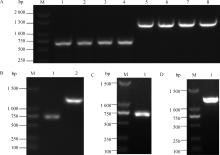
Fig.1
The construction and identification of nanobody expression vectorA. The PCR amplification results of D67 and D67-GFP (M. DL2000 DNA marker; 1-4. D67 gene; 5-8. D67-GFP gene); B. The colony PCR results of DH5α (M. DL2000 DNA marker; 1.D67 gene; 2. D67-GFP gene); C. The colony PCR result of BL21 (M. DL2000 DNA marker; 1. D67 gene); D. The colony PCR result of BL21(M. DL2000 DNA marker; 1. D67-GFP gene)"
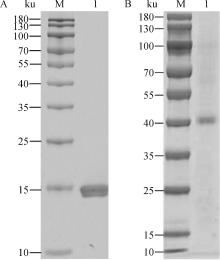
Fig.2
SDS-PAGE results of nanobodies D67 and D67-GFP against H7 subtype avian influenza virusA. The SDS-PAGE result of nanobody D67(M. Protein marker; 1. D67); B. The SDS-PAGE result of nanobody D67-GFP(M. Protein marker; 1. D67-GFP)"
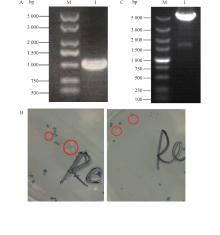
Fig.3
The construction and identification of antigen expression vector FastBac-Dual-H7-HA1A. The PCR amplification result of H7-HA1 (M. DL2000 DNA marker; 1.H7-HA1 gene); B. The blue-white spot screening results of DH10Bac; C. The PCR amplification result of DH10Bac(M. DL5000 DNA marker; 1.the colony of DH10Bac)"

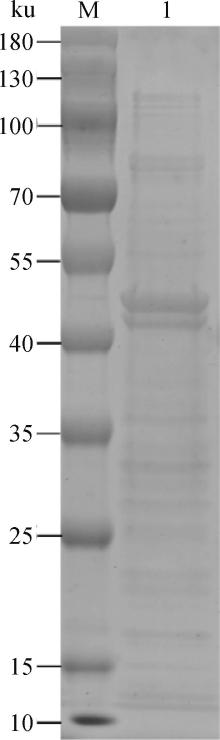
Fig.4
The SDS-PAGE result of the H7 subtype avian influenza virus antigen H7-HA1M. Protein marker; 1. H7-HA1"
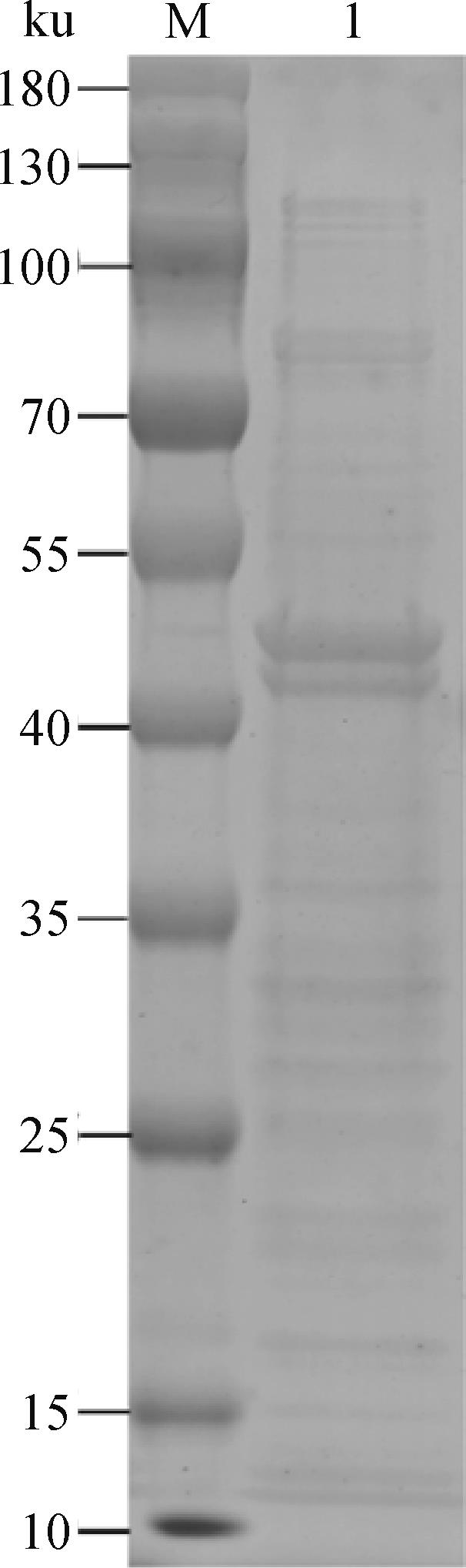

Fig.5
The immunofluorescence results of nanobody D67-GFP against H7 subtype avian influenza virusA. Treatment group; B. Control group. Bar=100 μm"
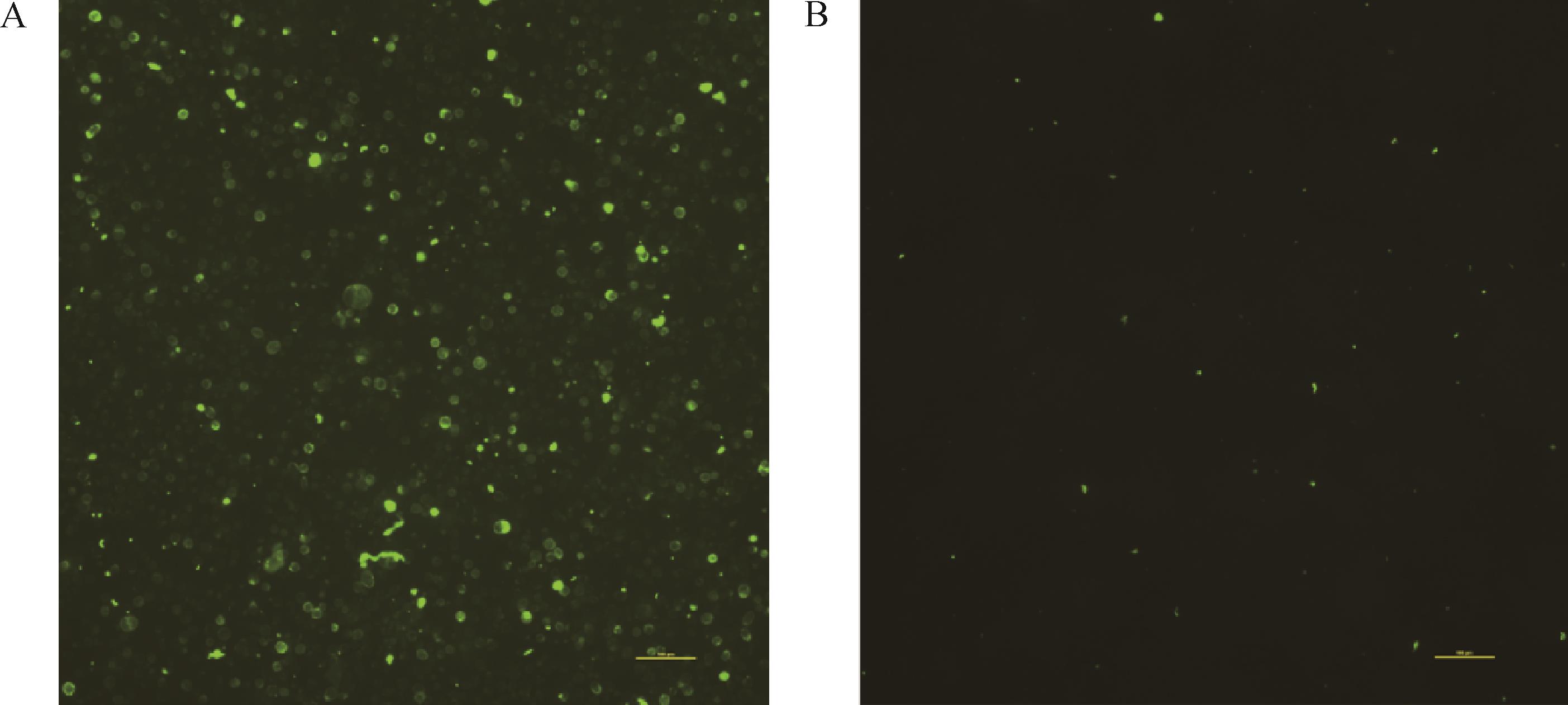
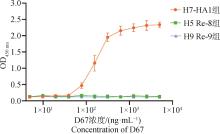
Fig.6
The ELISA result of nanobody D67 against H7 subtype avian influenza virus"
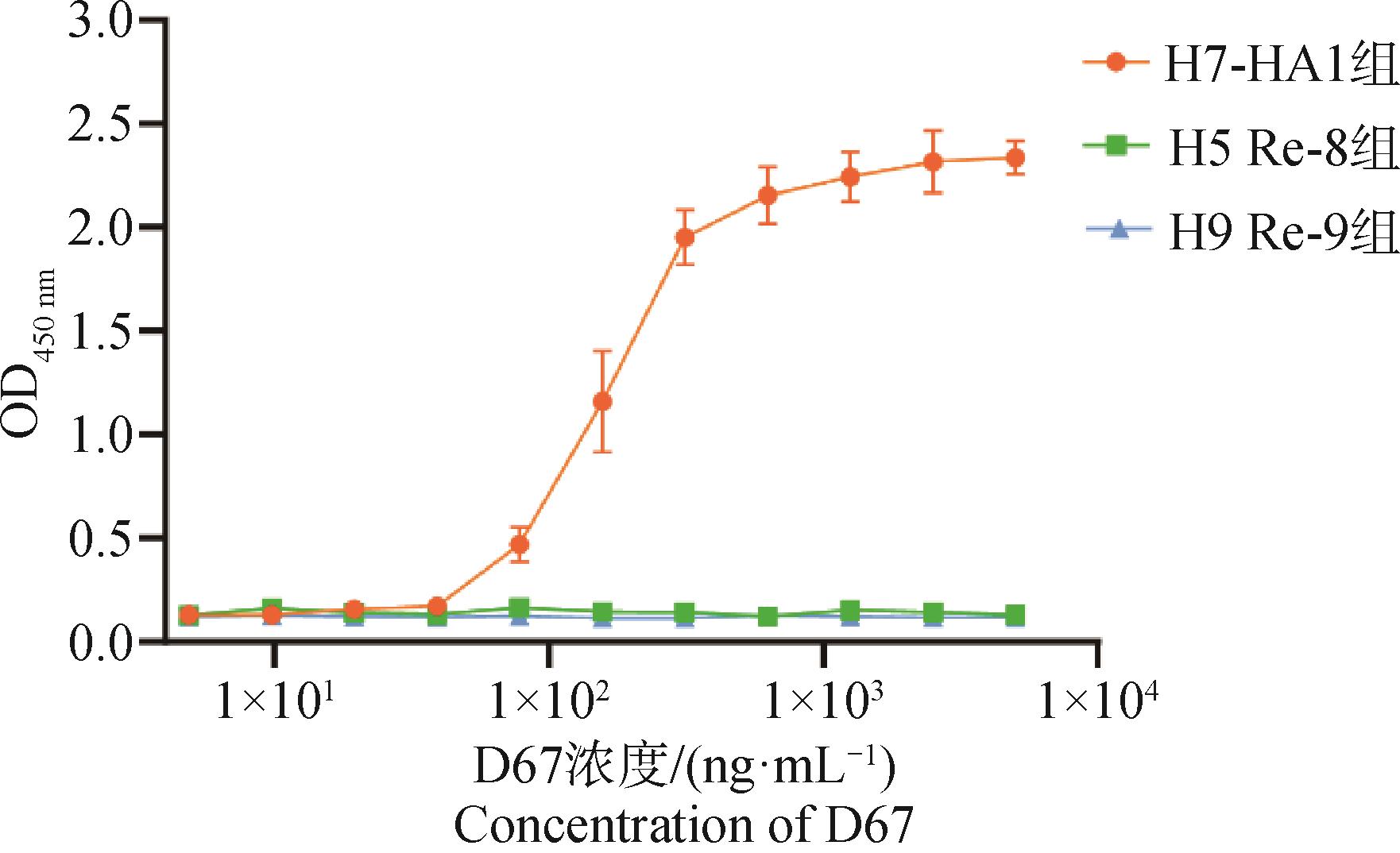
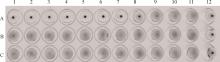
Fig.7
The HI result of nanobody D67 against H7 subtype avian influenza virusA. H7-HA1 antigen group; B. H5 Re-8 antigen group; C. H9 Re-9 antigen group"
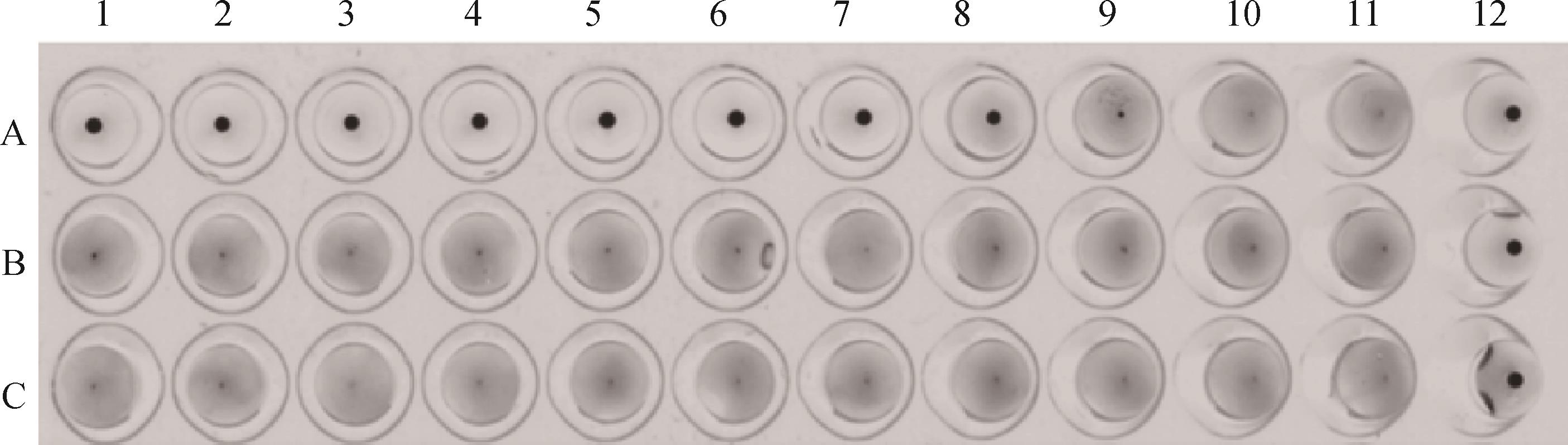
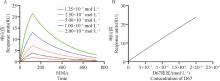
Fig.8
The SPR results of nanobody D67 against H7 subtype avian influenza virusA. Molecular interaction kinetic curve graph; B. Affinity curve graph"
| [1] | THOMPSON A J,PAULSON J C.Adaptation of influenza viruses to human airway receptors[J].J Biol Chemist,2021,296:100017. |
| [2] | CHAUHAN R P,GORDON M L.An overview of influenza A virus genes,protein functions,and replication cycle highlighting important updates[J].Virus Gen,2022,58(4):255-269. |
| [3] | LONG J S,MISTRY B,HASLAM S M,et al.Host and viral determinants of influenza A virus species specificity[J].Nat Rev Microbiol,2019,17(2):67-81. |
| [4] | JANG G S,KIM I Y,CASEL B A M,et al.HA N193D substitution in the HPAI H5N1 virus alters receptor binding affinity and enhances virulence in mammalian hosts[J].Emerg Microb Infect,2024,13(13):230. |
| [5] | XU Y,PENG R C,ZHANG W,et al.Avian-to-human receptor-binding adaptation of avian H7N9 influenza virus hemagglutinin[J].Cell Rep,2019,29(2):2217-2228. |
| [6] | SHI J Z,DENG G H,KONG H H,et al.H7N9 virulent mutants detected in chickens in China pose an increased threat to humans[J].Cell Res,2017,27(12):1409-1421. |
| [7] | HUANG X Y,CAI Y Q,YIN G H,et al.Identification of catalytically active domain epitopes in neuraminidase protein of H9N2 subtype of avian influenza virus[J].Avian Pathol,2023,52(5):377-387. |
| [8] | QI W B,JIA W X,LIU D,et al.Emergence and adaptation of a novel highly pathogenic H7N9 influenza virus in birds and humans from a 2013 human-infecting low-pathogenic ancestor[J].J Virol,2018,92(2):e00921-17. |
| [9] | LIU D,SHI W F,SHI Y,et al.Origin and diversity of novel avian influenza A H7N9 viruses causing human infection:phylogenetic structural and coalescent analyses[J].Lancet,2013,381(9881):1926-1932. |
| [10] | LAM T T Y,ZHOU B P,WANG J,et al.Dissemination divergence and establishment of H7N9 influenza viruses in China[J].Nature,2015,522(7554):102-U265. |
| [11] | HU Z L,JIAO X N,LIU X F,et al.Antibody immunity induced by H7N9 avian influenza vaccines:evaluation criteria,affecting factors,and implications for rational vaccine design[J].Frontiers in Microbiology,2017,8:1898. |
| [12] | LI C J,CHEN H L.H7N9 influenza virus in China[J].Cold Spring Harb Perspect Med,2021,11(8):a038349. |
| [13] | WESTERHUIS B,TEN HULSCHER H,JACOBI R,et al.Specific memory B cell response in humans upon infection with highly pathogenic H7N7 avian influenza virus[J].Sci Rep,2020,10(5):5458. |
| [14] | 黄 程,杨志远,林 健,等.H9亚型禽流感病毒mRNA疫苗的构建与效力评价[J].畜牧兽医学报,2025,56(4):1843-1853. |
| HUANG C,YANG Z Y,LIN J,et al.Construction and efficacy evaluation of mRNA vaccines against H9 subtype avian influenza virus[J].Acta Veterinaria et Zootechnica Sinica,2025,56(4):1843-1853.(in Chinese) | |
| [15] | STEPHENS C B,SPACKMAN E,PANTIN-JACKWOOD M J,et al.Effects of an H7 highly pathogenic and related low pathogenic avian influenza virus on chicken egg production,viability,and virus contamination of egg contents and surfaces [J].Avian Dis,2020,64(2):143-148. |
| [16] | 刘照生,伏晓庆,罗春蕊,等.云南省2023年活禽市场8株H9N2亚型禽流感病毒全基因组序列分析[J].中国热带医学,2025,25(3):350-357. |
| LIU Z S,FU X Q,LUO C R,et al.Whole genomic analysis of 8 strains of H9N2 subtype avian influenza virus isolates from livepoultry markets in Yunnan,2023[J].China Tropical Medicine,2025,25(3):350-357.(in Chinese) | |
| [17] | 冯丽妃,杜珊妮.H5N1禽流感新挑战:牛源病毒如何影响人类健康[N].中国科学报,2025-02-18(1 ). |
| FENG L F,DU S N.H5N1 avian influenza:A new challenge—How the bovine-origin virus impacts human health[N].China Science Daily,2025-02-18(1).(in Chinese) | |
| [18] | WAN X,LI J,WANG Y,et al.H7N9 virus infection triggers lethal cytokine storm by activating gasdermin E-mediated pyroptosis of lung alveolar epithelial cells[J].Nat Sci Rev,2022,9(1):137. |
| [19] | SHI J,ZENG X,CUI P,et al.Alarming situation of emerging H5 and H7 avian influenza and effective control strategies[J].Emerg Microb Infect,2023,12(1):2155072. |
| [20] | PETERS L,GREENE C,AZZIZ-BAUMGARTNER E,et al.Strategies for combating avian influenza in the Asia-Pacific [J].Western Pac Surveill Response J,2018,9(5 Suppl 1):8-10. |
| [21] | LI A,KASAI T.The asia pacific strategy for emerging diseases-a strategy for regional health security[J].Western Pac Surveill Response J,2011,2(1):1-6. |
| [22] | HAMERS-CASTERMAN C,ATARHOUCH T,MUYLDERMANS S,et al.Naturally occurring antibodies devoid of light chains[J].Nature,1993,363(6428):446-448. |
| [23] | ROTHBAUER U,ZOLGHADR K,MUYLDERMANS S,et al.A versatile nanotrap for biochemical and functional studies with fluorescent fusion proteins[J].Mol Cell Proteom,2008,7(2):282-289. |
| [24] | BORUAH B M,LIU D,YE D,et al.Single domain antibody multimers confer protection against rabies infection[J].PLoS One,2013,8(8):e71383 |
| [25] | 王若瑜,白崇智,仲启明,等.人乳头瘤病毒16型纳米抗体的筛选及鉴定[J].中国肿瘤生物治疗杂志,2024,31(12):1211-1217. |
| WANG R Y,BAI C Z,ZHONG Q M,et al.Screening and identification of nanobody against human papillomavirus 16[J].Chinese Journal of Cancer Biotherapy,2024,31(12):1211-1217.(in Chinese) | |
| [26] | SOETENS E,BALLEGEER M,SAELENS X.An inside job:applications of intracellular single domain antibodies[J].Biomolecules,2020,10(12):1663. |
| [27] | ABULROB A,ZHANG J B,TANHA J,et al.Single domain antibodies as blood-brain barrier delivery vectors[J].Int Congress Series,2005,1277(1):212-223. |
| [28] | SCULLY M,CATALAND S R,PEYVANDI F,et al.Caplacizumab treatment for acquired thrombotic thrombocytopenic Purpura[J].N Engl J Med,2019,380(4):335-346. |
| [29] | WANG X R,CHEN Q,SUN Z C,et al.Nanobody affinity improvement:Directed evolution of the anti-ochratoxin A single domain antibody[J].Int J Biol Macromol,2020,151:312-321. |
| [30] | EL SALAMOUNI N S,CATER J H,SPENKELINK L M,et al.Nanobody engineering:computational modelling and design for biomedical and therapeutic applications[J].FEBS Open Bio,2025,15(2):236-253. |
| [31] | SHI W F,GAO F.Emerging H5N8 avian influenza viruses[J].Science,2021,372(6544):784-786. |
| [32] | 谢倩梅.酵母表面展示H5亚型禽流感病毒纳米抗体载体的构建和应用[D].广州:华南农业大学,2023. |
| XIE Q M.Construction and application of yeast surface display about the nanobody vector of H5 influenza virus[D].Guangzhou:South China Agricultural of University,2023.(in Chinese) | |
| [33] | MUYLDERMANS S.Nanobodies:natural single-domain antibodies[J].Annu Rev Biochem,2013,82:775-797. |
| [1] | SUI Jinyu, WU Yunpu, LI Chao, WANG Suchun, PAN Junhui, QI Qian, WEI Shimeng, WANG Kaicheng. Analysis of the Threat Posed to Human and Mammalian Health by H5 Subtype Influenza Virus [J]. Acta Veterinaria et Zootechnica Sinica, 2025, 56(9): 4232-4240. |
| [2] | GUO Deyang, HU Hui, ZHENG Xueli, JIANG Yanfen. Prokaryotic Expression and Analysis of Bacteriostatic Effects of Porcine β-defensin-1 [J]. Acta Veterinaria et Zootechnica Sinica, 2025, 56(6): 2836-2846. |
| [3] | ZHAO Yunhai, ZHANG Yangyang, MA Haiyun, WANG Qing, HE Xiaoxiao, LIU Kai, ZHANG Yuting, LIU Yudong, YANG Yongning, WU Xiaochun, XING Xiaoyong, QUAN Guomei, ZHANG Zhixiong, BAO Shijun. Prokaryotic Expression and Adhesion Characteristics of Molecular Chaperone Dnak of Mycoplasma bovis [J]. Acta Veterinaria et Zootechnica Sinica, 2025, 56(6): 2868-2878. |
| [4] | JIA Qiong, GAO Shuaipeng, XIU Yanyu, REN Hongrui, ZHANG Shuyin, YANG Haoyu, FAN Ruiwen. Establishment of Double-antibody Sandwich ELISA Method Based on the Specifiec Nanobody against Clostridium Perfringens β Toxin [J]. Acta Veterinaria et Zootechnica Sinica, 2025, 56(6): 2906-2916. |
| [5] | WU Qiong, LI Lingdan, YUAN Hui, BIN Chen, DENG Ke, LI Wei, YE Shiyi, LI Guopan, SHEN Qingchun, XIONG Tao. Prokaryotic Expression of PoIFN-α 8s and Identification of Its Activity in vitro and in vivo [J]. Acta Veterinaria et Zootechnica Sinica, 2025, 56(5): 2413-2423. |
| [6] | LIN Xinyi, JIANG Xinyu, SU Zinuo, WANG Yuling, RUAN Shiyu, HONG Hailong, WU Jiahao, BO Ruonan. Study on Preparation and the Mucosal Immune Adjuvant Activity of Ultra-Large Mesoporous Silica Nanoparticles Loading Polysaccharide from Atractylodes macrocephala Koidz [J]. Acta Veterinaria et Zootechnica Sinica, 2025, 56(5): 2507-2519. |
| [7] | SHI Yuting, HAN Xinyu, ZHONG Muhui, LIN Yaozhong, LIU Tengfei, LI Yan, YIN Huifang, JIA Weixin. Establishment and Validation of the Reverse Genetics System for G57 Genotype H9N2 Subgenotype Avian Influenza Virus [J]. Acta Veterinaria et Zootechnica Sinica, 2025, 56(4): 1825-1833. |
| [8] | HUANG Cheng, YANG Zhiyuan, LIN Jian, CHENG Huimin, WANG Mi, MAO Huilin, WANG Guoliang, LIU Guiming, ZHAO Jicheng, LIU Yuehuan. Construction and Efficacy Evaluation of mRNA Vaccines against H9 Subtype Avian Influenza Virus [J]. Acta Veterinaria et Zootechnica Sinica, 2025, 56(4): 1843-1853. |
| [9] | GAO Zhiqiang, LAI Ping'an, SONG Yueqian, CHONG Yan, GUO Youran, BAI Zilong, GUO Huimin, WANG Lin, PU Jing, SHI Xiju, REN Tong, ZHAO Xiangpeng. Studies and Application of Multi-target Nucleic Acid Mass Spectrometry Detection Method for Avian Influenza/Newcastle Disease Virus [J]. Acta Veterinaria et Zootechnica Sinica, 2025, 56(3): 1386-1395. |
| [10] | WU Jiahui, SHEN Shiyan, DENG Jinbo, WU Haiyang, REN Zhixin, WU Yangbo, HUANG Juan, HUANG Haobin, PAN Weixiong, ZHAO Zengjue, HE Rongxiao, SUN Chongjun, ZHANG Linghua. Construction of Recombinant Lactococcus lactis Inducible Expressing HA Protein of H5N1 Subtype Avian Influenza Virus and Analysis of Its Immunogenicity in Ducks [J]. Acta Veterinaria et Zootechnica Sinica, 2025, 56(2): 774-787. |
| [11] | SHAO Yongheng, NI Minting, GAO Mengling, TANG Jiao, ZHANG Gengxin, LIN Shengyu, LIU Guangliang, CHEN Jianing, WANG Wenhui. Prokaryotic Expression of VP1 Protein to Porcine Teschovirus Type 5 and the Establishment of an Indirect ELISA Detection Method [J]. Acta Veterinaria et Zootechnica Sinica, 2025, 56(2): 883-889. |
| [12] | LIN Yating, LIU Shuyi, QIU Deyang, YANG Dawei, CHEN Hu, LI Guimei, SHAO Di. Establishment of RT-RAA-LFD Detection Method for Avian Influenza Virus H5 and H9 Subtypes [J]. Acta Veterinaria et Zootechnica Sinica, 2025, 56(12): 6308-6315. |
| [13] | ZHANG Yaling, JING Wei, ZHAO Yan, HE Xiaobing, FANG Yongxiang, SU Yang, LI Xiaoming, ZHANG Hui, JING Zhizhong, CHEN Guohua. Establishment of Prokaryotic Expression of the ORF002 Protein of Lumpy Skin Disease Virus and an Indirect ELISA Antibody Detection Method [J]. Acta Veterinaria et Zootechnica Sinica, 2025, 56(11): 5817-5825. |
| [14] | CAO Qiuxia, YAN Kexin, CHENG Zhenkong, BIAN Xianyu, WANG Chuanhong, LI Sufen, ZHANG Xuehan, FAN Baochao, GUO Rongli, YANG Shanshan, WANG Xiaodu, LI Bin. Expression and Biological Activity Analysis of Porcine CCL25 Recombinant Protein [J]. Acta Veterinaria et Zootechnica Sinica, 2025, 56(11): 5864-5874. |
| [15] | ZHANG Taiming, LI Yaxuan, WANG Changshou, HU Ge. Forsythiaside A Inhibits Replication of H9N2 Avian Influenza Virus by Modulating the TLR3-NF-κB Signaling Pathway [J]. Acta Veterinaria et Zootechnica Sinica, 2025, 56(10): 5266-5276. |
| Viewed | ||||||
|
Full text |
|
|||||
|
Abstract |
|
|||||
