


Acta Veterinaria et Zootechnica Sinica ›› 2026, Vol. 57 ›› Issue (1): 221-233.doi: 10.11843/j.issn.0366-6964.2026.01.019
• ANIMAL GENETICS AND BREEDING • Previous Articles Next Articles
DU Baobao1( ), YANG Mengzhe1, SUN Xiuzhu2, REN Zhanjun1, WANG Shuhui1()
Received:2025-06-03
Online:2026-01-23
Published:2026-01-26
Contact:
WANG Shuhui
E-mail:18794097425@nwafu.edu.cn;wangshuhui252@163.com
CLC Number:
DU Baobao, YANG Mengzhe, SUN Xiuzhu, REN Zhanjun, WANG Shuhui. Elucidating Key Genes Affecting Coarse Hair Percentage in Rex and Hycole Meat Rabbit Hybrid Offspring via Transcriptome Sequencing[J]. Acta Veterinaria et Zootechnica Sinica, 2026, 57(1): 221-233.
Table1
Primers for quantitative real-time PCR"
基因 Gene | 引物序列(5′→3′) Primer sequence | 产物长度/bp Product size |
|---|---|---|
| GAPDH | F: TCGTCTCCTGCGACTTCAAC R: ACCCTGTTGCTGTAGCCAAA | 130 |
| FOXP3 | F:TTCCGAAACCACCCTGCTAC R:AACTCATCCACGGTCCACAC | 113 |
| CENPE | F:AACAGTGGGAGCATGACCTG R:ATGGGTGTCAGATGCCAAGG | 98 |
| MMP13 | F:TCACGCTTTTCCTCCTGGAC R:CAAGCCCTAAGGAATGGCCA | 134 |
| MMP3 | F:CCACTCCCTGGGTCTGTTTC R:GCCGGTCCATAGAGGGATTG | 135 |
| FGF7 | F:GCCCTGAGCGACATACAAGA R:CCAACTGCCACAGTCCTGAT | 175 |
Table 2
Statistics of fur quality phenotypes of F2-generation hybrid rabbits"
性状 Trait | 最小值 Minimumvalue | 最大值 Maximumvalue | 中位数 Median | 平均值±标准差 Mean±Standard error | 变异系数/% Coefficient of variation |
|---|---|---|---|---|---|
| 被毛长度/cm Hair length | 1.71 | 2.76 | 2.33 | 2.33±0.32 | 13.53 |
| 皮张鲜重/g Fresh pelt weight | 195.00 | 490.00 | 365.50 | 374.00±80.42 | 21.50 |
| 皮板厚度/mm Dermis thickness | 2.00 | 3.34 | 2.48 | 2.63±0.41 | 15.75 |
| 皮张长度/cm Pelt length | 32.10 | 42.10 | 37.55 | 37.31±2.70 | 7.24 |
| 皮张宽度/cm Pelt width | 21.90 | 28.00 | 26.05 | 25.53±1.92 | 7.51 |
| 皮张面积/cm2 Pelt area | 702.99 | 1 092.00 | 974.36 | 953.38±106.32 | 11.15 |
| 被毛细度/μm Hair fineness | 16.54 | 32.46 | 20.21 | 21.95±5.02 | 22.85 |
| 初级毛囊密度/(个·mm-2) Primary hair follicle density | 3.00 | 6.00 | 3.84 | 4.17±0.97 | 23.25 |
| 次级毛囊密度/(个·mm-2) Secondary hair follicle density | 82.67 | 146.00 | 108.84 | 110.94±19.02 | 17.15 |
| S/P值 S/P ratio | 18.31 | 38.55 | 27.49 | 27.73±6.91 | 24.92 |
| 粗毛率/% Coarse hair percentage | 3.00 | 14.00 | 12.00 | 9.17±4.30 | 46.94 |
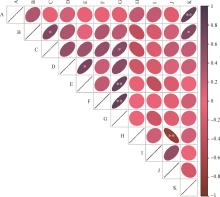
Fig.1
Correlation analysis of fur qualityA represents the hair length; B represents the hair fineness; C represents the fresh weight of the skin; D represents the thickness of the skin plate; E represents the length of the skin; F represents the width of the skin; G represents the area of the skin; H represents the density of primary hair follicles; I represents the density of secondary hair follicles; J represents the S/P value; K represents the coarse hair percentage. ** indicates extremely significant correlation (P<0.01), * indicates significant correlation (P<0.05)"
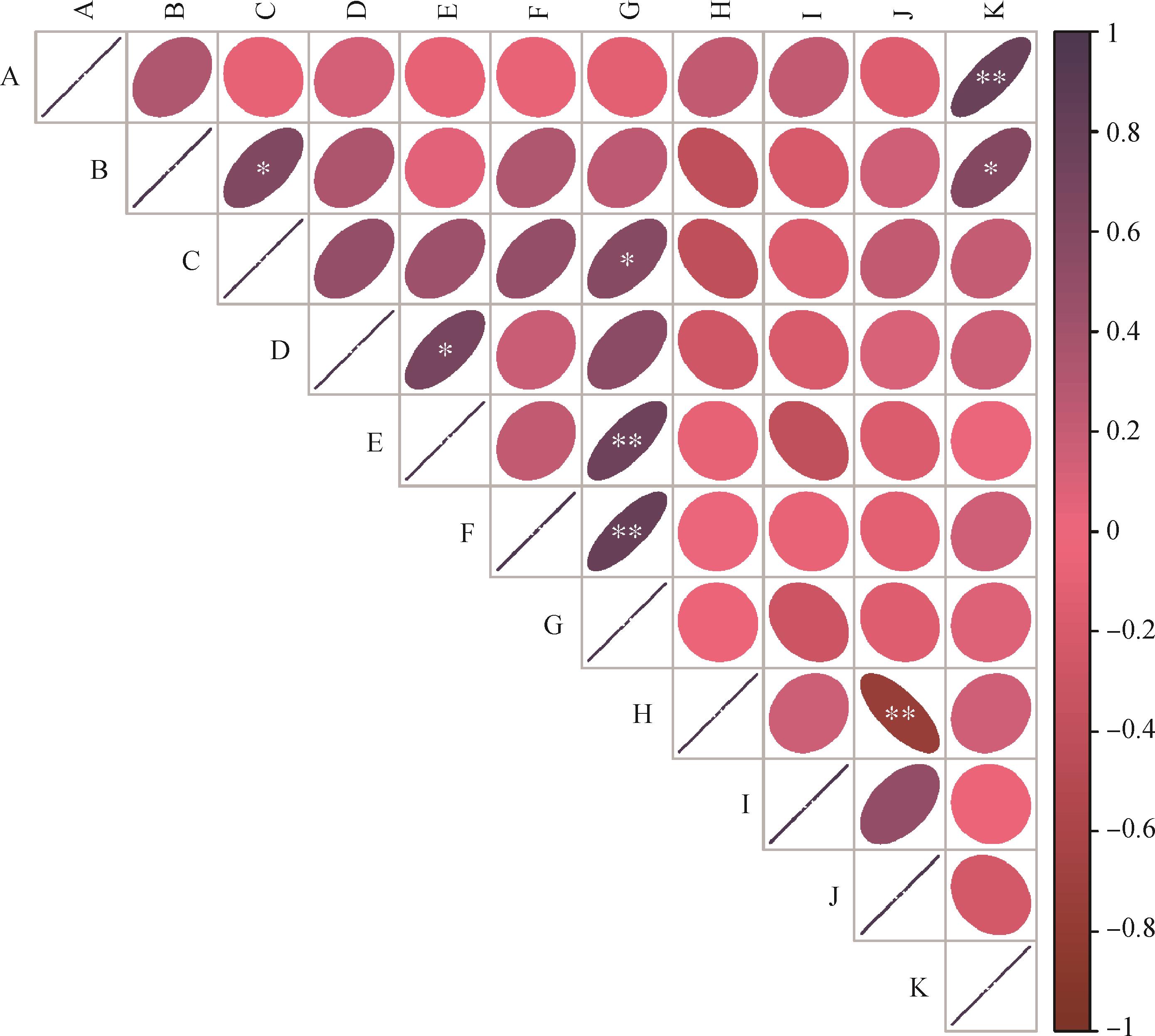
Table 3
Sequencing data quality"
样本名称 Sample name | 原始读段 Raw reads | 原始碱基数/G Raw bases | 过滤读段 Clean reads | 过滤碱基数/G Clean bases | 测序错误率 Error rate | Q20 | Q30 | GC pct |
|---|---|---|---|---|---|---|---|---|
| C1 | 467 94 086 | 7.02 | 43 611 690 | 6.54 | 0.01 | 98.98 | 97.20 | 55.97 |
| C2 | 46 771 506 | 7.02 | 44 099 066 | 6.61 | 0.01 | 98.83 | 96.84 | 54.02 |
| C3 | 42 685 678 | 6.40 | 39 925 176 | 5.99 | 0.01 | 98.74 | 96.67 | 55.97 |
| C4 | 53 288 656 | 7.99 | 48 225 400 | 7.23 | 0.01 | 98.68 | 96.55 | 55.19 |
| C5 | 44 297 634 | 6.64 | 41 113 674 | 6.17 | 0.01 | 98.84 | 96.92 | 52.28 |
| X1 | 46 946 412 | 7.04 | 44 517 474 | 6.68 | 0.01 | 98.82 | 96.87 | 54.52 |
| X2 | 45 152 604 | 6.77 | 42 733 180 | 6.41 | 0.01 | 98.77 | 96.72 | 55.10 |
| X3 | 50 136 554 | 7.52 | 50 006 982 | 7.50 | 0.01 | 98.74 | 96.67 | 56.81 |
| X4 | 47 641 854 | 7.15 | 47 552 784 | 7.13 | 0.01 | 98.78 | 96.74 | 55.54 |
| X5 | 52 115 464 | 7.82 | 48 179 530 | 7.23 | 0.01 | 98.79 | 96.80 | 54.01 |
Table 4
Statistics of fur quality phenotypes in the high coarse hair percentage group and the low coarse hair percentage group"
项目 Item | 粗毛率高组 CH | 粗毛率低组 CL | P值 P-value |
|---|---|---|---|
| 被毛长度/cm Hair length | 2.51±0.22 | 2.08±0.26 | 0.023* |
| 被毛细度/μm Hair fineness | 26.99±3.39 | 18.52±1.46 | 0.001** |
| 皮张鲜重/g Fresh pelt weight | 415.20±62.14 | 349.20±99.86 | 0.245 |
| 皮板厚度/mm Dermis thickness | 2.64±0.46 | 2.54±0.32 | 0.702 |
| 皮张长度/cm Pelt length | 37.00±2.36 | 36.92±2.84 | 0.963 |
| 皮张宽度/cm Pelt width | 26.18±1.87 | 25.04±1.97 | 0.376 |
| 皮张面积/cm2 Pelt area | 969.71±105.62 | 928.66±136.42 | 0.610 |
| 粗毛率/% Coarse hair percentage | 12.80±0.84 | 4.40±1.14 | 0.000** |
Table 5
Analysis of hair follicle density between the high coarse hair percentage group and the low coarse hair percentage group"
项目 Item | 粗毛率高组 CH | 粗毛率低组 CL | P值 P-value |
|---|---|---|---|
| 初级毛囊密度/(个·mm-2) Primary hair follicle density | 3.87±0.80 | 3.93±0.86 | 0.900 |
| 次级毛囊密度/(个·mm-2) Secondary hair follicle density | 109.40±24.08 | 112.93±19.92 | 0.807 |
| S/P值 S/P ratio | 28.53±4.47 | 29.99±8.61 | 0.745 |
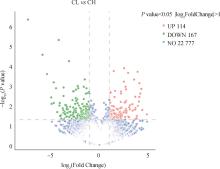
Fig.2
The volcano map of differentially expressed genes between the high coarse hair percentage group and the low coarse hair percentage group"
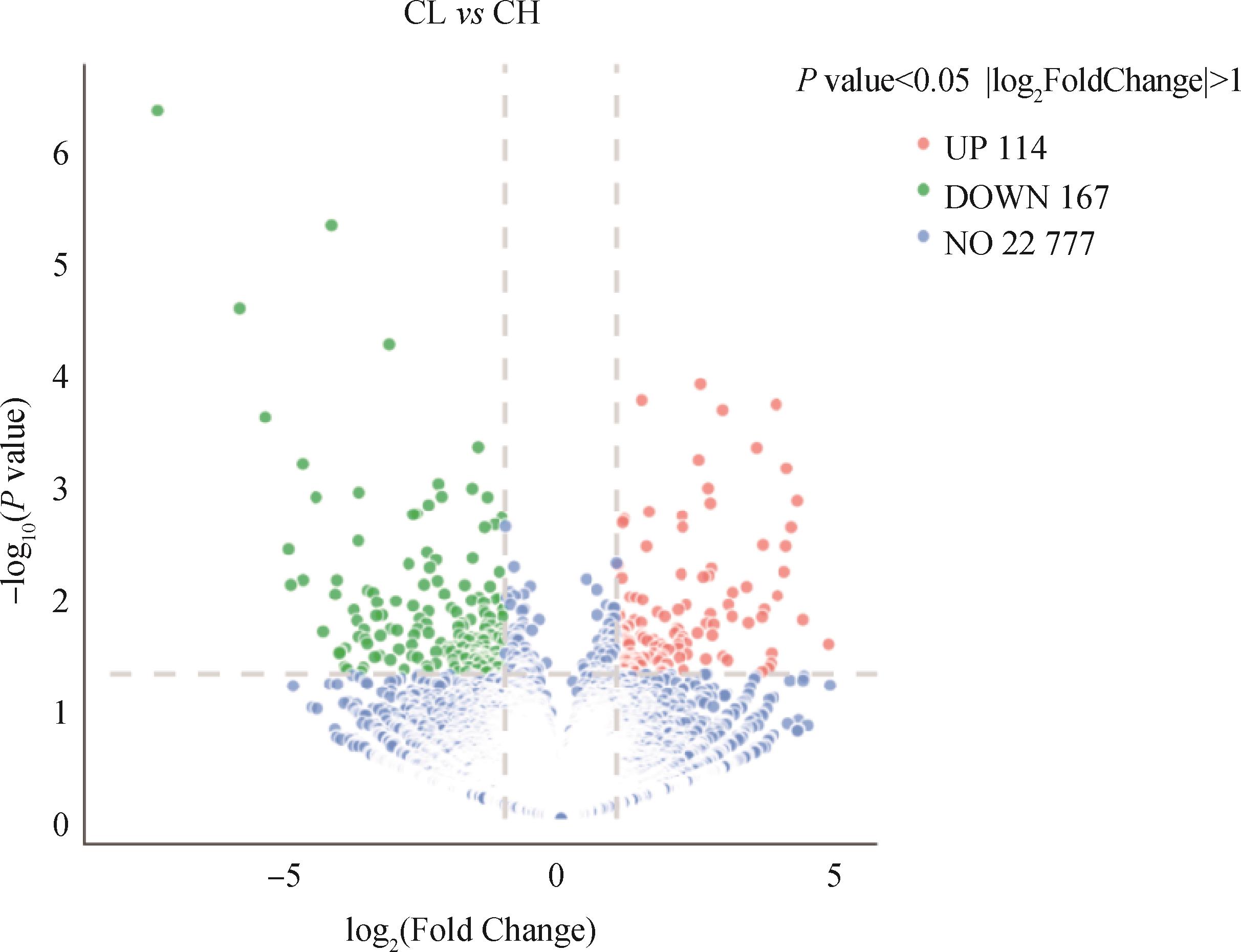
Fig.3
The clustering analysis of differentially expressed genes between the high coarse hair percentage group and the low coarse hair percentage group"
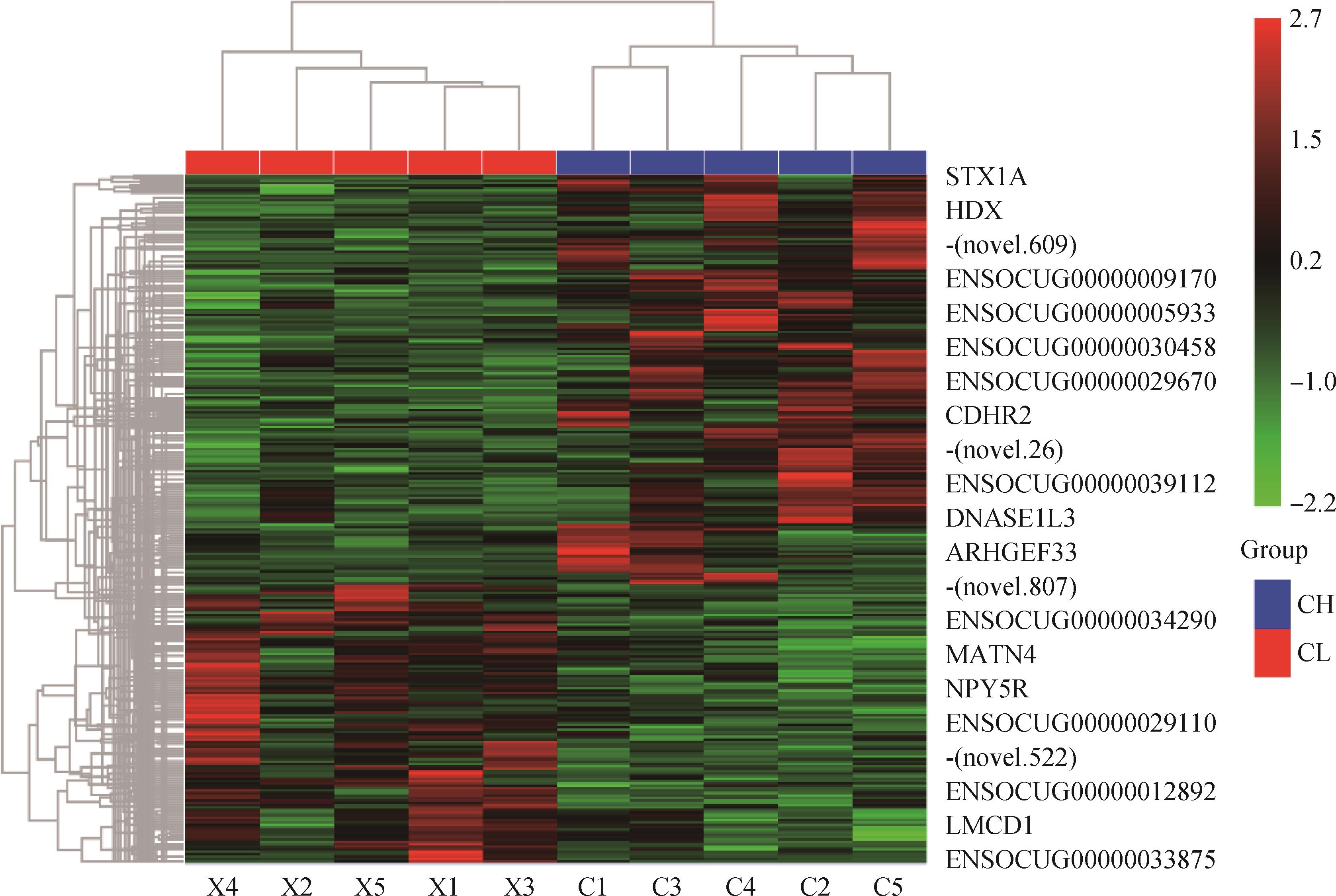
Fig.4
Bar chart of GO functional analysis of the differentially expressed genes"

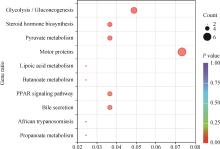
Fig.5
KEGG enrichment analysis diagram of differentially expressed genes"
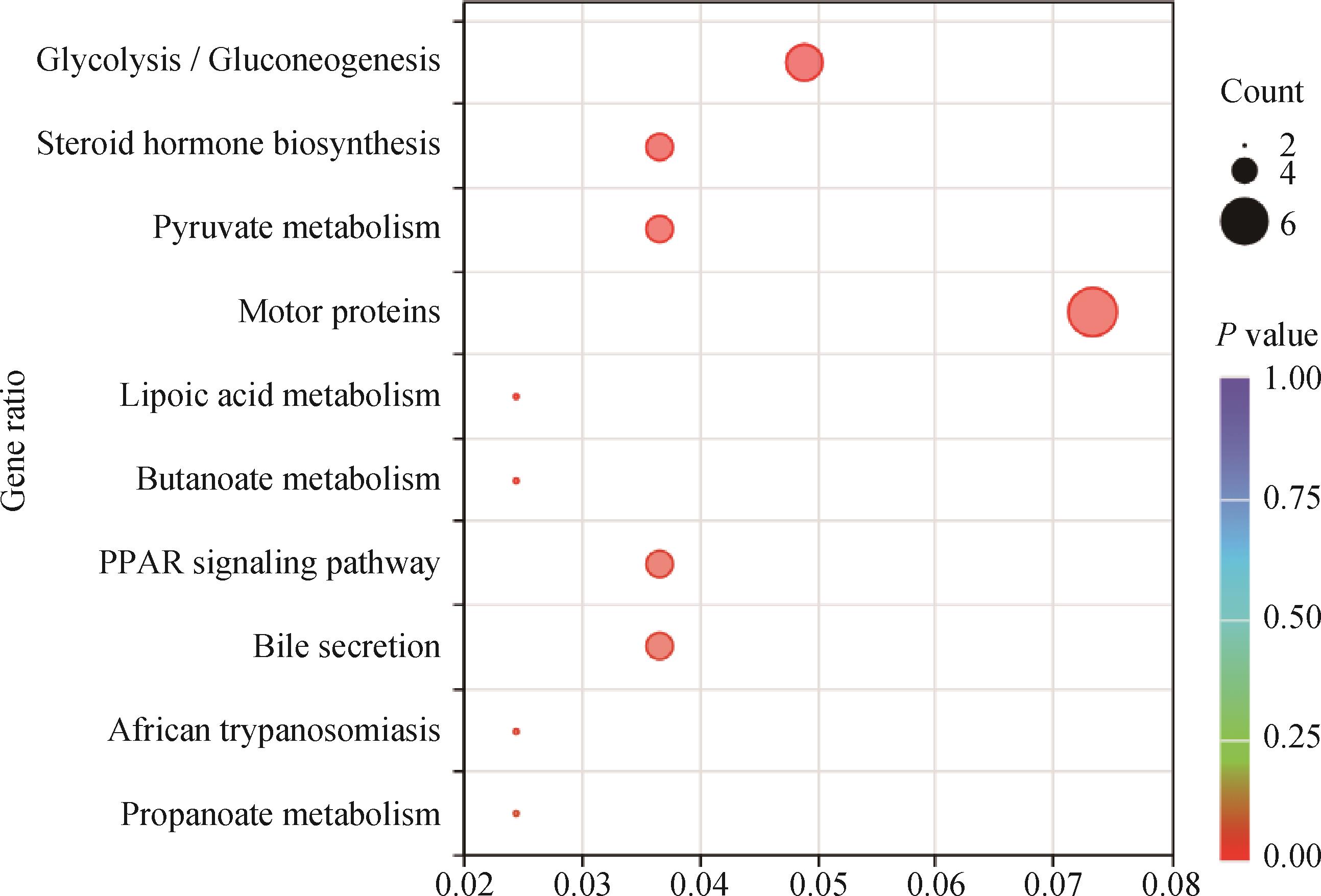
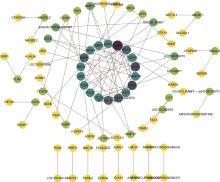
Fig.6
PPI network analysis diagram of differentially expressed genes"
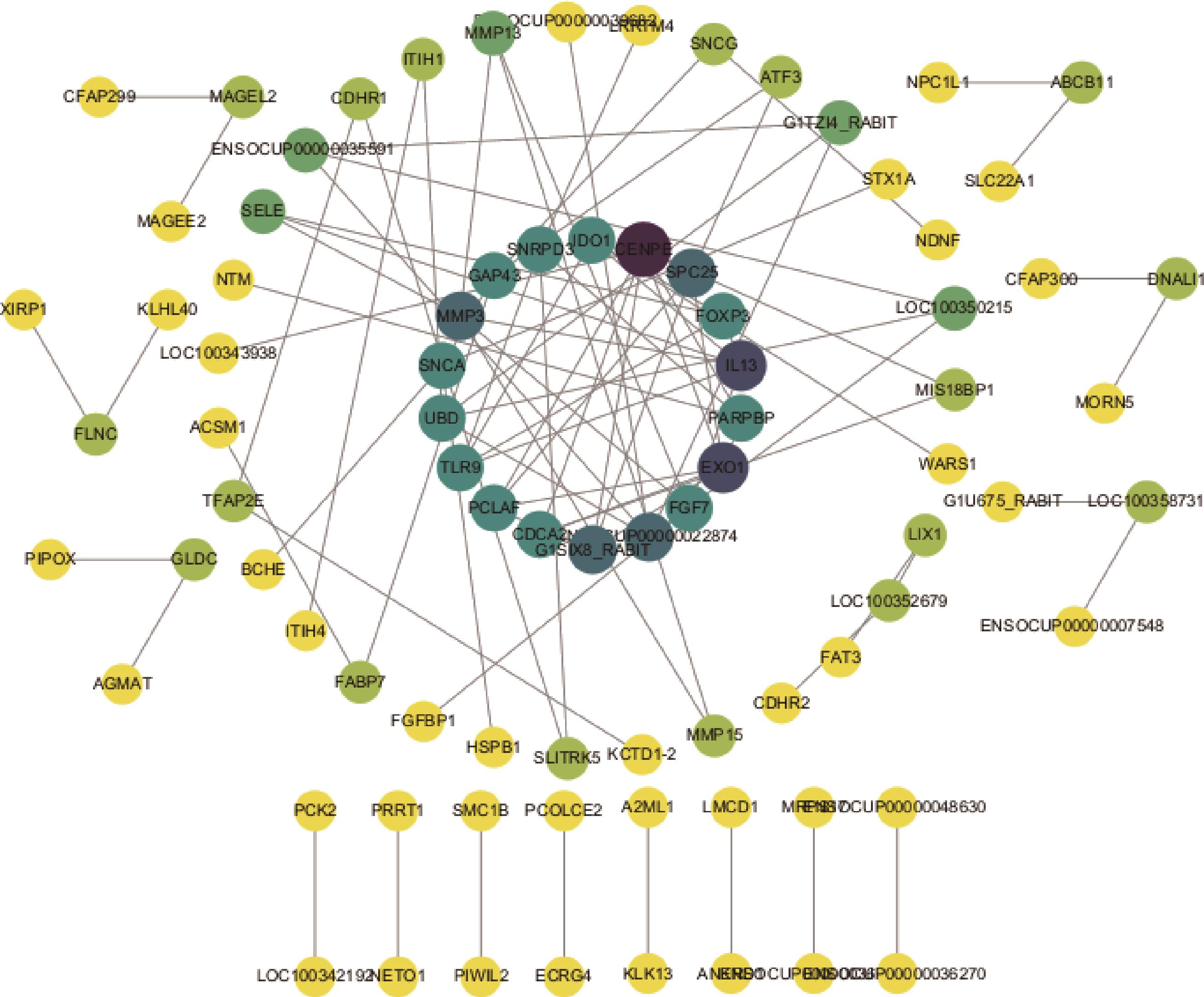
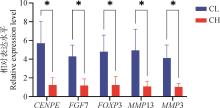
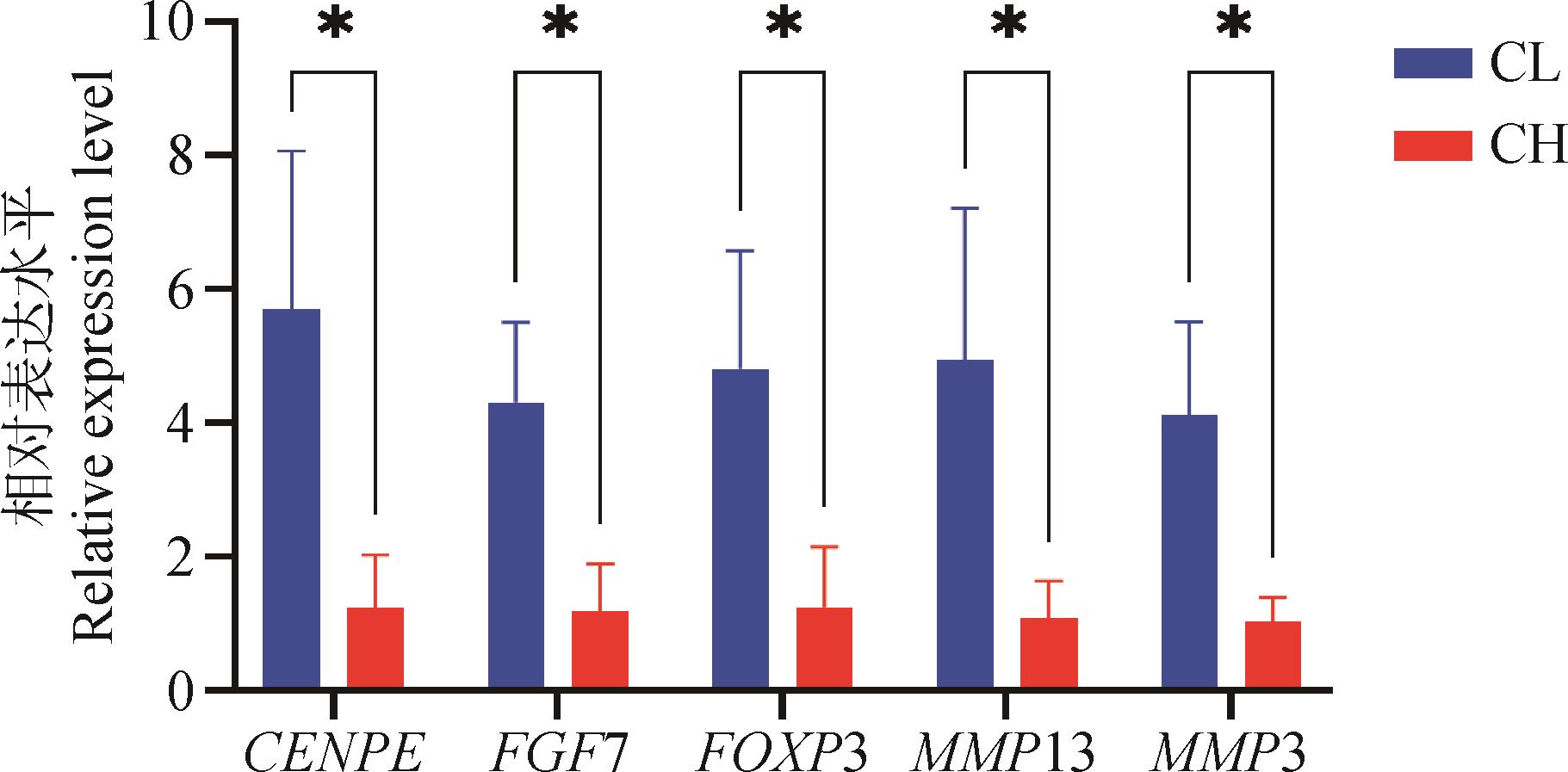
Fig.7
Gene RT-qPCR verification"
| [1] | 吴晓静.饲粮维生素D添加水平对獭兔毛囊发育和脂肪代谢的影响[D].泰安:山东农业大学,2022. |
| WU X J.Effects of dietary vitamin D supplementation on hair follicle development and fat metabolism in Rex rabbits[D].Taian:Shandong Agricultural University,2022.(in Chinese) | |
| [2] | 张 晶,荆战星,尹华山,等.伊拉、伊高乐、伊普吕三种法国配套系父母代在重庆同一环境下的性能测定分析[J].中国养兔,2019(3):7-9. |
| ZHANG J,JING Z X,YIN H S,et al.Analysis on the performance of Hyla,Hycole,Hyplus three French matching parents in Chongqing in the same environment[J].China Rabbit Farming,2019(3):7-9.(in Chinese) | |
| [3] | 吴淑琴,赵月平,杨翠军,等.不同毛色獭兔被毛品质比较研究[J].黑龙江畜牧兽医,2018(13):202-204. |
| WU S Q,ZHAO Y P,YANG C J,et al.Comparative study on wool quality of Rex rabbits with different coat colors[J].Heilongjiang Animal Husbandry and Veterinary Medicine,2018(13):202-204.(in Chinese) | |
| [4] | 武拉平,王建勋,秦应和.2022年兔产业生产概况、2023年发展趋势及政策建议[J].中国畜牧杂志,2023,59(3):348-352. |
| WU L P,WANG J X,QIN Y H.Production overview of the rabbit industry in 2022,development trend in 2023 and policy recommendations[J].Chinese Journal of Animal Science,2023,59(3):348-352.(in Chinese) | |
| [5] | KIM T H,KIM N S,LIM D,et al.Generation and analysis of large-scale expressed sequence tags (ESTs) from a full-length enriched cDNA library of porcine backfat tissue[J].BMC Genomics,2006,7:36. |
| [6] | WANG Z,GERSTEIN M,SNYDER M.RNA-Seq:a revolutionary tool for transcriptomics[J].Nat Rev Genet,2009,10(1):57-63. |
| [7] | 曾建红.蜀兴1号肉兔和伊拉兔生产性能及其背最长肌转录组学和代谢组学的比较研究[D].成都:西南民族大学,2023. |
| ZENG J H.Comparative study on production performance and transcriptomics and metabolomics of longissimus dorsi muscle between Shuxing No.1 meat rabbit and Hyla Rabbit[D].Chengdu:Southwest Minzu University,2023.(in Chinese) | |
| [8] | RISHIKAYSH P,DEV K,DIAZ D,et al.Signaling involved in hair follicle morphogenesis and development[J].Int J Mol Sci,2014,15(1):1647-1670. |
| [9] | ZHAO B,CHEN Y,YAN X,et al.Gene expression profiling analysis reveals fur development in rex rabbits (Oryctolagus cuniculus)[J].Genome,2017,60(12):1060-1067. |
| [10] | DING H,ZHAO H,CHENG G,et al.Analyses of histological and transcriptome differences in the skin of short-hair and long-hair rabbits[J].BMC Genomics,2019,20:140. |
| [11] | ZHAO B,CHEN Y,HAO Y,et al.Transcriptomic analysis reveals differentially expressed genes associated with wool length in rabbit[J].Anim Genet,2018,49(5):428-437. |
| [12] | HUANG D,DING H,WANG Y,et al.Hair follicle transcriptome analysis reveals differentially expressed genes that regulate wool fiber diameter in angora rabbits[J].Biology,2023,12(3):445. |
| [13] | 王源朗,丁海生,齐平平,等.长毛兔粗、细毛毛囊转录组比较分析[J].中国农业大学学报,2025,30(1):142-152. |
| WANG Y L,DING H S,QI P P,et al.Comparative analysis of transcriptomes in coarse and fine hair follicles of angora rabbits[J].Journal of China Agricultural University,2025,30(1):142-152.(in Chinese) | |
| [14] | 刘洪丽,付朝辉,刘 磊,等.饲粮中谷氨酰胺添加水平对断奶至3月龄獭兔毛皮品质和肠道屏障的影响[J].动物营养学报,2017,29(5):1803-1809. |
| LIU H L,FU C H,LIU L,et al.Effects of dietary glutamine supplementation levels on fur quality and intestinal barrier of Rex rabbits from weaning to 3 months of age[J].Chinese Journal of Animal Nutrition,2017,29(5):1803-1809.(in Chinese) | |
| [15] | 隋啸一,刘 磊,高 琴,等.饲粮铜添加水平对生长獭兔生长性能、毛皮品质、肌肉品质及氮代谢的影响[J].动物营养学报,2016,28(11):3687-3693. |
| SUI X Y,LIU L,GAO Q,et al.Effects of dietary copper supplementation levels on growth performance,fur quality,muscle quality and nitrogen metabolism of growing Rex rabbits[J].Chinese Journal of Animal Nutrition,2016,28(11):3687-3693.(in Chinese) | |
| [16] | 吴博华,何兆华,赵鹏飞,等.甘肃高山细毛羊毛囊形态结构比较分析[J].中国畜牧杂志,2024,60(9):180-184. |
| WU B H,HE Z H,ZHAO P F,et al.Comparative analysis of hair follicle morphological structure of Gansu Alpine Fine-wool sheep[J].Chinese Journal of Animal Science,2024,60(9):180-184.(in Chinese) | |
| [17] | SZKLARCZYK D,GABLE A L,NASTOU K C,et al.The STRING database in 2021:customizable protein-protein networks,and functional characterization of user-uploaded gene/measurement sets[J].Nucleic Acids Res,2020,49(D1):D605-D612. |
| [18] | CHIN C H,CHEN S H,WU H H,et al.Cytohubba:identifying hub objects and sub-networks from complex interactome[J].BMC Syst Biol,2014,8(Suppl 4):S11. |
| [19] | ASHBURNER M,BALL C A,BLAKE J A,et al.Gene ontology:tool for the unification of biology.The Gene Ontology Consortium[J].Nat Genet,2000,25(1):25-29. |
| [20] | KANEHISA M,GOTO S.KEGG:Kyoto encyclopedia of genes and genomes[J].Nucleic Acids Res,2000,28(1):27-30. |
| [21] | KANEHISA M,SATO Y,KAWASHIMA M,et al.KEGG as a reference resource for gene and protein annotation[J].Nucleic Acids Res,2016,44(D1):D457-462. |
| [22] | 王英龙,刘津玮,隗广飞,等.新型改良兔毛的结构和性能研究[J].毛纺科技,2024,52(8):1-5. |
| WANG Y L,LIU J W,KUI G F,et al.Study on the structure and properties of novel modified rabbit hair[J].Wool Textile Journal,2024,52(8):1-5.(in Chinese) | |
| [23] | 曹 亮,李燕平,郑建婷,等.海狸色獭兔与白色獭兔杂交试验研究[J].中国养兔,2019(2):11-13,16. |
| CAO L,LI Y P,ZHENG J T,et al.Crossbreeding experiment between beaver and white Rex rabbits[J].China Rabbit Farming,2019(2):11-13,16.(in Chinese) | |
| [24] | 程春芳,万 娟,丁恺志,等.成肌细胞增殖与分化及其调控机制[J].中国组织工程研究,2023,27(14):2200. |
| CHENG C F,WAN J,DING K Z,et al.Proliferation and differentiation of myoblasts and their regulatory mechanisms[J].Chinese Journal of Tissue Engineering Research,2023,27(14):2200.(in Chinese) | |
| [25] | TORKAMANI N,RUFAUT N W,JONES L,et al.Beyond goosebumps:does the arrector pili muscle have a role in hair loss?[J].Int J Trichol,2014,6(3):88-94. |
| [26] | FERNÁNDEZ-MARTOS S,CALVO-SÁNCHEZ M,GARCÍA-ALONSO K,et al.Sustained human hair follicle growth ex vivo in a glycosaminoglycan hydrogel matrix[J].Int J Mol Sci,2019,20(7):1741. |
| [27] | ZHU B,XU T,YUAN J,et al.Transcriptome sequencing reveals differences between primary and secondary hair follicle-derived dermal papilla cells of the cashmere goat (capra hircus)[J].PLoS One,2013,8(9):e76282. |
| [28] | ELLIOTT K,STEPHENSON T J,MESSENGER A G.Differences in hair follicle dermal papilla volume are due to extracellular matrix volume and cell number:implications for the control of hair follicle size and androgen responses[J].J Invest Dermatol,1999,113(6):873-877. |
| [29] | STENN K S,KARNIK P.Lipids to the top of hair biology[J].J Invest Dermatol,2010,130(5):1205-1207. |
| [30] | RYU Y C,KIM Y R,PARK J,et al.Pyruvate kinase M2 promotes hair regeneration by connecting metabolic and Wnt/β-catenin signaling[J].Pharmaceutics,2022,14(12):2774. |
| [31] | GUO T,HAN J,YUAN C,et al.Comparative proteomics reveals genetic mechanisms underlying secondary hair follicle development in fine wool sheep during the fetal stage[J].J Proteomics,2020,223:103827. |
| [32] | GRYMOWICZ M,RUDNICKA E,PODFIGURNA A,et al.Hormonal effects on hair follicles[J].Int J Mol Sci,2020,21(15):5342. |
| [33] | WU X,GU Y,LI S,et al.RNA-Seq reveals the roles of long non-coding RNAs (lncRNAs) in cashmere fiber production performance of cashmere goats in China[J].Genes,2023,14(2):384. |
| [34] | PARK S,PARK H W,SEO D B,et al.In vitro hair growth-promoting effects of araliadiol via the p38/PPAR-γ signaling pathway in human hair follicle stem cells and dermal papilla cells[J].Front.Pharmacol,2024,15:1482898. |
| [35] | GUO L,YU Q C,FUCHS E.Targeting expression of keratinocyte growth factor to keratinocytes elicits striking changes in epithelial differentiation in transgenic mice[J].EMBO J,1993,12(3):973. |
| [36] | HOU C,MIAO Y,WANG X,et al.Expression of matrix metalloproteinases and tissue inhibitor of matrix metalloproteinases in the hair cycle.[J].Exp Ther Med,2016,12(1):231-237. |
| [37] | KÄHÄRI V M,SAARIALHO-KERE U.Matrix metalloproteinases in skin[J].Exp Dermatol,1997,6(5):199-213. |
| [38] | YAMAZAKI M,TSUBOI R,LEE Y R,et al.Hair cycle-dependent expression of hepatocyte growth factor (HGF) activator,other proteinases,and proteinase inhibitors correlates with the expression of HGF in rat hair follicles[J].J Invest Dermatol Symp Proc,1999,4(3):312-315. |
| [39] | WANG M,ZHAO D,SPINETTI G,et al.Matrix metalloproteinase 2 activation of transforming growth factor-beta1 (TGF-beta1) and TGF-beta1-type II receptor signaling within the aged arterial wall[J].Arterioscler Thromb Vasc Biol,2006,26(7):1503-1509. |
| [40] | ALI N,ZIRAK B,RODRIGUEZ R S,et al.Regulatory T cells in skin facilitate epithelial stem cell differentiation[J].Cell,2017,169(6):1119-1129.e11. |
| [1] | WAN Qiongfei, SHI Shanshan, GUO Ruonan, Lü Hang, HU Debao, GUO Yiwen, ZHANG Linlin, DING Xiangbin, GUO Hong, LI Xin. Screening and Functional Analysis of Key lncRNAs of Bovine Embryonic Muscle Development [J]. Acta Veterinaria et Zootechnica Sinica, 2025, 56(8): 3802-3812. |
| [2] | ZHU Haiyan, ZHANG Jingyi, YAN Xueyong, LIANG Haiping, WEI Qing, CAO Ji, HUANG Jianzhen. Investigating the Molecular Mechanisms of Photoperiod 's Effect on Egg-Laying Performance of Taihe Black-Bone Silky Fowls Based on RNA-seq Analysis [J]. Acta Veterinaria et Zootechnica Sinica, 2025, 56(5): 2123-2135. |
| [3] | CHEN Qiong, MAO Shuaixiang, WU Longfei, YANG Chuang, SUN Baoli. lncRNA Expression Characteristics in Semitendinosus Muscle of Leiqiong Cattle and Lufeng Cattle and Its ceRNA Network Analysis in Skeletal Muscle Development and Fat Deposition [J]. Acta Veterinaria et Zootechnica Sinica, 2025, 56(3): 1203-1215. |
| [4] | YANG Yang, LI Liangyuan, WAN Pengcheng, LU Shouliang, LIU Changbin, YANG Hua, WANG Limin, DAI Rong, ZHOU Ping. Screening and Analysis of Core Genes and Key lncRNAs for Seasonal Estrus Traits in Sheep [J]. Acta Veterinaria et Zootechnica Sinica, 2025, 56(3): 1264-1277. |
| [5] | YU Xinya, HE Haijian, WANG Lei, NI Yuchen, DU Jing, ZHOU Yingshan, DONG Wanyu, WANG Xiaodu. Effect of lncRNA 18850 on Porcine Epidemic Diarrhea Virus Replication [J]. Acta Veterinaria et Zootechnica Sinica, 2025, 56(3): 1366-1375. |
| [6] | LU Jian, MA Meng, GUO Jun, WANG Xingguo, DOU Taocun, HU Yuping, WANG Qiang, LI Yongfeng, SHAO Dan, TONG Haibing, GUO Jie, QU Liang. Studies on Key Genes and Signaling Pathways of Regulation of Energy Restriction during Rearing and Conversion to Ad libitum on the Reproductive Organ Development of Hens at the Initiation of Laying Period [J]. Acta Veterinaria et Zootechnica Sinica, 2025, 56(2): 737-754. |
| [7] | MA Yuan, JIN Haoyan, WANG Nana, XIE Yaru, LI Tianjiao, ZHANG Lingkai. Dynamic Transcriptional Differences in Porcine Round Spermatids Resolved Based on scRNA-seq [J]. Acta Veterinaria et Zootechnica Sinica, 2025, 56(11): 5545-5562. |
| [8] | Yan ZHANG, Meijin WU, Jiahao ZHOU, Hongxiu DIAO. The Effect of Doxorubicin Treatment on the Differential Expression of lncRNAs in Canine Mammary Tumor CHMp Cell Line [J]. Acta Veterinaria et Zootechnica Sinica, 2024, 55(6): 2716-2726. |
| [9] | LIU Yangguang, ZHANG Huibin, WEN Haoyu, XIE Fan, ZHAO Shiming, DING Yueyun, ZHENG Xianrui, YIN Zongjun, ZHANG Xiaodong. SNP/Indel Screening Analysis of Porcine Ovarian Granulosa Cells Treated with Follicular Fluid Exosomes [J]. Acta Veterinaria et Zootechnica Sinica, 2024, 55(2): 576-586. |
| [10] | Shuang XU, Juan DU, Kaiyi ZHANG, Jiakun MIAO, Yu YANG, Yanfang WANG, Shulin YANG. Molecular Pathological Mechanisms of Subcutaneous Fat Dysfunction in Metabolic Disease Susceptible Pigs [J]. Acta Veterinaria et Zootechnica Sinica, 2024, 55(11): 4938-4949. |
| [11] | Weiyu ZHANG, Jing CHENG, Jiabao XU, Jing WANG, Xinyan TAO, Bo LI, Yawei ZHANG, Dandan ZHANG, Ning ZHANG, Zhenkai HAO, Chenbo ZHOU, Yuanqing ZHANG. Regulation of Preadipocyte Differentiation by SREBP1 Gene in Jinnan Cattle [J]. Acta Veterinaria et Zootechnica Sinica, 2024, 55(11): 5003-5017. |
| [12] | Jian LU, Xiaojun JU, Xingguo WANG, Meng MA, Qiang WANG, Yongfeng LI, Taocun DOU, Yuping HU, Jun GUO, Dan SHAO, Haibing TONG, Liang QU. Effects of Metabolizable Energy Intake during Rearing on Development of Reproductive Organs, Hormone Level and Gene Expression in Ovary of Laying Hens [J]. Acta Veterinaria et Zootechnica Sinica, 2024, 55(11): 5085-5100. |
| [13] | Menglei CAI, Dongxu ZHAO, Zhenggang ZHANG, Donghai LIU, Tingting JIANG, Shixuan SU, Xuemin YAN, Xiaoyang XUE, Guolin CUI. The Effect of GreA Protein on the Biological Characteristics and Pathogenicity of Salmonella Enteritidis [J]. Acta Veterinaria et Zootechnica Sinica, 2024, 55(11): 5173-5182. |
| [14] | Tingting ZHOU, Li LI, Yantao WU, Wenying LU, Baoquan FU, Hong YIN, Wanzhong JIA, Hongbin YAN. Progress on Single-cell Transcriptomics Technology and Its Applications in Research on Parasites [J]. Acta Veterinaria et Zootechnica Sinica, 2024, 55(10): 4290-4301. |
| [15] | Xiaoyu MAO, Jiawei DU, Jiayu TANG, Jinhai PAN, Lei JIANG, Xiaolei SUN, Linsen ZAN, Hongbao WANG. Effects of CHRNG Gene on Proliferation and Differentiation of Bovine Myoblasts and Its Mechanism [J]. Acta Veterinaria et Zootechnica Sinica, 2024, 55(10): 4360-4376. |
| Viewed | ||||||
|
Full text |
|
|||||
|
Abstract |
|
|||||
