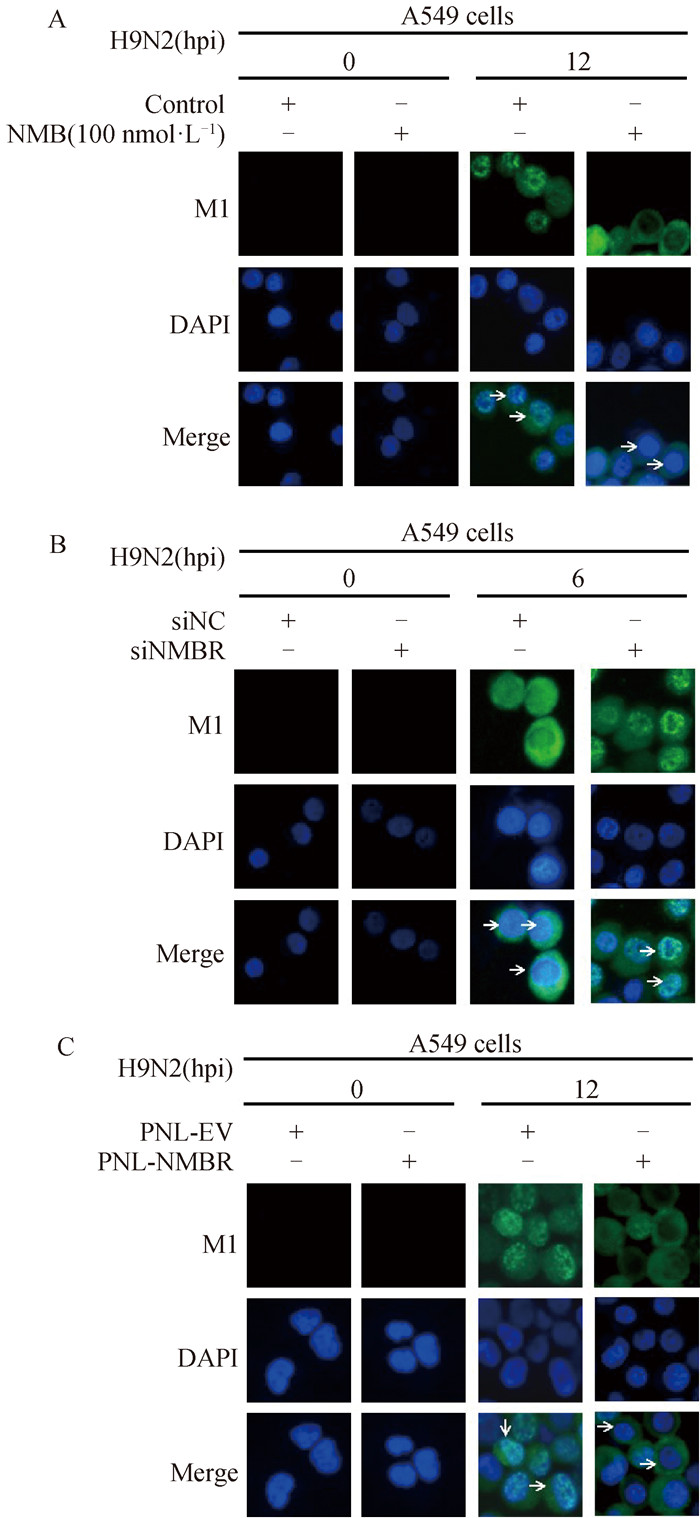
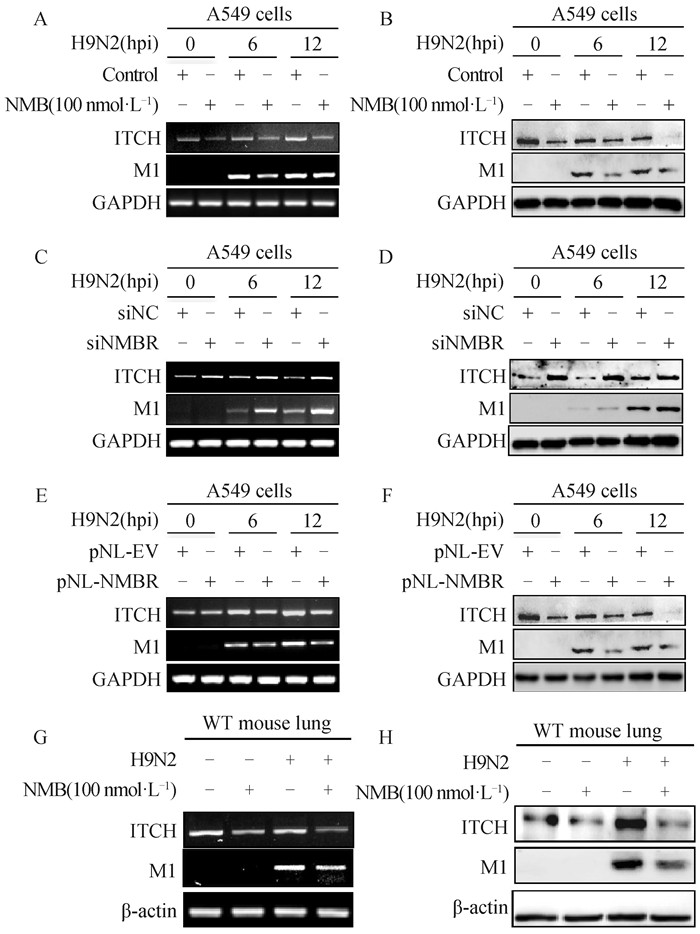
| 1 |
SHORT K R , KROEZE E J B V , FOUCHIER R A M , et al. Pathogenesis of influenza-induced acute respiratory distress syndrome[J]. Lancet Infect Dis, 2014, 14 (1): 57- 69.
doi: 10.1016/S1473-3099(13)70286-X
|
| 2 |
WASIK B R , VOORHEES I E H , PARRISH C R . Canine and feline influenza[J]. Cold Spring Harb Perspect Med, 2021, 11 (1): a038562.
doi: 10.1101/cshperspect.a038562
|
| 3 |
SUN Y P , LIU J H . H9N2 influenza virus in China: a cause of concern[J]. Protein Cell, 2015, 6 (1): 18- 25.
doi: 10.1007/s13238-014-0111-7
|
| 4 |
LEE D H , CRIADO M F , SWAYNE D E . Pathobiological origins and evolutionary history of highly pathogenic avian influenza viruses[J]. Cold Spring Harb Perspect Med, 2021, 11 (2): a038679.
doi: 10.1101/cshperspect.a038679
|
| 5 |
ZHANG J H , HUANG L H , LIAO M , et al. H9N2 avian influenza viruses: challenges and the way forward[J]. Lancet Microbe, 2023, 4 (2): e70- e71.
doi: 10.1016/S2666-5247(22)00305-6
|
| 6 |
SAGONG M , LEE K N , LEE E K , et al. Current situation and control strategies of H9N2 avian influenza in South Korea[J]. J Vet Sci, 2023, 24 (1): e5.
doi: 10.4142/jvs.22216
|
| 7 |
BO-SHUN Z , LI L J , QIAN Z , et al. Co-infection of H9N2 influenza virus and Pseudomonas aeruginosa contributes to the development of hemorrhagic pneumonia in mink[J]. Vet Microbiol, 2020, 240, 108542.
doi: 10.1016/j.vetmic.2019.108542
|
| 8 |
邢燕茹, 范春艳, 罗玉丽, 等. H9N2亚型禽流感病毒流行病学研究进展[J]. 中国家禽, 2021, 43 (10): 80- 86.
|
|
XING Y R , FAN C Y , LUO Y L , et al. Advance on epidemiology of H9N2 subtype avian influenza virus[J]. China Poultry, 2021, 43 (10): 80- 86.
|
| 9 |
GU M , XU L J , WANG X Q , et al. Current situation of H9N2 subtype avian influenza in China[J]. Vet Res, 2017, 48 (1): 49.
doi: 10.1186/s13567-017-0453-2
|
| 10 |
DHARMAYANTI N L P I , INDRIANI R , NURJANAH D . Vaccine efficacy on the novel reassortant H9N2 virus in indonesia[J]. Vaccines (Basel), 2020, 8 (3): 449.
doi: 10.3390/vaccines8030449
|
| 11 |
JIANG Z M , WEI F H , ZHANG Y Y , et al. IFI16 directly senses viral RNA and enhances RIG-I transcription and activation to restrict influenza virus infection[J]. Nat Microbiol, 2021, 6 (7): 932- 945.
doi: 10.1038/s41564-021-00907-x
|
| 12 |
OUYANG W , CEN M Y , YANG L P , et al. NMI facilitates influenza A virus infection by promoting degradation of IRF7 through TRIM21[J]. Am J Respir Cell Mol Biol, 2021, 65 (1): 30- 40.
doi: 10.1165/rcmb.2020-0391OC
|
| 13 |
GÜNL F , KRISCHUNS T , SCHREIBER J A , et al. The ubiquitination landscape of the influenza A virus polymerase[J]. Nat Commun, 2023, 14 (1): 787.
doi: 10.1038/s41467-023-36389-0
|
| 14 |
COCKRAM P E , KIST M , PRAKASH S , et al. Ubiquitination in the regulation of inflammatory cell death and cancer[J]. Cell Death Differ, 2021, 28 (2): 591- 605.
doi: 10.1038/s41418-020-00708-5
|
| 15 |
吴玉湖, 胡欣妍, 杨宣叶, 等. 蛋白质泛素化修饰对流感病毒增殖和致病性的影响[J]. 病毒学报, 2023, 39 (4): 1152- 1160.
|
|
WU Y H , HU X Y , YANG X Y , et al. Effects of ubiquitination on replication and pathogenesis of influenza virus[J]. Chinese Journal of Virology, 2023, 39 (4): 1152- 1160.
|
| 16 |
KAMEDA H , MIYOSHI H , SHIMIZU C , et al. Expression and regulation of neuromedin B in pituitary corticotrophs of male melanocortin 2 receptor-deficient mice[J]. Endocrinology, 2014, 155 (7): 2492- 2499.
doi: 10.1210/en.2013-2077
|
| 17 |
YANG G H , HUANG H P , TANG M Y , et al. Role of neuromedin B and its receptor in the innate immune responses against influenza A virus infection in vitro and in vivo[J]. Vet Res, 2019, 50 (1): 80.
doi: 10.1186/s13567-019-0695-2
|
| 18 |
KORDYUKOVA L V , SHTYKOVA E V , BARATOVA L A , et al. Matrix proteins of enveloped viruses: a case study of Influenza A virus M1 protein[J]. J Biomol Struct Dyn, 2019, 37 (3): 671- 690.
doi: 10.1080/07391102.2018.1436089
|
| 19 |
DAHMANI I , LUDWIG K , CHIANTIA S . Influenza A matrix protein M1 induces lipid membrane deformation via protein multimerization[J]. Biosci Rep, 2019, 39 (8): BSR20191024.
doi: 10.1042/BSR20191024
|
| 20 |
WANG S S , ZHAO Z D , BI Y H , et al. Tyrosine 132 phosphorylation of influenza A virus M1 protein is crucial for virus replication by controlling the nuclear import of M1[J]. J Virol, 2013, 87 (11): 6182- 6191.
doi: 10.1128/JVI.03024-12
|
| 21 |
BARMAN S , ALI A , HUI E K W , et al. Transport of viral proteins to the apical membranes and interaction of matrix protein with glycoproteins in the assembly of influenza viruses[J]. Virus Res, 2001, 77 (1): 61- 69.
doi: 10.1016/S0168-1702(01)00266-0
|
| 22 |
GÓMEZ-PUERTAS P , ALBO C , PÉREZ-PASTRANA E , et al. Influenza virus matrix protein is the major driving force in virus budding[J]. J Virol, 2000, 74 (24): 11538- 11547.
doi: 10.1128/JVI.74.24.11538-11547.2000
|
| 23 |
NAYAK D P , BALOGUN R A , YAMADA H , et al. Influenza virus morphogenesis and budding[J]. Virus Res, 2009, 143 (2): 147- 161.
doi: 10.1016/j.virusres.2009.05.010
|
| 24 |
BOULO S , AKARSU H , RUIGROK R W H , et al. Nuclear traffic of influenza virus proteins and ribonucleoprotein complexes[J]. Virus Res, 2007, 124 (1-2): 12- 21.
doi: 10.1016/j.virusres.2006.09.013
|
| 25 |
BUI M , WILLS E G , HELENIUS A , et al. Role of the influenza virus M1 protein in nuclear export of viral ribonucleoproteins[J]. J Virol, 2000, 74 (4): 1781- 1786.
doi: 10.1128/JVI.74.4.1781-1786.2000
|
| 26 |
YAMAUCHI Y . Influenza A virus uncoating[J]. Adv Virus Res, 2020, 106, 1- 38.
|
| 27 |
HOM N , GENTLES L , BLOOM J D , et al. Deep mutational scan of the highly conserved influenza A virus M1 matrix protein reveals substantial intrinsic mutational tolerance[J]. J Virol, 2019, 93 (13): e00161- 19.
|
| 28 |
唐梦瑶, 马逸杰, 田世茂, 等. 神经介素B及其受体NMBR参与抗A型流感病毒H1N1亚型感染的信号通路[J]. 畜牧兽医学报, 2021, 52 (11): 3215- 3223.
doi: 10.11843/j.issn.0366-6964.2021.011.023
|
|
TANG M Y , MA Y J , TIAN S M , et al. The signaling pathway of neuromedin B and its receptor NMBR involvement in anti-influenza A virus H1N1 subtype infection[J]. Acta Veterinaria et Zootechnica Sinica, 2021, 52 (11): 3215- 3223.
doi: 10.11843/j.issn.0366-6964.2021.011.023
|
| 29 |
MAHESUTIHAN M , ZHENG W N , CUI L , et al. CypA regulates AIP4-mediated M1 ubiquitination of influenza A virus[J]. Virol Sin, 2018, 33 (5): 440- 448.
doi: 10.1007/s12250-018-0058-6
|
| 30 |
CERVIA L D , SHIBUE T , BORAH A A , et al. A ubiquitination cascade regulating the integrated stress response and survival in carcinomas[J]. Cancer Discov, 2023, 13 (3): 766- 795.
doi: 10.1158/2159-8290.CD-22-1230
|
| 31 |
LI J Y , ZHU K , GU A H , et al. Feedback regulation of ubiquitination and phase separation of HECT E3 ligases[J]. Proc Natl Acad Sci U S A, 2023, 120 (33): e2302478120.
doi: 10.1073/pnas.2302478120
|
| 32 |
KIRUI J , MONDAL A , MEHLE A . Ubiquitination upregulates influenza virus polymerase function[J]. J Virol, 2016, 90 (23): 10906- 10914.
doi: 10.1128/JVI.01829-16
|



 )
)