

畜牧兽医学报 ›› 2026, Vol. 57 ›› Issue (1): 349-359.doi: 10.11843/j.issn.0366-6964.2026.01.030

• 预防兽医 • 上一篇    下一篇

H7亚型禽流感病毒纳米抗体制备与鉴定

罗琛滢(), 许斯祺, 刘宇彤, 张沁莹, 邓凤如, 冯赛祥()   

  1. 华南农业大学兽医学院,人兽共患病防控制剂国家地方联合工程实验室,广州 510620
  • 收稿日期:2025-03-17 出版日期:2026-01-23 发布日期:2026-01-26
  • 通讯作者: 冯赛祥 E-mail:827528057@qq.com;fengsx@scau.edu.cn
  • 作者简介:罗琛滢,硕士生,主要从事纳米抗体的开发与应用研究,E-mail:827528057@qq.com
  • 基金资助:
    国家重点研发计划项目(2022YFD1801003)

Preparation and Characterization of Nanobody against H7 Subtype Avian Influenza Virus

LUO Chenying(), XU Siqi, LIU Yutong, ZHANG Qinying, DENG Fengru, FENG Saixiang()   

  1. National and Local Joint Engineering Laboratory for Zoonosis Prevention and Control Biologics,College of Veterinary Medicine,South China Agricultural University,Guangzhou 510620,China
  • Received:2025-03-17 Online:2026-01-23 Published:2026-01-26
  • Contact: FENG Saixiang E-mail:827528057@qq.com;fengsx@scau.edu.cn

摘要:

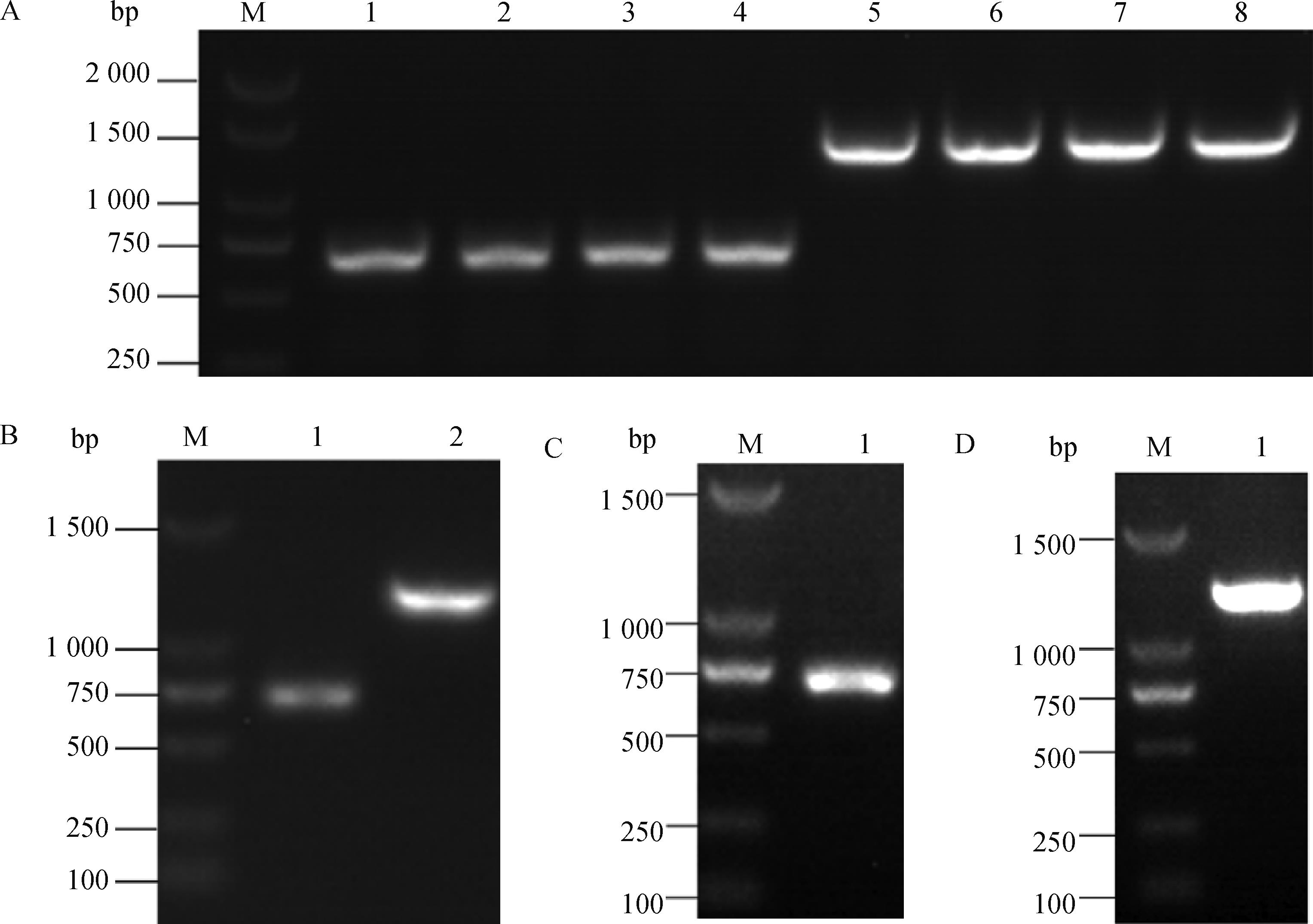
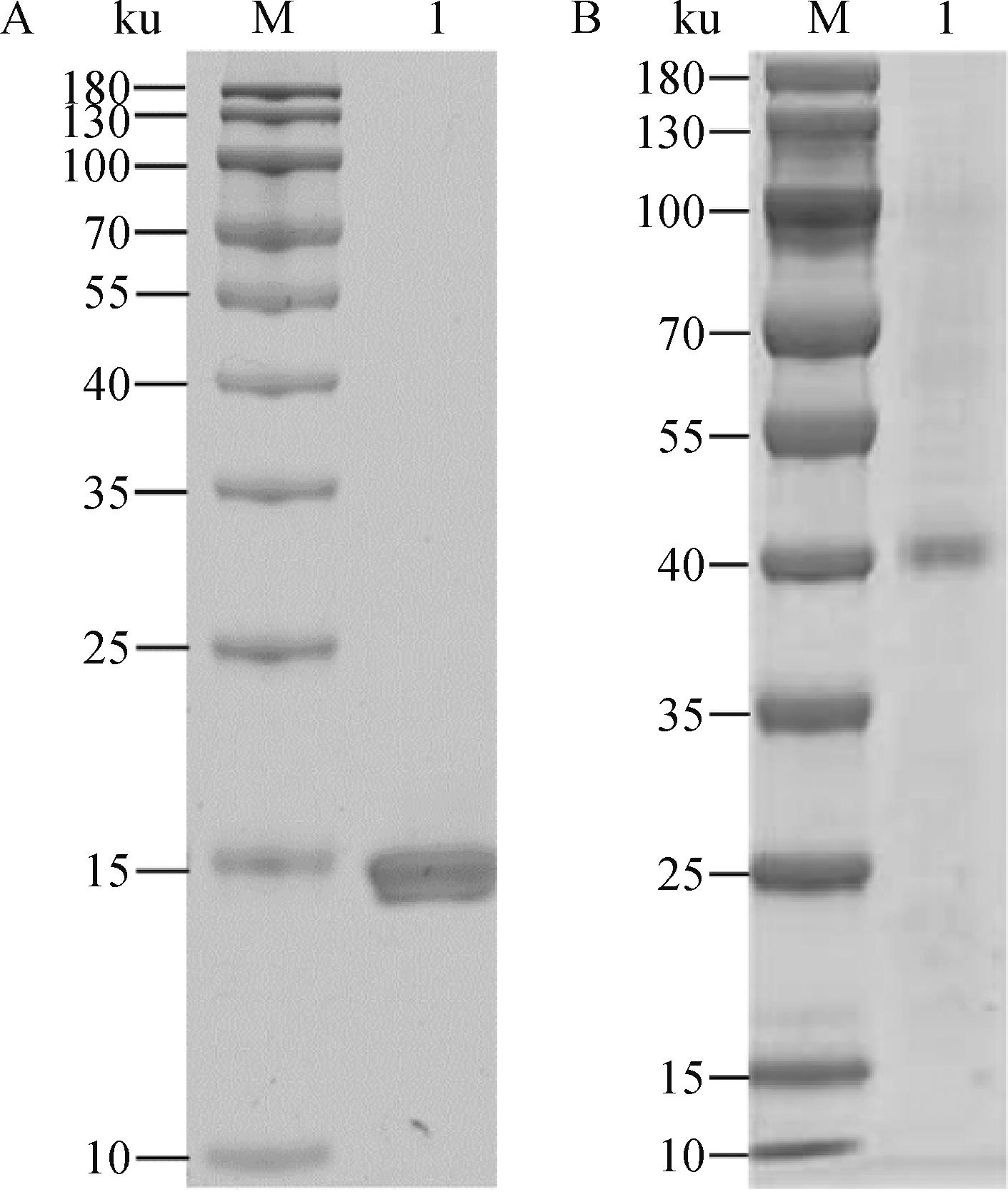
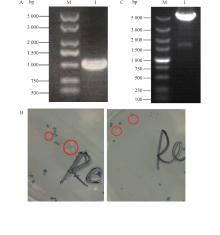
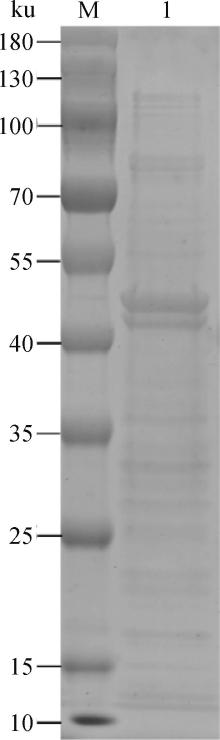
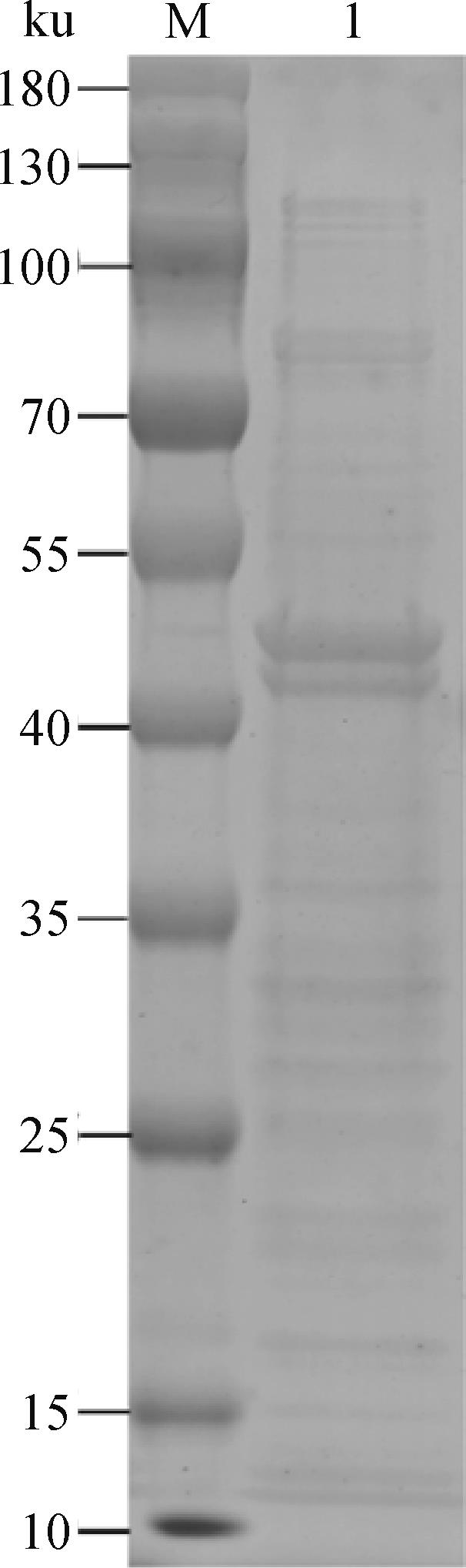
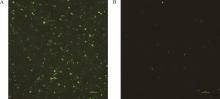
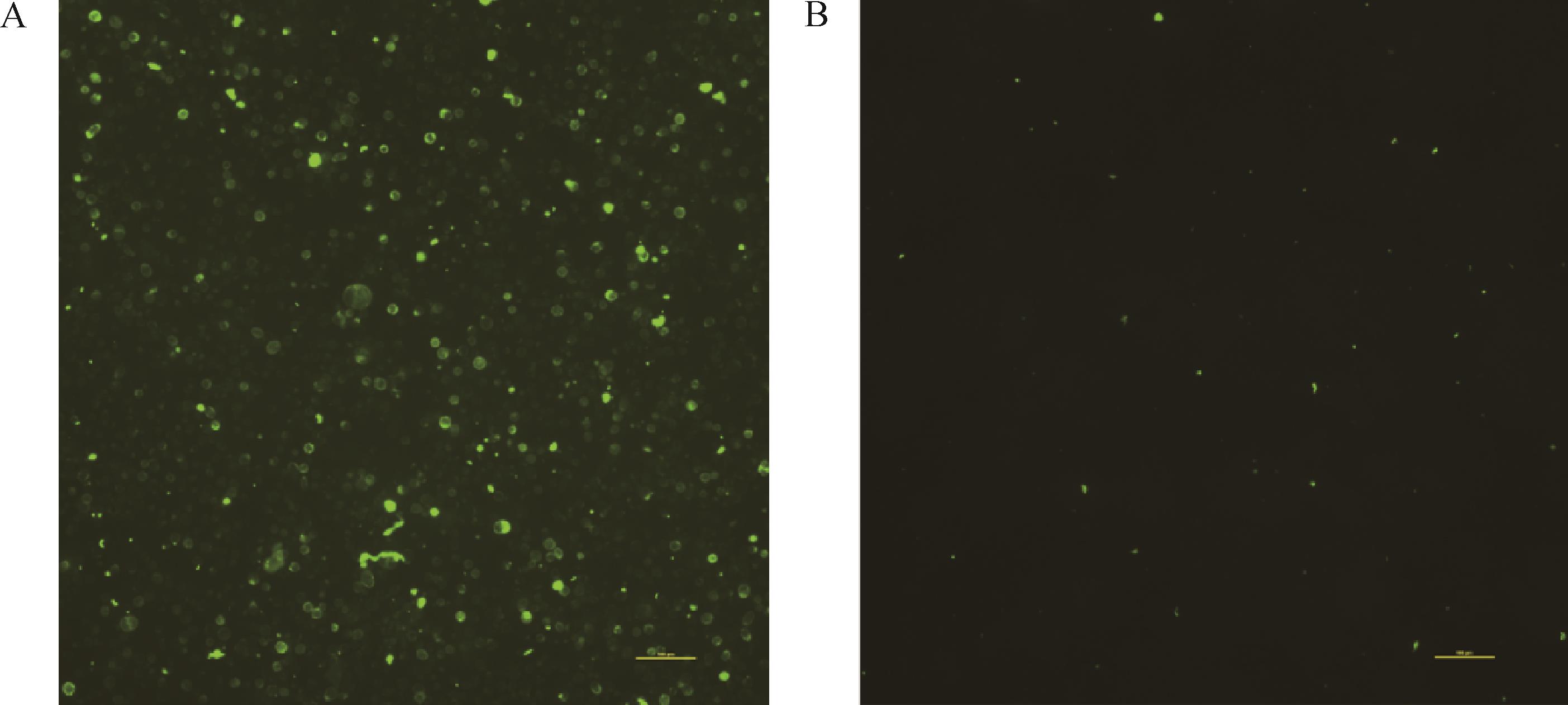
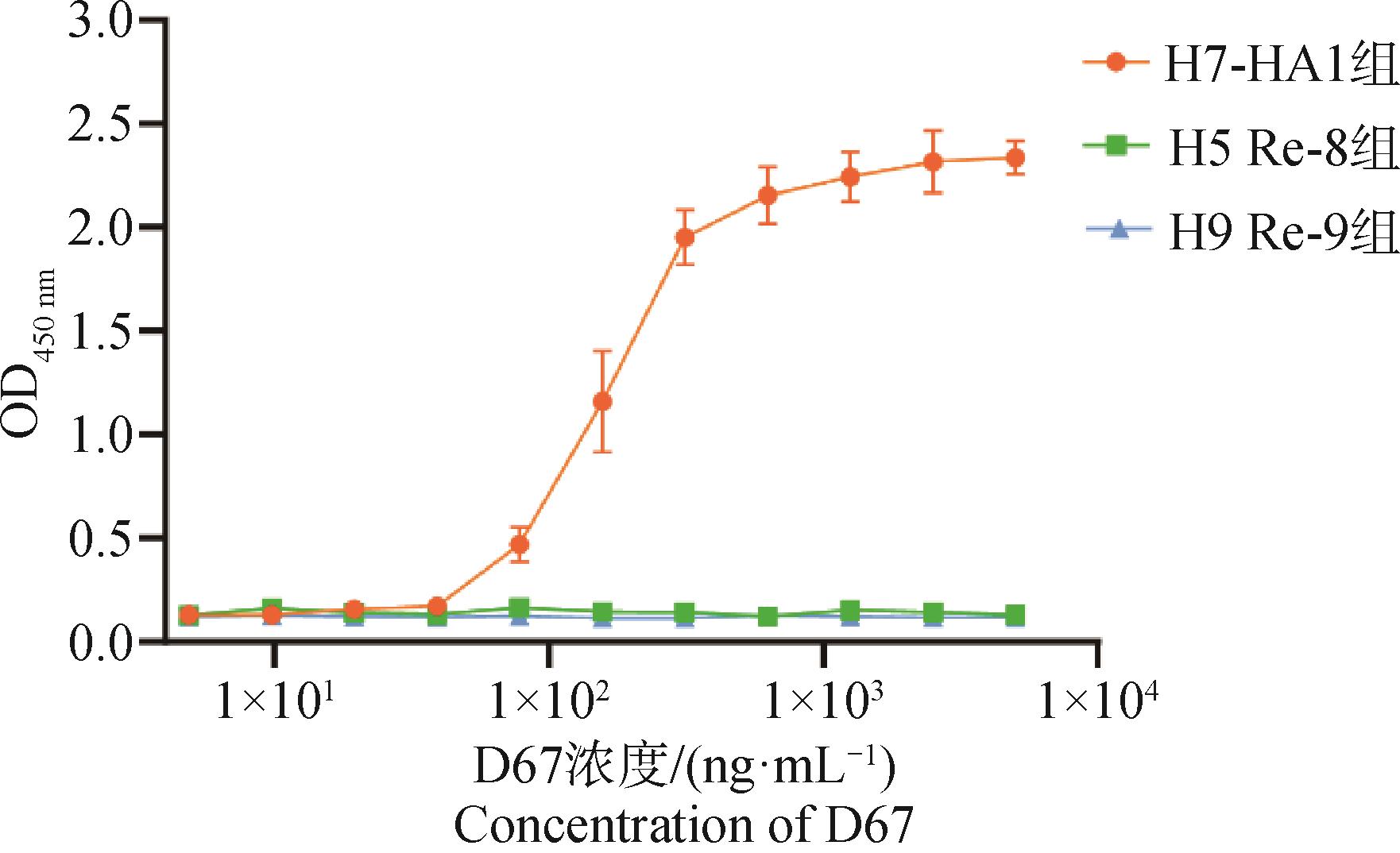
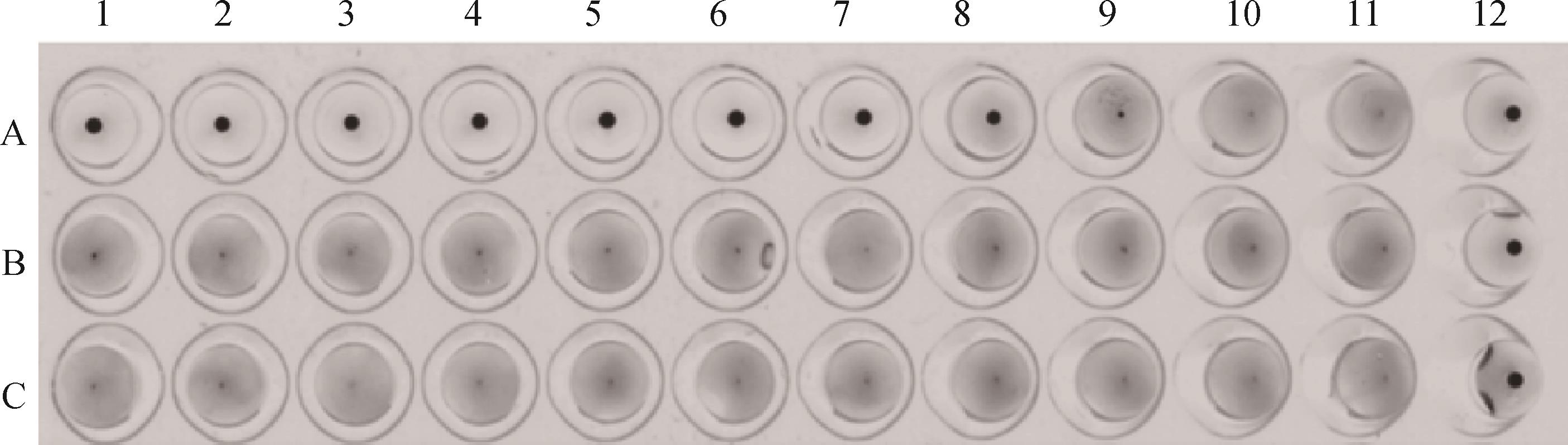
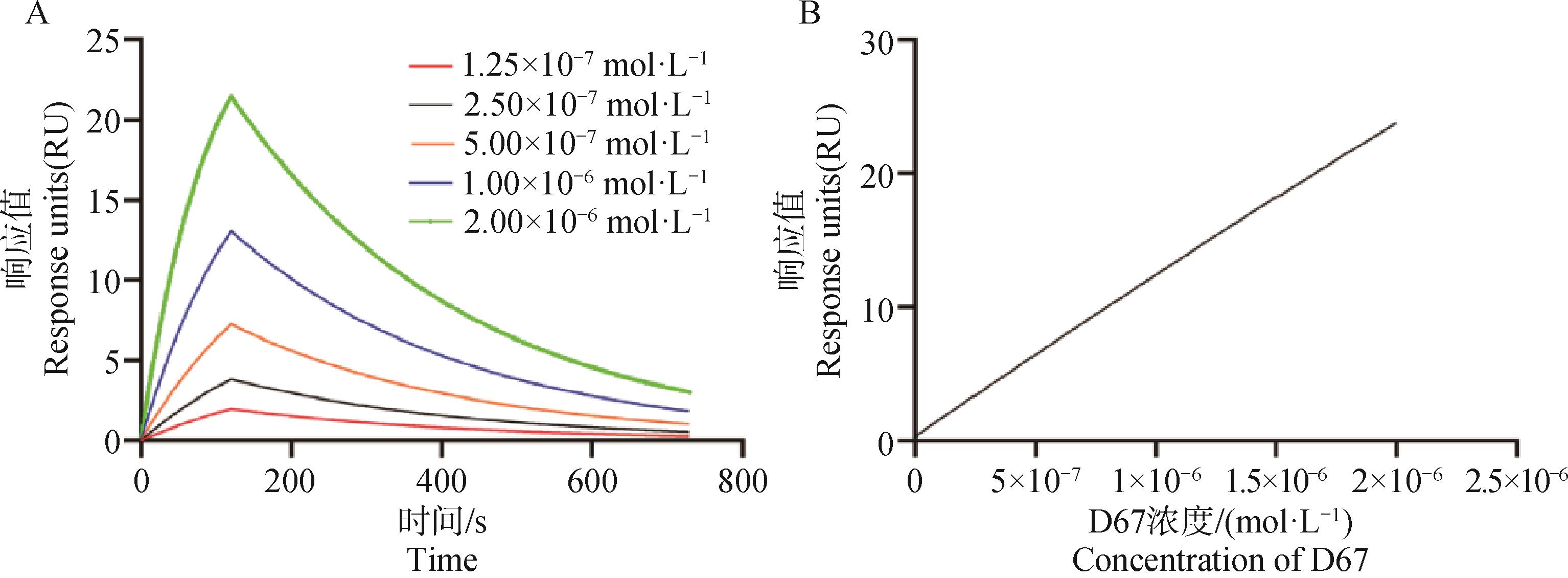
本研究旨在利用大肠杆菌系统表达出一种抗H7亚型禽流感病毒的纳米抗体。通过同源重组技术构建抗体表达载体和抗原表达载体,利用E. coli DH5α完成重组载体的扩增,接着分别将抗体表达载体和抗原表达载体转入大肠杆菌表达系统和昆虫细胞表达系统实现蛋白的高效表达,随后分别用链霉亲和素层析法和IMAC法对抗体和抗原进行纯化。最后,利用免疫荧光试验(IFA)、酶联免疫吸附试验(ELISA)、血凝抑制试验(HI)和表面等离子共振(SPR)分析抗体的效价、特异性、免疫反应性及与抗原的相互作用力。结果显示:成功构建了抗体表达载体和抗原表达载体,表达出大小为15 ku的纳米抗体D67、大小为42 ku的荧光纳米抗体D67-GFP和大小为55 ku的禽流感抗原H7-HA1;用IFA检测抗体的免疫反应性,经纳米抗体孵育后的H7-HA1阳性细胞呈现出显著高于对照组的绿色荧光;用ELISA检测抗体的特异性,仅H7-HA1抗原组出现明显OD450 nm,且P/N值随着D67抗体浓度降低而下降;用HI检测抗体的效价和特异性,仅H7抗原组出现明显血凝抑制效应,效价为8log2;用SPR检测抗原-抗体相互作用力,得结合常数为3.99×10³ L·(mol·s)⁻¹,解离常数为3.23×10⁻³ s-1,亲和力常数KD为8.1×10⁻⁷ mol·L-1,抗原抗体间存在强效亲和作用。本研究成功制备抗H7亚型禽流感的纳米抗体D67,并通过多维评估体系证明了D67可与H7-HA1抗原实现高效特异结合,可为建立H7亚型禽流感的快速检测方法提供技术基础。

关键词: 禽流感, 纳米抗体, 生物学活性, 原核表达

Abstract:

This study aimed to express a nanobody targeting H7-subtype avian influenza virus using an E. coli system. Nanobody and antigen expression vectors were constructed via homologous recombination. Recombinant vectors were amplified using E. coli DH5α, followed by transformation into E. coli BL21(DE3) and BEVS for high-yield protein production. Nanobodies and antigens were purified using streptavidin affinity chromatography and IMAC purification, respectively. Finally, immunofluorescence assay (IFA), enzyme-linked immunosorbent assay (ELISA), hemagglutination inhibition (HI) and surface plasmon resonance (SPR) were employed to analyze nanobody titer, specificity, immunoreactivity, and antigen-nanobody interaction dynamics. Expression vectors were successfully constructed, followed by the production of a 15 ku nanobody (D67), a 42 ku fluorescent nanobody (D67-GFP) and a 55 ku avian influenza antigen (H7-HA1). In IFA, H7-HA1-positive cells incubated with the nanobody exhibited significantly stronger green fluorescence signals compared to the control group. ELISA revealed significant OD450 signals exclusively in the H7-HA1 antigen group, with P/N ratios decreasing as D67 concentrations diminished. HI assays demonstrated specific hemagglutination inhibition only for the H7 antigen group, achieving a titer of 8log2. SPR analysis quantified the interaction kinetics, yielding an association rate of 3.99×10³ L·(mol·s)⁻¹, dissociation rate of 3.23×10⁻³ s-1, and equilibrium dissociation constant of 8.1×10⁻⁷ mol·L⁻¹, confirming strong antigen-nanobody affinity.The H7-subtype-targeting nanobody D67 was successfully prepared and validated through a multidimensional evaluation system, demonstrating its high-efficiency and specific binding to H7-HA1. This work provides a technical foundation for developing rapid detection methods for H7-subtype avian influenza.

Key words: avian influenza, nanobody, biological activity, prokaryotic expression

中图分类号: